General Directions for Making Bread
Ingredients
Directions
Good flour, good yeast, pure water and sweet milk are the first essentials to the making of "Good Bread." Flour should alw^ays be sifted before meas- uring, and if kept in a cool pantry, it should be warmed before using. Milk and water should also be warm. It has been the general custom to mix bread at night, but the best bread makers now agree that it is better to raise it more quickly. More of the sweet, natural flavor and strength of the flour is retained if the dough rises quickly, and never more than until double its bulk. Kneading is necessary when water bread is made, but not for milk bread if all the ingredients are mixed thoroughly and it is cut down often with a knife. One of the important steps, and one often overlooked, is that the dough be well covered in all its stages until it is put into the oven. A crust is not desirable until the loaf is in the baking pan. Be very careful about using any flour beyond a dusting of the board w^hen shaping into loaves for often the failure to have good bread is caused by the careless use of a cup of flour which was needlessh' worked into the dough at this stage, causing the loaf to rise unevenly in the oven and bulge at the side. Butter the top of the loat when taken from the oven.
Transcribed from a scanned cookbook and modernised for today's kitchens. Where the book gave no heat or time, or said "a moderate oven", the temperatures and times here may be modern equivalents rather than the book's own figures. See the original page.
You might also like
 Cornbread345 recipes
 Bread Pudding336 recipes
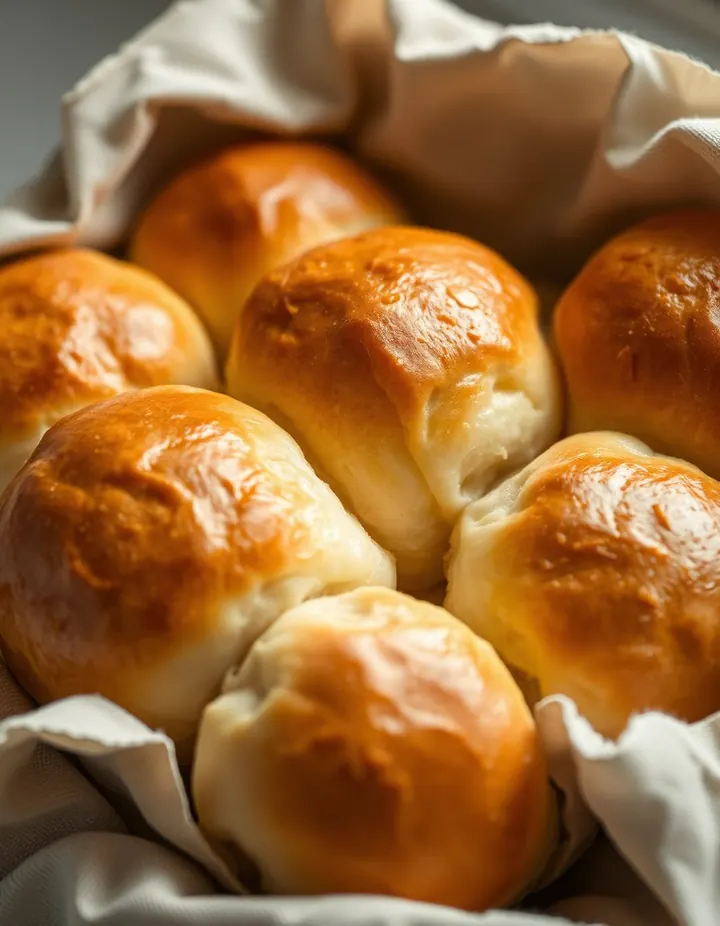 Milk Bread Rolls242 recipes
 Potato Bread124 recipes
The free Flavor Lab newsletter: one surprising pairing a week and the molecular reason it works, in 60 seconds. No spam, unsubscribe anytime.
Prefer an account? Create a free account to save pairings and unlock the full chemistry.