Why it works: Butter and flour are a kitchen classic. They rank in the top 12% of all ingredient pairs, and cooks put them together in 124,287 recipes. Both carry isobutyraldehyde, which smells malty, green. The science ↓
Cakes and Bread
Ingredients
Directions
In vegetarian cookery there is no difference, as far as cake- making is concerned, between it and ordinary cookery. In making cakes we will confine our attention chiefly to general principles which, if once known, render cake-making of every description comparatively easy work. Those who wish for detailed recipes for making almost every kind of cake known will find all that they require on a large scale in " Cassell's Dictionary of Cookery," and also everything necessary on a smaller scale in ^* Cassell's Shilling Cookery," which has already reached its hundred-thousandth edition.
Cakes may be divided into two classes — those that contain fruit and those that do not. Plum cakes can be made very rich indeed, like a wedding cake, or so plain that it can scarcely be distinguished from a loaf of bread with a few currants in it. Again, cakes that contain no fruit can^ at the same time, be made exceedingly rich, the richness chiefly depending upon the amount of butter and eggs that are used. We will first give a few dii-ections with regard to making what may be termed plain cakes, cakes that contain no fruit at all. Perhaps the best model we can give to illustrate the general principles will be that of a pound cake. The recipe is a very easy one to recollect, as a pound cake means one that is made from a pound of butter, a pound of sugar, a pound of eggs, and a pound of flour. There is one addition, however, which the good plain cook will probably not be np to, and which, so far as flavour is concerned, makes all the difference between Francatelli and "Jemima Ann" — we must rub some of the lumps of sugar on the outsides of either two oranges or two lemons. It is also a great improvement to add a small glass of brandy, and in every kind of cake we must add a pinch of salt.
CAKES AND BRP^AD.
In making cakes it is always necessary to be careful about the butter. It is best to put the butter in cold water before it is used, and, if salt butter, it should be washed in several waters to extract the salt. The next thing necessary is to beat the butter to a cream. To do this it must be worked about in a basin with a wooden spoon. The basin should be a strong one, and a wooden spoon is far preferable to a metal one. You simply beat the butter and spread it against the sides of the basin and knock it about till it loses its con- sistency. You cannot beat the butter to the consistency of ordinary cream, but to a state more resembling Devonshire clotted cream. Of course, when it is like this it is much more easily mixed with the other ingredients. In making a pound cake we should first of all beat the butter to a cream and then add flour, sugar, and eggs gradually. When the^ whole is thoroughly well mixed together, we must bake it in a tm, or mould, °or hoop. We need say nothing about tins or moulds, but will confine ourselves to giving directions how to bake a cake in a hoop, for, as a rule, ordinary English cooks do not understand how to use them.
One great advantage of using a hoop is that when the cake is baked there is no fear of breaking it in turning it out. A very simple hoop can be made with an ordinary slip of tin, say six inches wide ; as the tin will lap over, the cake can be made any size round you wish. It is a good plan to fasten a piece of copper wire round the outside of the tin. This can be twisted, and when the cake is baked and has got cold can be untwisted, and the tin will then open of its own accord. The tin must be lined with buttered paper, and buttered paper must be placed on a flat piece of tin at the bottom. When an " amateur hoop " is used like we have described, care must be taken that the cake does not come out at the bottom. The cake, especially when it is made with beaten-up eggs, like sponge cake, will rise, and unless precautions are taken the tin will rise with it, and the unset portion of the cake break loose round the edge at the bottom. To prevent this the tin must be kept down with a weight at the top. In a proper hoop made for the purpose there are appliances for fastening the hoop together itself and also for keeping it in its place, but if we use a strip of tin we must place something across the tm
Nutrition, whole recipe (rough)
Counts 6 of 8 ingredients. The other 2 aren't in our nutrition table and add nothing above, so the real totals are higher.
What these numbers assume: 6 portions
| Ingredient | Portion assumed | kcal |
|---|---|---|
| Flour | 1 cup (125g) all-purpose | 455 |
| Butter | 1 tbsp (14g) | 102 |
| Egg | 1 large egg (50g) | 78 |
| Orange | 1 medium (131g) | 62 |
| Sugar | 1 tbsp (12.5g) granulated | 49 |
| Salt | 1 tsp (6g) | 0 |
| Fruit | not in our table | 0 |
| Cake | not in our table | 0 |
One typical portion per ingredient; the recipe's quantities are not counted. A rough guide only, not for medical or dietary planning.
Transcribed from a scanned cookbook and modernised for today's kitchens. Where the book gave no heat or time, or said "a moderate oven", the temperatures and times here may be modern equivalents rather than the book's own figures. See the original page.
Explore the science
The flavor team
The pairs that carry this dish. Each one is judged two ways: how much their aromas overlap, and how often cooks already put them together.
-
Butter + flourtop 12% of all pairsSmell alikelowCooked together124,287 recipes
Shared aroma: isobutyraldehyde (malty, green).
-
Sugar + flourtop 15% of all pairsSmell alikemoderateCooked together92,116 recipes
Shared aroma: phenylacetaldehyde (hawthorne, honey).
-
Egg + flourtop 15% of all pairsSmell alikelowCooked together106,462 recipes
Shared aroma: isobutyraldehyde (malty, green).
-
Butter + eggtop 17% of all pairsSmell alikemoderateCooked together118,967 recipes
Shared aroma: decanal (soap, orange peel).
-
Butter + sugartop 17% of all pairsSmell alikemoderateCooked together98,233 recipes
Shared aroma: guaiacol (smoky, sweet).
Butter and flour barely smell alike, yet cooks put them together in 124,287 recipes: they work on texture and structure more than aroma.
Ranks compare each pair with 20,000 random ingredient pairs on CompKitchen. How we score pairs
Swap the orange
How well each one fits the dish's main ingredients (butter, sugar, egg, flour):
- Raisinfits better
- Vanillafits better
- Figfits better
- Orangethe original
Fit is the average pairing score against butter, sugar, egg, flour. Candidates are from the same food group and used in at least 100 recipes.
More pound cake recipes
You might also like
 Orange Bundt Cake349 recipes
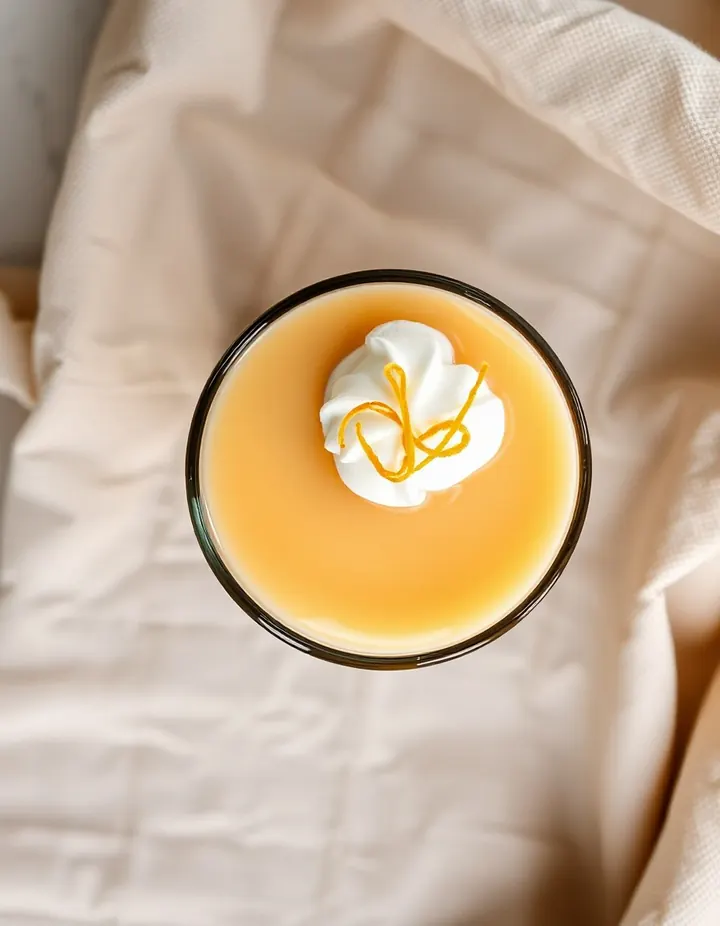 Orange Cream Rice Pudding121 recipes
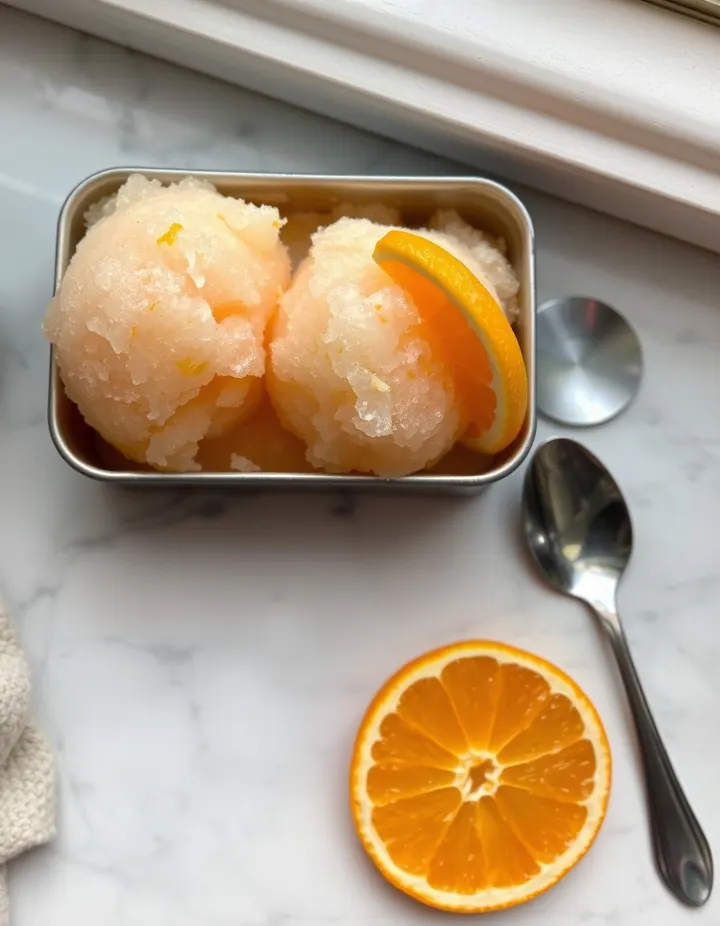 Orange Gelatin100 recipes
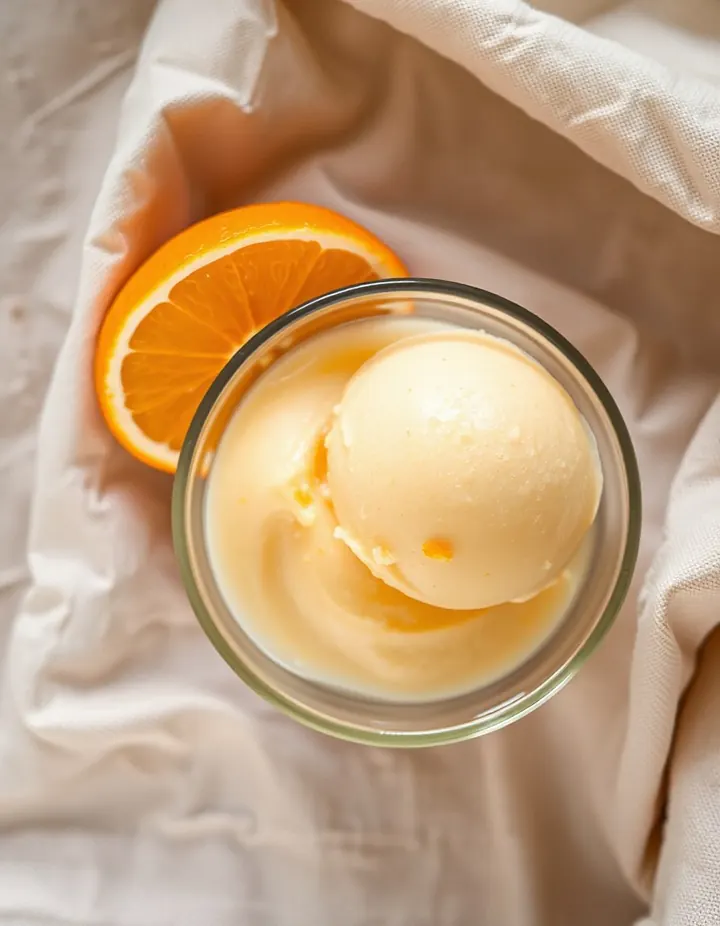 Orange Sherbet73 recipes
The free Flavor Lab newsletter: one surprising pairing a week and the molecular reason it works, in 60 seconds. No spam, unsubscribe anytime.
Prefer an account? Create a free account to save pairings and unlock the full chemistry.