Why it works: Apple and orange match in chemistry and in kitchens. They rank in the top 7% of all ingredient pairs, and cooks put them together in 2,230 recipes. Both carry beta-damascenone, which smells apple, rose. The science ↓
Desserts with Crusts
Ingredients
Directions
Fruit tarts
Apple Tart: Pare and slice some quick-cooking, tart apples, and place them in the bottom of a pudding dish, with a tablespoonful of water.
Cover with a crust prepared in the following manner: Into a cup of thin cream stir a gill of yeast and two cups of flour; let this become very light, then add sufficient flour to mix soft.
Knead for fifteen or twenty minutes very thoroughly, roll evenly, and cover the apples; put all in a warm place until the crust has become very light, then bake.
If the apples do not bake easily, they may be partially cooked before putting on the crust.
Dish so that the fruit will be uppermost, and serve cold with cream and sugar, cocoanut sauce, or mock cream.
Gooseberry Tart: Fill a pudding dish with well prepared green gooseberries, adding a tablespoonful or two of water.
Cover with a crust as for Apple Tart, and when light, bake in a moderately quick oven.
Cut the crust into the required number of pieces, and dish with gooseberries heaped on top.
Serve cold with sugar and cream.
Cherry Tart: Prepare the same as for Apple Tart, with stoned cherries, only omitting the water, as the cherries will be sufficiently juicy of themselves.
If the fruit is very juicy, sprinkle a tablespoonful of flour over it before putting on the crust.
Plum and peach tart may be made in the same manner, and are both very nice.
Shortcakes
Strawberry and Other Fruit Shortcakes: Beat together one cup of thin cream, slightly warmed, a tablespoonful of yeast, and two small cups of flour.
Set in a warm place till very light.
Add sufficient warm flour to mix soft, and knead thoroughly for fifteen or twenty minutes.
Divide into two equal portions, and roll into sheets about one half inch in thickness, making the center a very little thinner than the edges, so that when risen, the center will not be highest.
Place in tins, and set in a warm place until perfectly risen, or until they have doubled their first thickness.
Bake quickly.
When cold, spread one cake with fruit, and cover with the other.
If the fruit is large, it may be chopped fine with a knife, or mashed with a spoon.
A little lemon juice added to peaches is an addition for shortcake.
Banana Shortcake: Prepare the crust as previously directed.
Fill with sliced bananas, for every three of which add the juice of one orange, a little of the grated rind, and a half cup of sugar.
Lemon Shortcake: Prepare the crust as for Fruit Shortcake.
For the filling, grate the yellow portion only of the lemon, and squeeze the juice into a bowl; add a cupful of sugar.
Braid a tablespoonful of flour smooth with two tablespoonfuls of water, add enough boiling water, stirring well meanwhile, to make a teacupful.
Add this to the other ingredients, beat well together, and place the bowl in a basin of boiling water or over the teakettle.
Cook until about as thick as boiled custard.
Fill this between the shortcakes and serve.
Cream and berry shortcake
Berry Shortcake with Prepared Cream: Prepare the shortcake as previously directed.
Sweeten the berries and spread on the lower crust, then pour over them a cream prepared as follows, and add top crust.
Cream: Heat one half cup of milk and the same of thin cream to boiling, add two tablespoonfuls of sugar, and thicken with one teaspoonful of cornstarch rubbed smooth in a little cold milk.
Turn the hot sauce over the beaten white of two eggs, stirring rapidly meanwhile, until the egg is thoroughly mingled with the whole.
Allow it to become cold before using.
Raised pies and loaf
Raised Pie: Prepare the dough as for shortcake.
Divide in two portions, spread one on the tin, and cover with a layer of easy-cooking tart apples sliced in eighths.
Put two or three spoonfuls of rather thick sweet cream over the apples, and cover with the top crust.
Let the crusts rise until very light, and bake.
Peaches may be used in the same manner.
Baked Apple Loaf: Prepare some dough as for buns on page 347, leaving out the sugar, and when ready for the last melding, cut it into three portions.
Put some flour on the bread board, mold the dough well, and roll as thin as pie crust in such shape as will fit a shallow baking tin.
Spread over the tin, and cover the dough with a layer of easy-cooking, sour apples sliced very thin, or with very stiff apple marmalade.
Cover this with a second layer of dough, then add another layer of apples, and cover with the third portion of the dough.
Pinch the edges of the dough well together, let the loaf rise till very light, then bake.
Eat cold with sugar and cream.
If the apples will not cook quickly, they may be first steamed until nearly tender.
If the crust appears too hard when taken from the oven, cover with a wet napkin and allow it to steam for a little time until softened.
Nutrition, whole recipe (rough)
Counts 7 of 9 ingredients. The other 2 aren't in our nutrition table and add nothing above, so the real totals are higher.
What these numbers assume: 7 portions
| Ingredient | Portion assumed | kcal |
|---|---|---|
| Flour | 1 cup (125g) all-purpose | 455 |
| Milk | 1 cup (244ml) whole | 149 |
| Apple | 1 medium (182g) | 95 |
| Egg | 1 large egg (50g) | 78 |
| Orange | 1 medium (131g) | 62 |
| Cream | 1 tbsp (15ml) heavy | 51 |
| Sugar | 1 tbsp (12.5g) granulated | 49 |
| Water | not in our table | 0 |
| Cake | not in our table | 0 |
One typical portion per ingredient; the recipe's quantities are not counted. A rough guide only, not for medical or dietary planning.
Transcribed from a scanned cookbook and modernised for today's kitchens. Where the book gave no heat or time, or said "a moderate oven", the temperatures and times here may be modern equivalents rather than the book's own figures. See the original page.
Explore the science
The flavor team
The pairs that carry this dish. Each one is judged two ways: how much their aromas overlap, and how often cooks already put them together.
-
Apple + orangetop 7% of all pairsSmell alikestrongCooked together2,230 recipes
Shared aroma: beta-damascenone (apple, rose).
-
Cream + sugartop 9% of all pairsSmell alikemoderateCooked together43,450 recipes
Shared aroma: 2,3-butanedione (butter, sweet).
-
Milk + appletop 11% of all pairsSmell alikemoderateCooked together4,104 recipes
Shared aroma: 4-heptenal (creamy, biscuit).
-
Flour + milktop 14% of all pairsSmell alikelowCooked together78,219 recipes
Shared aroma: isobutyraldehyde (malty, green).
-
Flour + sugartop 15% of all pairsSmell alikemoderateCooked together92,116 recipes
Shared aroma: phenylacetaldehyde (hawthorne, honey).
Flour and milk barely smell alike, yet cooks put them together in 78,219 recipes: they work on texture and structure more than aroma.
Ranks compare each pair with 20,000 random ingredient pairs on CompKitchen. How we score pairs
What each ingredient does
- Flour
- Builds the dough structure that holds the crust together and lets it rise.
- Yeast
- Produces gas that makes the crust rise and turn light.
- Thin cream
- Adds richness and moisture to the dough and softens its texture.
- Sugar
- Adds sweetness and balances the tartness of the fruit.
- Cornstarch
- Thickens the hot milk and cream sauce as it cooks.
- Eggs
- Whites thicken and set into the cream as they are heated, giving it body.
The step that matters
Letting the crust rise until very light. Yeast dough needs full proofing in a warm place before baking. Underproofed crust stays dense and heavy, while overproofed dough can collapse in the oven, so the rise must be judged by the dough's lightness.
Swap the orange
How well each one fits the dish's main ingredients (flour, cream, sugar, milk, apple, egg):
- Vanillafits better
- Raisinfits better
- Figfits better
- Orangethe original
Fit is the average pairing score against flour, cream, sugar, milk, apple, egg. Candidates are from the same food group and used in at least 100 recipes.
“What each ingredient does” and “The step that matters” were written by Claude from this recipe’s own method and reviewed in samples by CompKitchen.
You might also like
 Orange Bundt Cake349 recipes
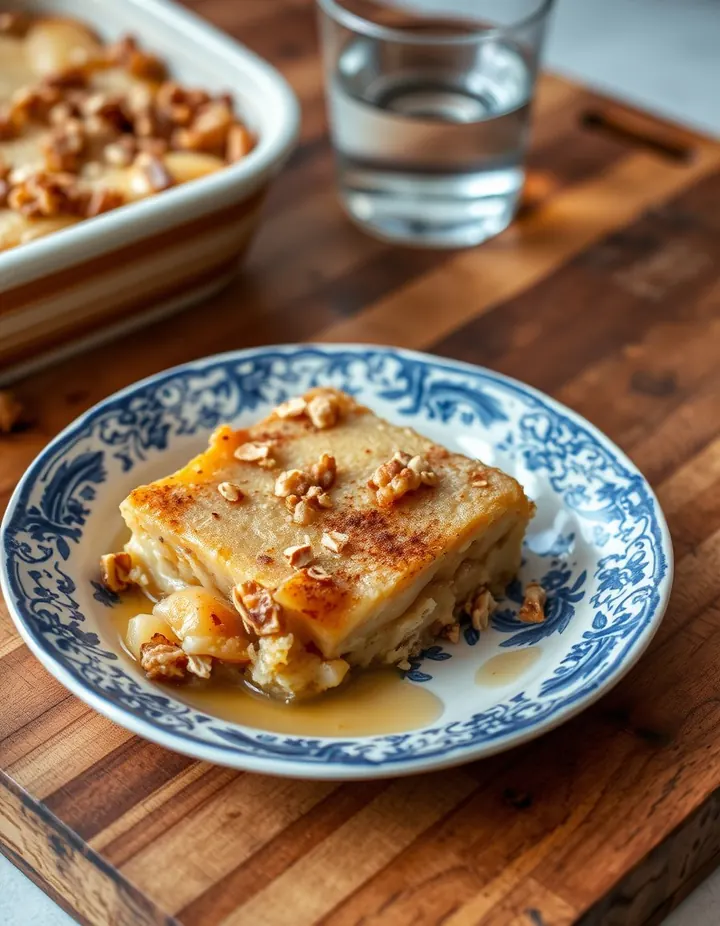 Apple Pudding256 recipes
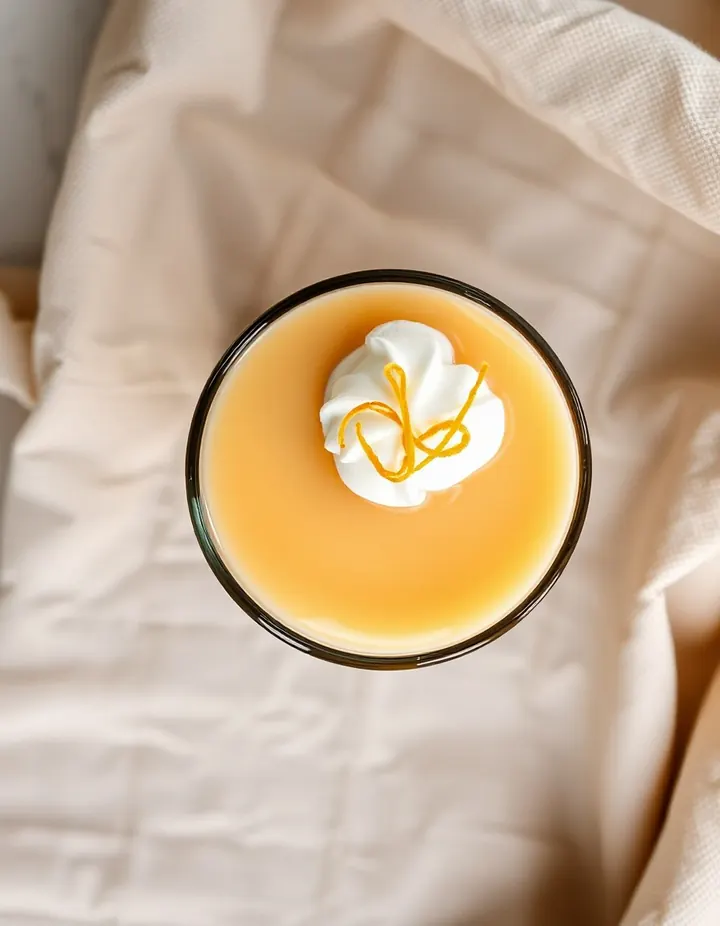 Orange Cream Rice Pudding121 recipes
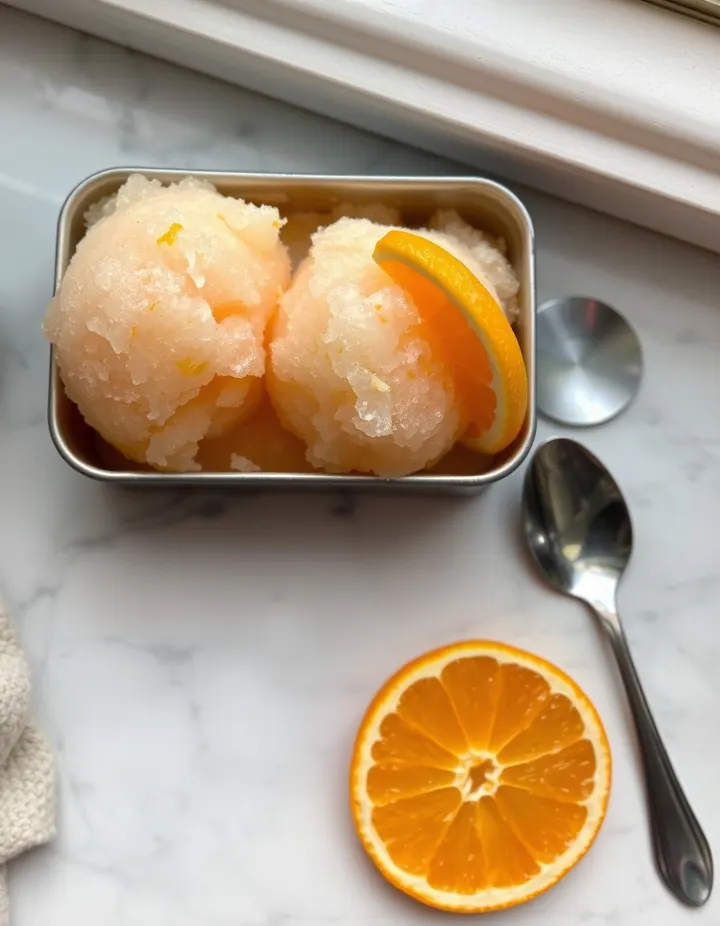 Orange Gelatin100 recipes
The free Flavor Lab newsletter: one surprising pairing a week and the molecular reason it works, in 60 seconds. No spam, unsubscribe anytime.
Prefer an account? Create a free account to save pairings and unlock the full chemistry.