Why it works: Mustard and vinegar are a kitchen classic. They rank in the top 7% of all ingredient pairs, and cooks put them together in 14,067 recipes. Both carry isobutyraldehyde, which smells malty, green. The science ↓
To Dress Salad
Ingredients
Directions
Prepare the salad
Gather lettuce, pepper grass, chervil, cress, etc. early in the morning, pick, wash, and lay in cold water with ice.
Just before dinner, drain the water from the salad, cut it into a bowl, giving proper proportions of each plant.
Make the dressing
Boil two fresh eggs for ten minutes.
Put the eggs in water to cool.
Take the yolks in a soup plate, pour on them a tablespoon of cold water, rub them with a wooden spoon until they are perfectly dissolved.
Add two spoonfuls of oil.
When well mixed, add a teaspoon of salt, one of powdered sugar, and one of mustard.
When all these are united and quite smooth, stir in two tablespoonfuls of common and two of tarragon vinegar.
Serve
Pour the dressing over the salad.
Garnish the top with the whites of the eggs cut into rings, and lay around the edge of the bowl young scallions.
Nutrition, whole recipe (rough)
What these numbers assume: 5 portions
| Ingredient | Portion assumed | kcal |
|---|---|---|
| Olive Oil | 1 tbsp (14g) | 119 |
| Eggs | 1 large egg (50g) | 78 |
| Mustard | 1 tsp (5g) yellow | 3 |
| Vinegar | 1 tbsp (15ml) distilled | 3 |
| Salt | 1 tsp (6g) | 0 |
One typical portion per ingredient; the recipe's quantities are not counted. A rough guide only, not for medical or dietary planning.
Transcribed from a scanned cookbook and modernised for today's kitchens. Where the book gave no heat or time, or said "a moderate oven", the temperatures and times here may be modern equivalents rather than the book's own figures. See the original page.
Explore the science
The flavor team
The pairs that carry this dish. Each one is judged two ways: how much their aromas overlap, and how often cooks already put them together.
-
Mustard + vinegartop 7% of all pairsSmell alikemoderateCooked together14,067 recipes
Shared aroma: isobutyraldehyde (malty, green).
-
Egg + mustardtop 28% of all pairsSmell alikemoderateCooked together9,210 recipes
Shared aroma: (e)-2-octenal (fatty, green).
-
Egg + vinegartop 33% of all pairsSmell alikelowCooked together12,922 recipes
Shared aroma: acetic acid (sour, vinegar).
Egg and vinegar barely smell alike, yet cooks put them together in 12,922 recipes: they work on texture and structure more than aroma.
Ranks compare each pair with 20,000 random ingredient pairs on CompKitchen. How we score pairs
What each ingredient does
- Egg yolks
- Their emulsifying lecithin helps bind the oil and vinegar into a smooth, thick dressing.
- Oil
- Provides fat and richness, and with the yolks forms the body of the dressing.
- Mustard
- Its compounds help stabilise the emulsion and add sharp flavour.
- Vinegar
- Adds acidity that brightens the dressing and balances the richness of the oil.
The step that matters
Rubbing the yolks until perfectly dissolved. The yolks must be worked smooth before the oil is added. Yolks that are not fully broken down cannot emulsify the oil properly, so the dressing may separate or look lumpy.
Swap the mustard
How well each one fits the dish's main ingredients (egg, vinegar):
- Cucumberfits about as well
- Mustardthe original
- Capsicumfits about as well
- Shallotfits less well
Fit is the average pairing score against egg, vinegar. Candidates are from the same food group and used in at least 100 recipes.
“What each ingredient does” and “The step that matters” were written by Claude from this recipe’s own method and reviewed in samples by CompKitchen.
You might also like
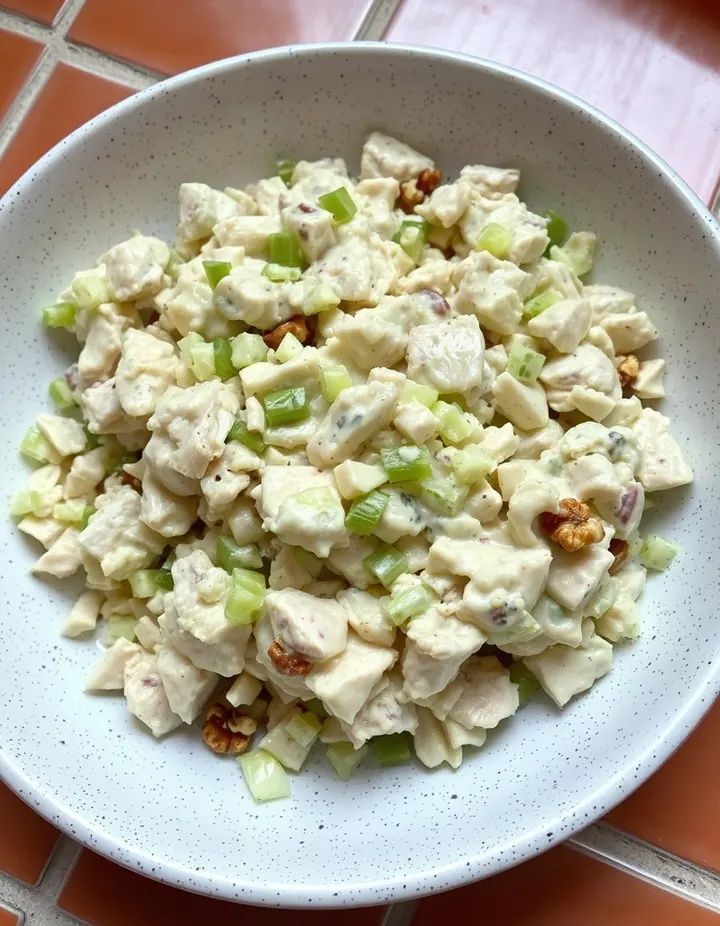 Chicken Salad623 recipes
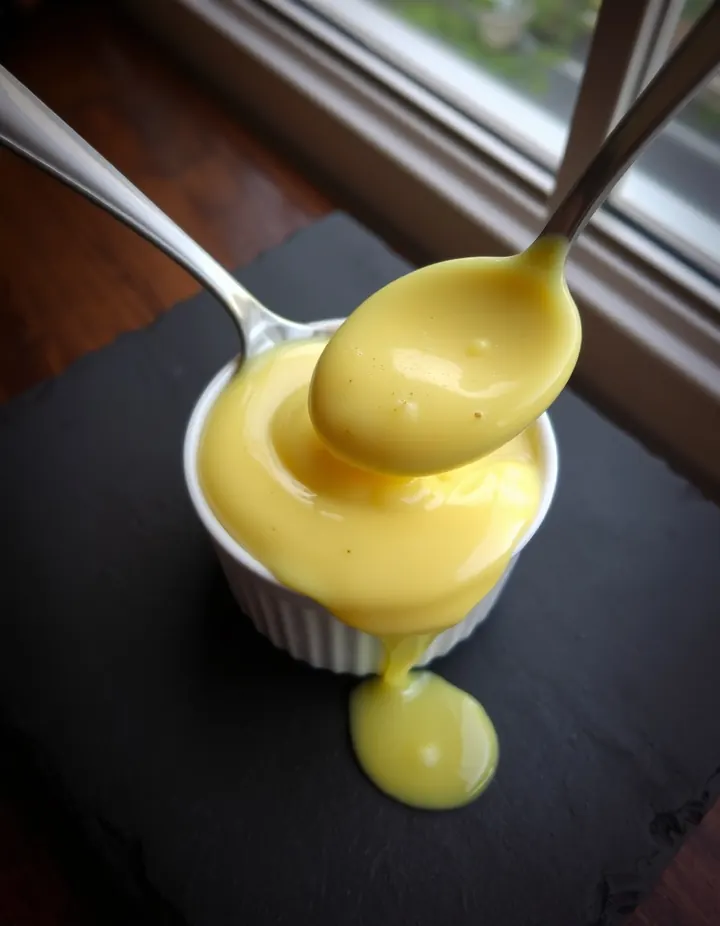 Salad Dressing491 recipes
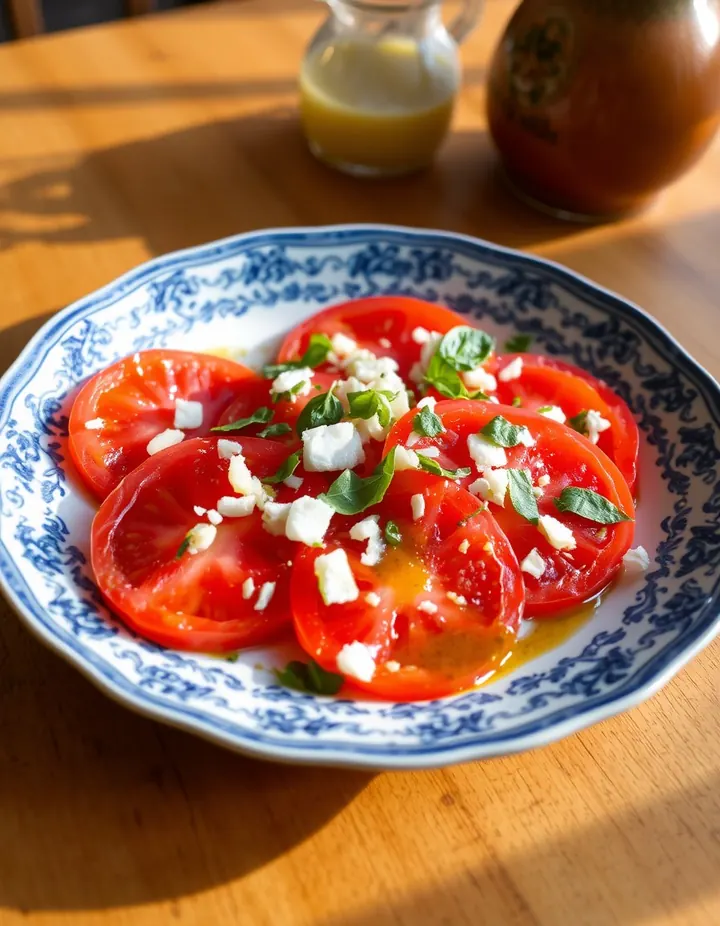 Tomato Salad179 recipes
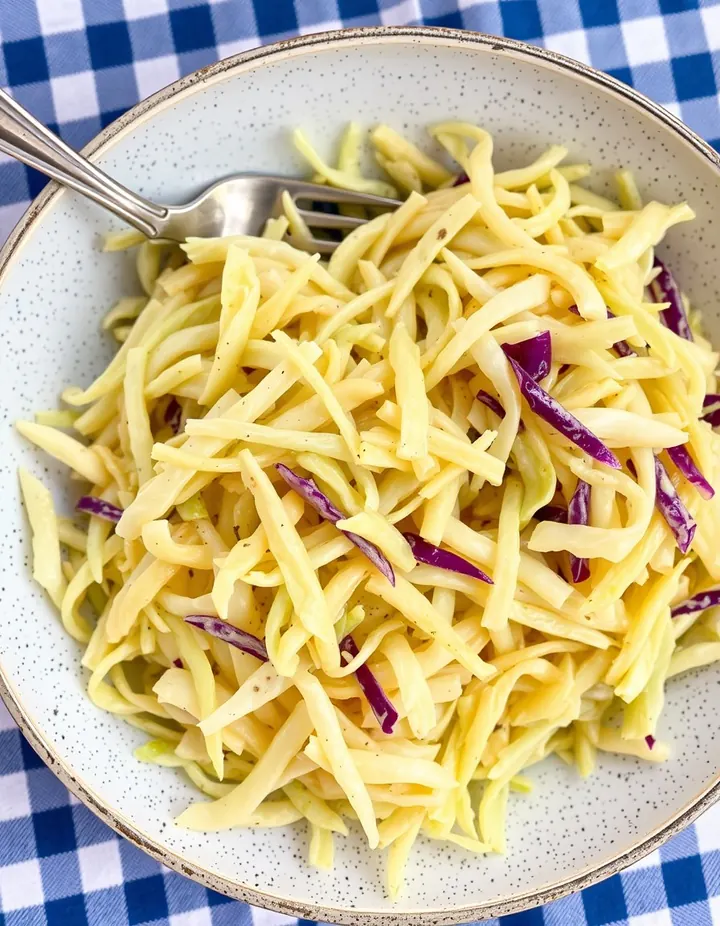 Cold Slaw160 recipes
The free Flavor Lab newsletter: one surprising pairing a week and the molecular reason it works, in 60 seconds. No spam, unsubscribe anytime.
Prefer an account? Create a free account to save pairings and unlock the full chemistry.