Why it works: Milk and butter are a kitchen classic. They rank in the top 7% of all ingredient pairs, and cooks put them together in 81,283 recipes. Both carry (z)-4-heptenal, which smells biscuit, cream. The science ↓
Chicken Pudding
Ingredients
Directions
Cook the chicken
Cut up two young chickens into good-sized pieces.
Put the chicken pieces in a saucepan with just enough water to cover them well.
Boil until quite tender.
Season with salt and pepper.
Let them simmer ten or fifteen minutes longer.
Remove the chicken from the broth and remove all the large bones.
Assemble and bake
Place the meat in a well-buttered pudding dish, season again if necessary, adding a few bits of butter.
Pour over the meat the batter made from eight eggs beaten light, one quart of milk, three tablespoonfuls of melted butter, a teaspoonful of salt, two large teaspoonfuls of baking powder, and enough sifted flour to make a batter like griddle-cakes.
Bake one hour in a moderate oven.
Make the gravy and serve
Make a gravy from the broth that remained from cooking the chicken, adding a tablespoonful of flour stirred into a third of a cup of melted butter.
Let the gravy boil up, adding more water if necessary.
Serve hot in a gravy boat with the pudding.
Nutrition, whole recipe (rough)
What these numbers assume: 7 portions
| Ingredient | Portion assumed | kcal |
|---|---|---|
| Flour | 1 cup (125g) all-purpose | 455 |
| Chicken | 100g cooked | 165 |
| Milk | 1 cup (244ml) whole | 149 |
| Butter | 1 tbsp (14g) | 102 |
| Egg | 1 large egg (50g) | 78 |
| Black Pepper | 1 tsp ground (2.3g) | 6 |
| Salt | 1 tsp (6g) | 0 |
One typical portion per ingredient; the recipe's quantities are not counted. A rough guide only, not for medical or dietary planning.
Transcribed from a scanned cookbook and modernised for today's kitchens. Where the book gave no heat or time, or said "a moderate oven", the temperatures and times here may be modern equivalents rather than the book's own figures. See the original page.
Explore the science
The flavor team
The pairs that carry this dish. Each one is judged two ways: how much their aromas overlap, and how often cooks already put them together.
-
Milk + buttertop 7% of all pairsSmell alikemoderateCooked together81,283 recipes
Shared aroma: (z)-4-heptenal (biscuit, cream).
-
Butter + flourtop 12% of all pairsSmell alikelowCooked together124,287 recipes
Shared aroma: isobutyraldehyde (malty, green).
-
Milk + chickentop 13% of all pairsSmell alikemoderateCooked together4,389 recipes
Shared aroma: 1-hexanal (fruit).
-
Milk + flourtop 14% of all pairsSmell alikelowCooked together78,219 recipes
Shared aroma: isobutyraldehyde (malty, green).
-
Butter + chickentop 15% of all pairsSmell alikemoderateCooked together13,902 recipes
Shared aroma: 2-furfurylthiol (coffee, roasted).
Butter and flour barely smell alike, yet cooks put them together in 124,287 recipes: they work on texture and structure more than aroma.
Ranks compare each pair with 20,000 random ingredient pairs on CompKitchen. How we score pairs
What each ingredient does
- Eggs
- Bind the batter and set into a custard-like structure as the pudding bakes.
- Baking powder
- Releases gas in the batter so the pudding rises and becomes light.
- Milk
- Thins the batter and adds moisture and richness to the pudding.
- Flour
- Thickens the batter and, in the gravy, thickens the broth.
- Butter
- Adds richness and fat, carrying flavor and keeping the pudding tender.
- Chicken
- Provides the main meat, which stays moist when simmered gently before baking.
The step that matters
Let the gravy boil up. Flour needs to reach a boil in liquid to fully thicken the gravy and lose its raw starchy taste; too little heat leaves it thin and pasty.
“What each ingredient does” and “The step that matters” were written by Claude from this recipe’s own method and reviewed in samples by CompKitchen.
You might also like
 Chicken Broth257 recipes
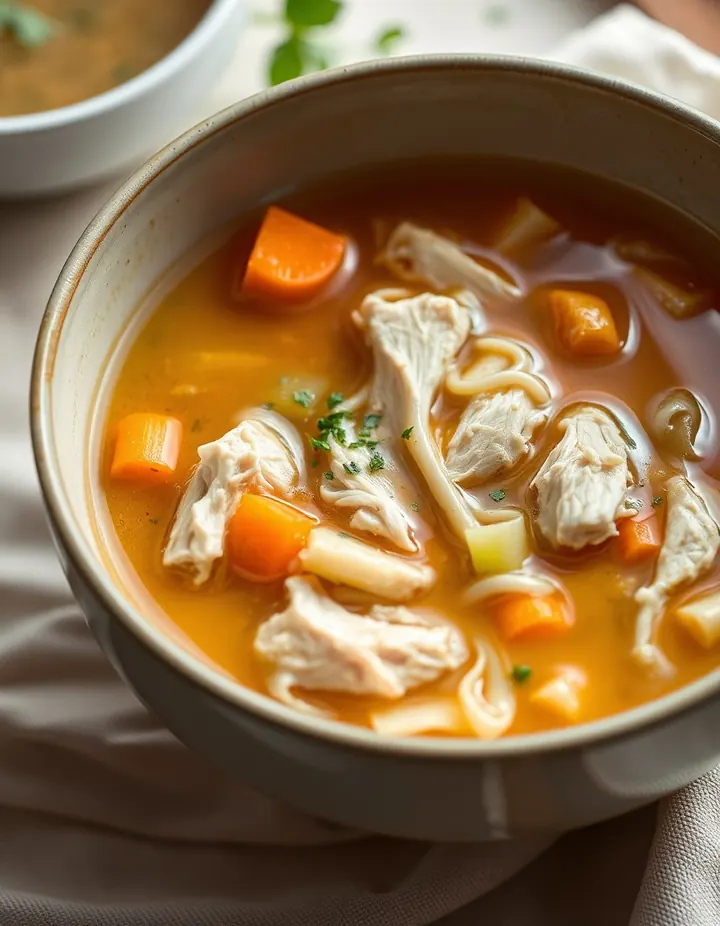 Chicken Soup156 recipes
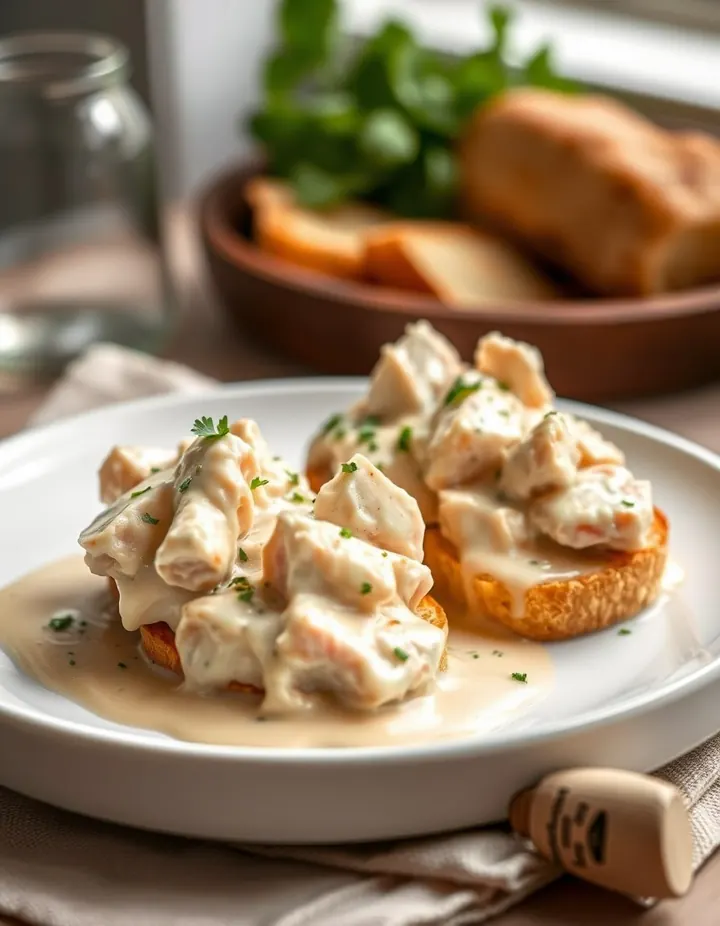 Creamed Chicken89 recipes
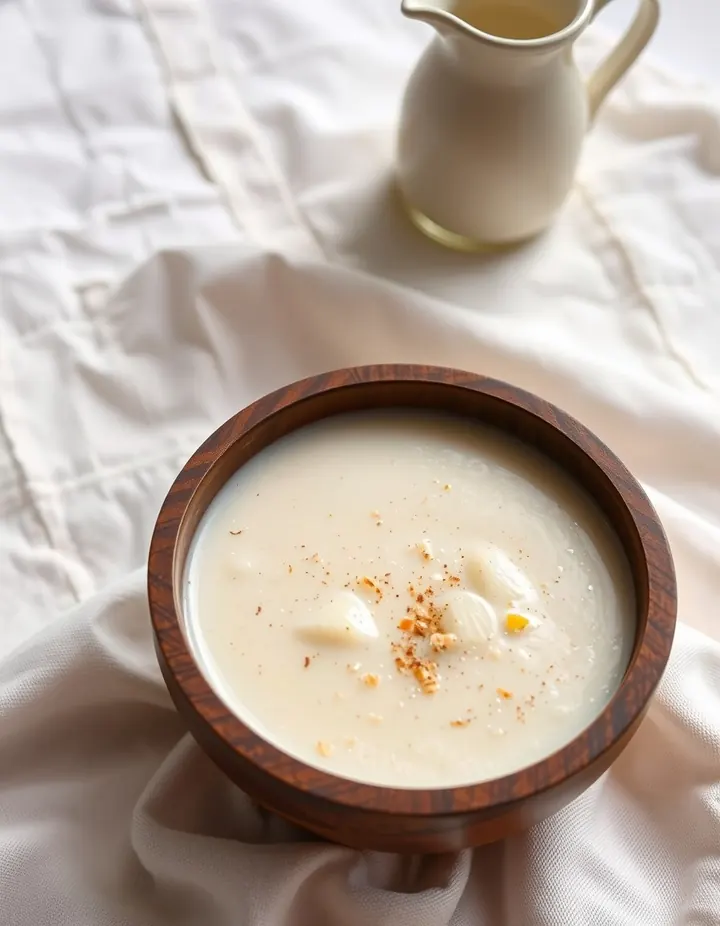 Chicken Panada75 recipes
The free Flavor Lab newsletter: one surprising pairing a week and the molecular reason it works, in 60 seconds. No spam, unsubscribe anytime.
Prefer an account? Create a free account to save pairings and unlock the full chemistry.