Why it works: Tomato and pepper are a kitchen classic. They rank in the top 7% of all ingredient pairs, and cooks put them together in 17,923 recipes. Both carry 2-isopropyl-3-methoxypyrazine, which smells earthy, pea. The science ↓
Calf's-head or Mock-turtle Soup
Ingredients
Directions
Make the soup
Make a brown roux by putting in a saucepan one tablespoonful of butter, let it brown, add two tablespoonfuls of flour, and let that brown.
Then add, slowly at first, one and a half or two quarts of water in which a calf's head has been boiled, white wine instead of vinegar being used in the boiling (see boiled calf's head, page 175).
Add three or four strained tomatoes and simmer for one half hour.
Skim off any fat and season with salt and pepper.
Finish and serve
Add some pieces of boiled calf's head cut in pieces one half inch square, a few egg balls, two or three tablespoonfuls of sherry, and a few very thin slices of lemon.
Nutrition, whole recipe (rough)
Counts 7 of 8 ingredients. The other 1 aren't in our nutrition table and add nothing above, so the real totals are higher.
What these numbers assume: 7 portions
| Ingredient | Portion assumed | kcal |
|---|---|---|
| Flour | 1 cup (125g) all-purpose | 455 |
| Butter | 1 tbsp (14g) | 102 |
| Wine | 2 tbsp cooking wine (30ml) | 25 |
| Tomato | 1 medium (123g) | 22 |
| Black Pepper | 1 tsp ground (2.3g) | 6 |
| Vinegar | 1 tbsp (15ml) distilled | 3 |
| Salt | 1 tsp (6g) | 0 |
| Water | not in our table | 0 |
One typical portion per ingredient; the recipe's quantities are not counted. A rough guide only, not for medical or dietary planning.
Transcribed from a scanned cookbook and modernised for today's kitchens. Where the book gave no heat or time, or said "a moderate oven", the temperatures and times here may be modern equivalents rather than the book's own figures. See the original page.
Explore the science
The flavor team
The pairs that carry this dish. Each one is judged two ways: how much their aromas overlap, and how often cooks already put them together.
-
Tomato + peppertop 7% of all pairsSmell alikemoderateCooked together17,923 recipes
Shared aroma: 2-isopropyl-3-methoxypyrazine (earthy, pea).
-
Sherry + vinegartop 11% of all pairsSmell alikemoderateCooked together660 recipes
Shared aroma: 4-ethyl-2-methoxyphenol (smoky, clove).
-
Butter + flourtop 12% of all pairsSmell alikelowCooked together124,287 recipes
Shared aroma: isobutyraldehyde (malty, green).
-
Butter + sherrytop 14% of all pairsSmell alikemoderateCooked together3,505 recipes
Shared aroma: ethyl octanoate (fruity, wine).
-
Vinegar + peppertop 14% of all pairsSmell alikemoderateCooked together27,814 recipes
Shared aroma: 4'-methylacetophenone (bitter almond).
Butter and flour barely smell alike, yet cooks put them together in 124,287 recipes: they work on texture and structure more than aroma.
Ranks compare each pair with 20,000 random ingredient pairs on CompKitchen. How we score pairs
What each ingredient does
- Butter
- Browned with the flour to form a roux, adding nutty flavour and colour to the base.
- Flour
- Thickens the soup once browned in the butter, giving it body.
- Tomatoes
- Add acidity and colour, and a fresh tang to the broth.
- Sherry
- Adds aromatic depth and a mellow, slightly sweet flavour at the end.
The step that matters
Browning the roux. The butter and flour must brown slowly without burning; scorched flour turns bitter and dark, spoiling the flavour of the whole soup, while properly browned roux gives colour and a toasted, savoury depth.
Swap the tomato
How well each one fits the dish's main ingredients (butter, flour, sherry, vinegar, pepper):
- Capsicumfits better
- Shallotfits better
- Mustardfits better
- Tomatothe original
Fit is the average pairing score against butter, flour, sherry, vinegar, pepper. Candidates are from the same food group and used in at least 100 recipes.
“What each ingredient does” and “The step that matters” were written by Claude from this recipe’s own method and reviewed in samples by CompKitchen.
You might also like
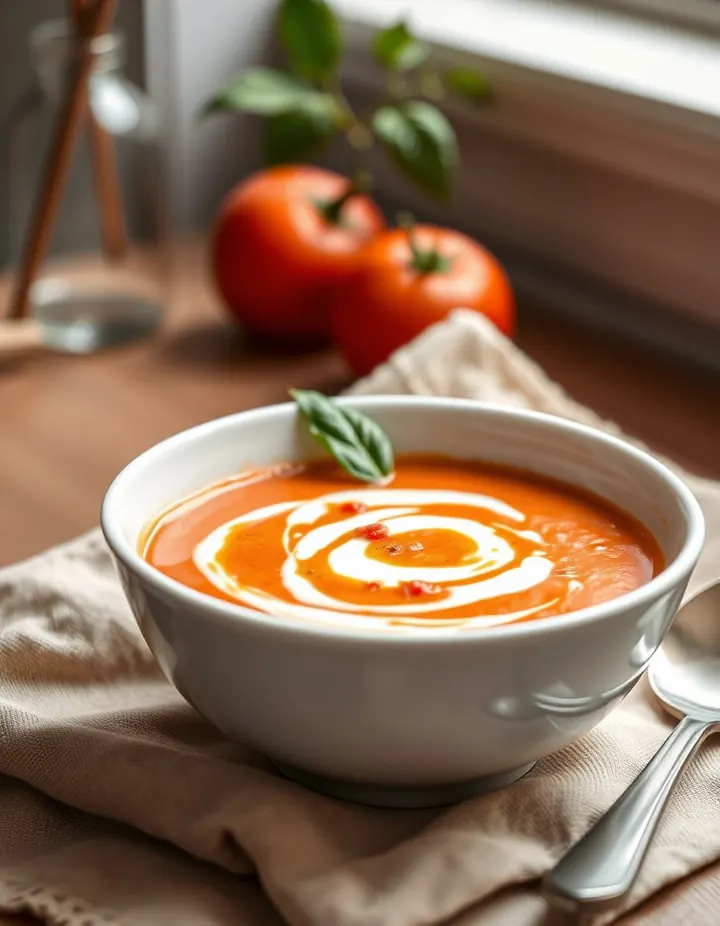 Tomato Bisque11 recipes
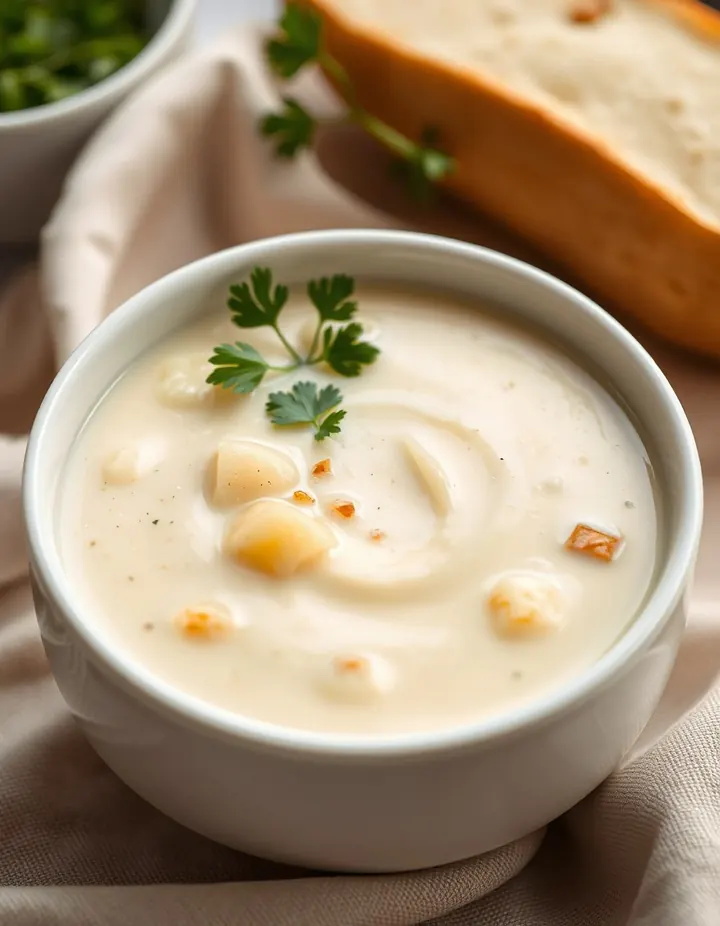 Indian Spiced Potato Soup with Tofu and Spinach448 recipes
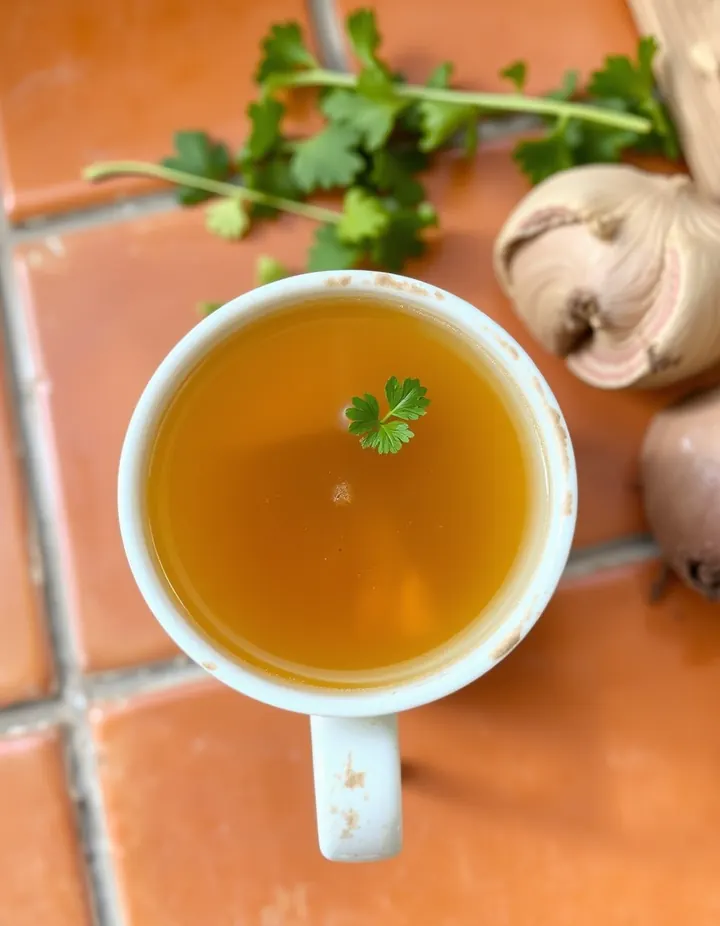 Clear Carrot and Bottle Gourd Soup65 recipes
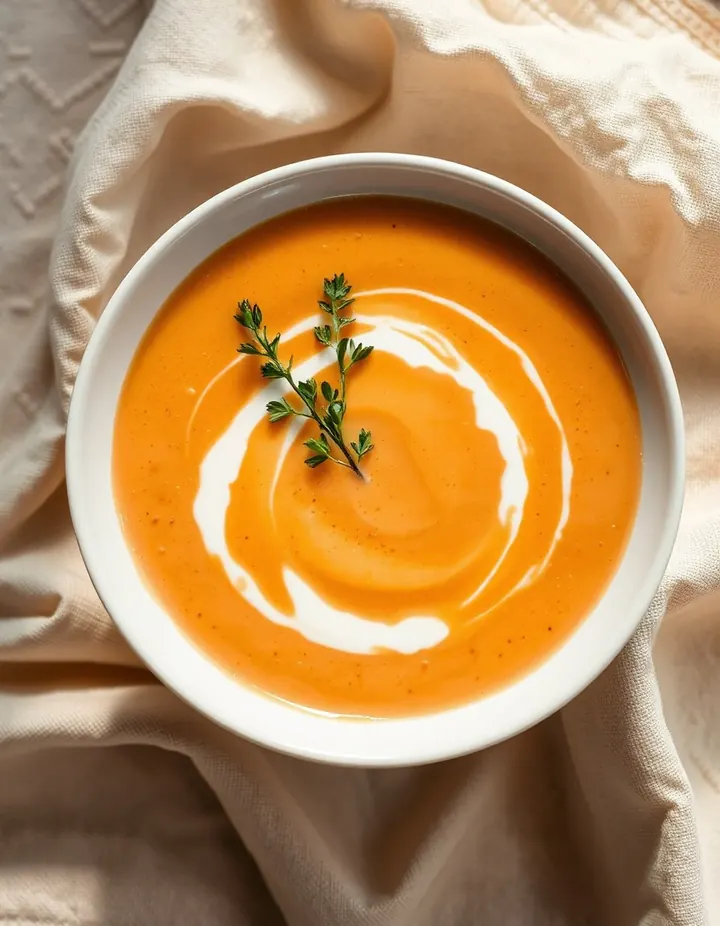 Mock Bisque Soup51 recipes
The free Flavor Lab newsletter: one surprising pairing a week and the molecular reason it works, in 60 seconds. No spam, unsubscribe anytime.
Prefer an account? Create a free account to save pairings and unlock the full chemistry.