Why it works: Crab and meat work together. They rank in the top 8% of all ingredient pairs, and cooks put them together in 448 recipes. Both carry 2,3,5-trimethylpyrazine, which smells cocoa, roasted. The science ↓
Crabs St. Laurent
Ingredients
Directions
Make the sauce
Melt one tablespoon of butter in a saucepan.
Add the flour and cook, but do not brown.
Slowly add the stock, stirring until the mixture is smooth.
Add the cream and cook until thickened.
Add salt, pepper, and cayenne.
Add the crab meat and grated Parmesan cheese; simmer for a few minutes.
Add the white wine.
Assemble and bake
Spread the mixture over buttered toast cut into squares or circles.
Sprinkle additional grated Parmesan cheese and place a small bit of butter on each piece.
Set in the oven for three minutes.
Serve
Serve hot on a napkin garnished with parsley.
Optional: Substitute boiled halibut for crab meat.
Nutrition, whole recipe (rough)
Counts 11 of 12 ingredients. The other 1 aren't in our nutrition table and add nothing above, so the real totals are higher.
What these numbers assume: 11 portions
| Ingredient | Portion assumed | kcal |
|---|---|---|
| Flour | 1 cup (125g) all-purpose | 455 |
| Parmesan Cheese | 1 oz (28g) | 110 |
| Butter | 1 tbsp (14g) | 102 |
| Shrimp | 100g cooked | 99 |
| Crab | 100g cooked | 97 |
| Cream | 1 tbsp (15ml) heavy | 51 |
| Wine | 2 tbsp cooking wine (30ml) | 25 |
| Black Pepper | 1 tsp ground (2.3g) | 6 |
| Cayenne | 1 tsp (1.8g) | 6 |
| Parsley | 1 tbsp chopped fresh (3.8g) | 1 |
| Salt | 1 tsp (6g) | 0 |
| Meat | not in our table | 0 |
One typical portion per ingredient; the recipe's quantities are not counted. A rough guide only, not for medical or dietary planning.
Transcribed from a scanned cookbook and modernised for today's kitchens. Where the book gave no heat or time, or said "a moderate oven", the temperatures and times here may be modern equivalents rather than the book's own figures. See the original page.
Explore the science
The flavor team
The pairs that carry this dish. Each one is judged two ways: how much their aromas overlap, and how often cooks already put them together.
-
Crab + meattop 8% of all pairsSmell alikemoderateCooked together448 recipes
Shared aroma: 2,3,5-trimethylpyrazine (cocoa, roasted).
-
Parmesan cheese + white winetop 8% of all pairsSmell alikemoderateCooked together697 recipes
Shared aroma: ethyl isobutyrate (fruity, ethereal).
-
Butter + creamtop 8% of all pairsSmell alikemoderateCooked together41,516 recipes
Shared aroma: delta-dodecalactone (sweet, creamy).
-
White wine + buttertop 9% of all pairsSmell alikemoderateCooked together5,083 recipes
Shared aroma: ethyl octanoate (fruity, wine).
-
Parmesan cheese + buttertop 9% of all pairsSmell alikemoderateCooked together4,163 recipes
Shared aroma: guaiacol (smoky, sweet).
Ranks compare each pair with 20,000 random ingredient pairs on CompKitchen. How we score pairs
What each ingredient does
- Crab meat
- Provides the main savoury filling and bulk of the topping.
- Flour
- Thickens the butter and stock into a smooth, stable sauce.
- Cream
- Adds richness and body, helping the sauce thicken and turn smooth.
- Grated parmesan cheese
- Adds salty, savoury flavour and browns on top when baked.
- Butter
- Adds fat and flavour, and helps the toast brown and crisp.
- White wine
- Adds acidity and aroma that brightens the rich sauce.
The step that matters
Add the flour without browning it. Flour must be cooked gently in the butter to remove its raw taste and form a roux that thickens smoothly. Browning changes its flavour and thickening power, and adding stock too fast can cause lumps.
“What each ingredient does” and “The step that matters” were written by Claude from this recipe’s own method and reviewed in samples by CompKitchen.
You might also like
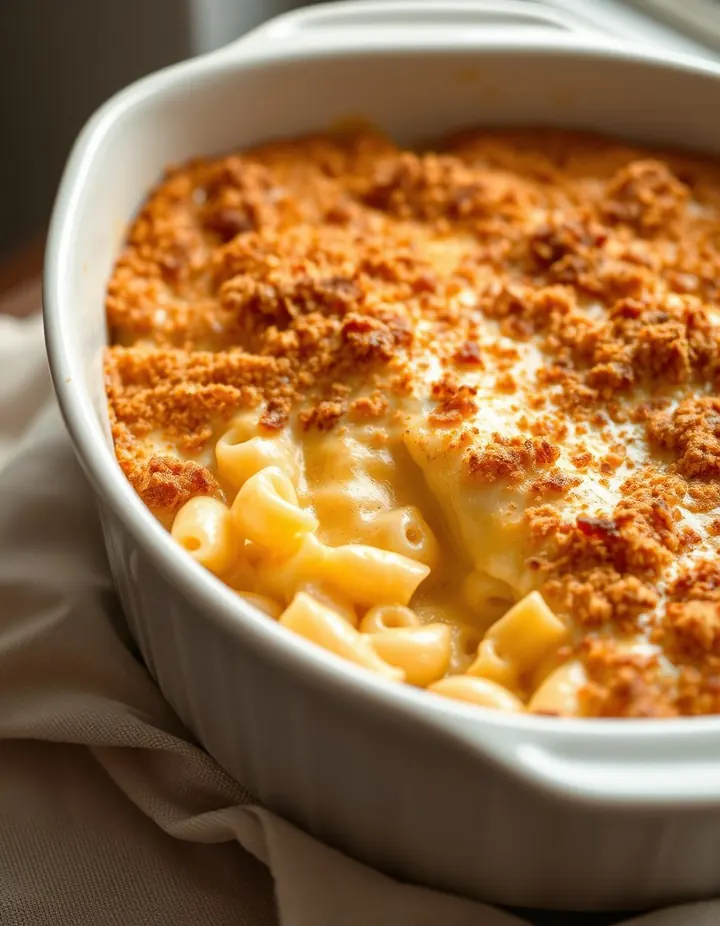 Macaroni and Cheese102 recipes
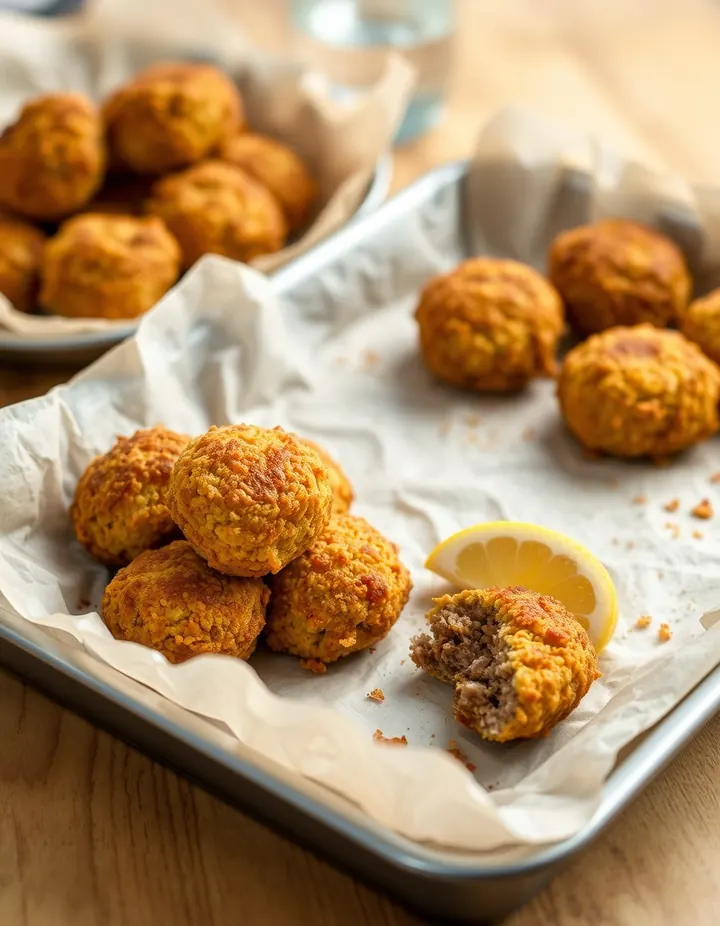 Meat Croquettes52 recipes
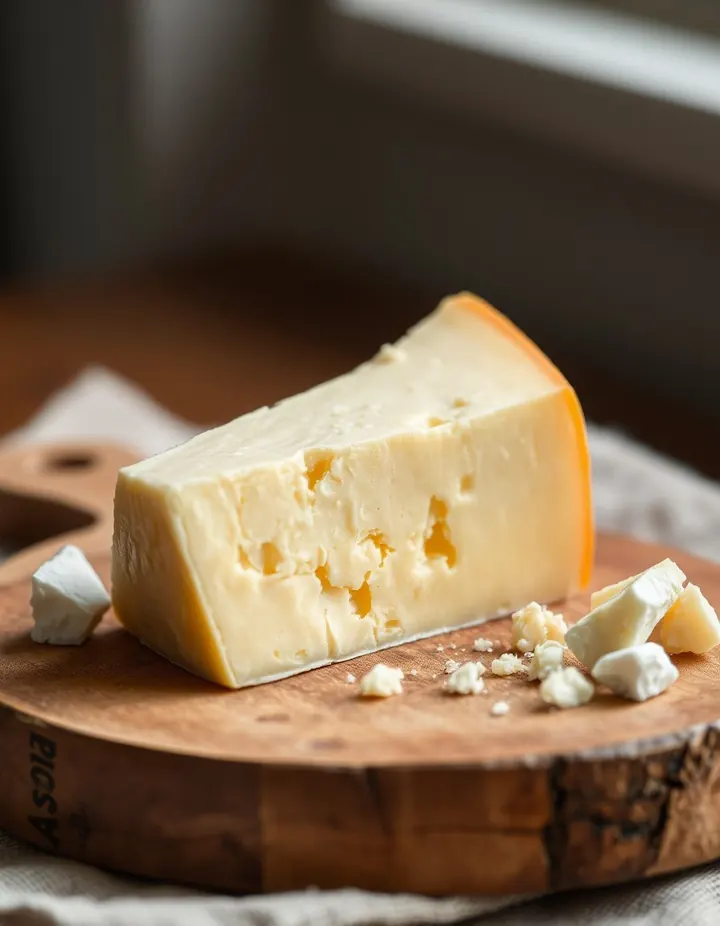 Cheese Making50 recipes
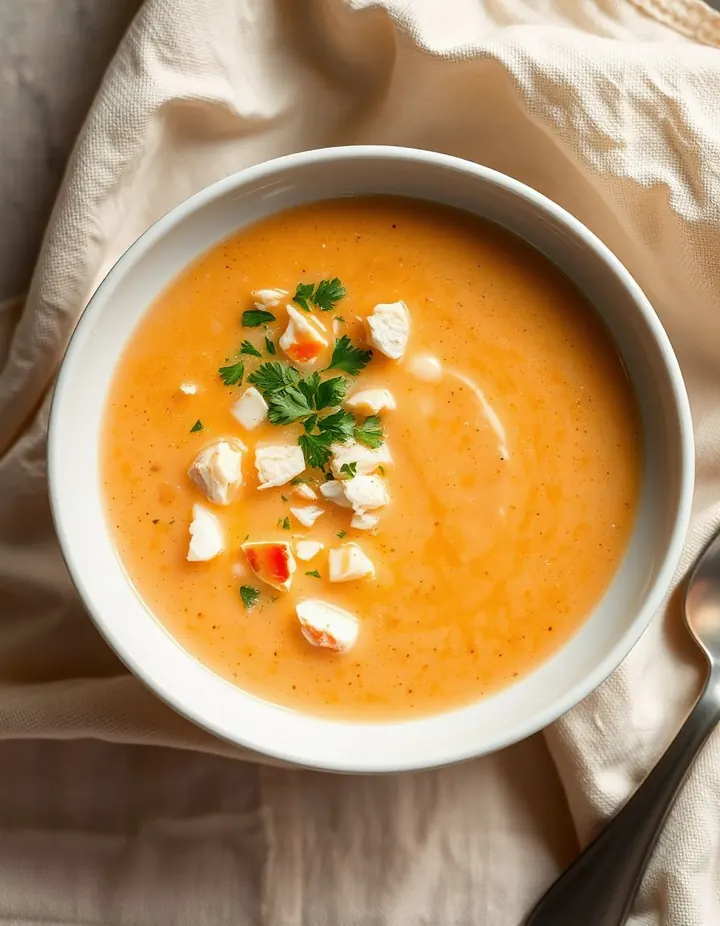 Crab Soup39 recipes
The free Flavor Lab newsletter: one surprising pairing a week and the molecular reason it works, in 60 seconds. No spam, unsubscribe anytime.
Prefer an account? Create a free account to save pairings and unlock the full chemistry.