Why it works: Lemon and pepper match in chemistry and in kitchens. They rank in the top 3% of all ingredient pairs, and cooks put them together in 27,047 recipes. Both carry trans-2-nonenal, which smells cardboard, fatty. The science ↓
Fritter Batter
Ingredients
Directions
2 eggs. 1 tablespoonful of oil. 1 cupful of flour. 1/2 cupful of cold water. 1 saltspoonful of salt. If for sweet fritters, 1 teaspoonful of sugar and 1 tablespoonful of brandy.
For clam or oyster fritters use one tablespoonful of lemon juice or vinegar, salt and pepper to taste, and the liquor of the clams or oysters instead of water.
Stir the salt into the egg-yolks; add slowly the oil, then the brandy and the sugar; the brandy may be omitted if desired, and if so, use two tablespoonfuls of oil instead of one. When well mixed stir in slowly the flour, and then the water, a little at a time. Beat it well and set it aside for two hours (it is better to let it stand longer); when ready to use, stir in the whites of the eggs beaten to a stiff froth. The batter should be very thick and of the consistency to coat completely the article it is intended to cover. If not soft enough add the white of another egg.
Nutrition, whole recipe (rough)
Counts 8 of 10 ingredients. The other 2 aren't in our nutrition table and add nothing above, so the real totals are higher.
What these numbers assume: 8 portions
| Ingredient | Portion assumed | kcal |
|---|---|---|
| Flour | 1 cup (125g) all-purpose | 455 |
| Olive Oil | 1 tbsp (14g) | 119 |
| Egg | 1 large egg (50g) | 78 |
| Sugar | 1 tbsp (12.5g) granulated | 49 |
| Lemon | juice of 1 lemon (48ml) | 12 |
| Black Pepper | 1 tsp ground (2.3g) | 6 |
| Vinegar | 1 tbsp (15ml) distilled | 3 |
| Salt | 1 tsp (6g) | 0 |
| Water | not in our table | 0 |
| Brandy | not in our table | 0 |
One typical portion per ingredient; the recipe's quantities are not counted. A rough guide only, not for medical or dietary planning.
Transcribed from a scanned cookbook and modernised for today's kitchens. Where the book gave no heat or time, or said "a moderate oven", the temperatures and times here may be modern equivalents rather than the book's own figures. See the original page.
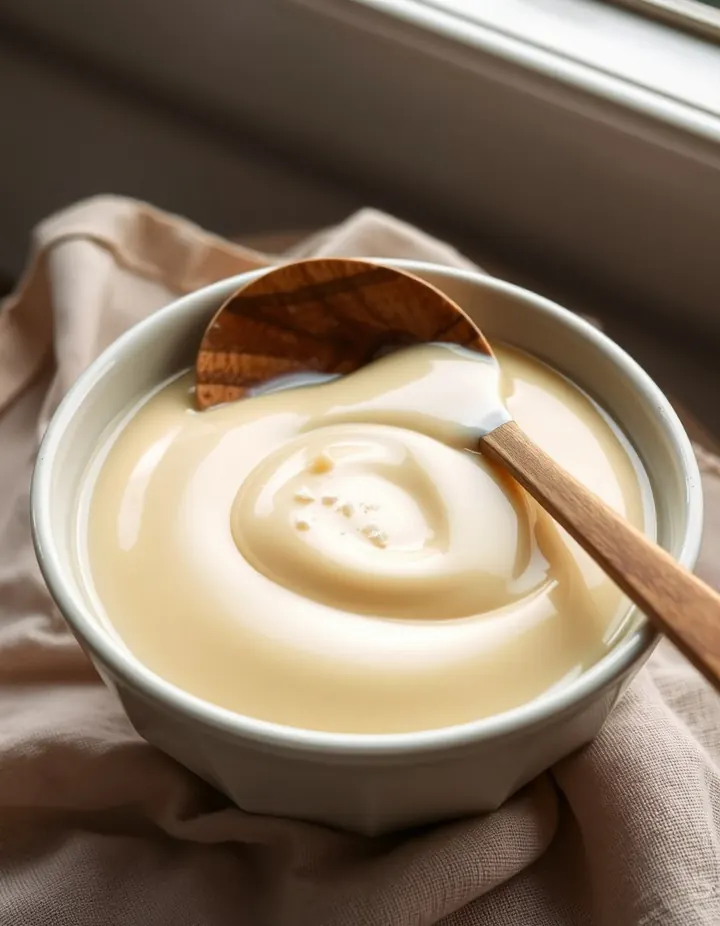
Photo for illustrative purposes only · Contact us to use it
Explore the science
The flavor team
The pairs that carry this dish. Each one is judged two ways: how much their aromas overlap, and how often cooks already put them together.
-
Lemon + peppertop 3% of all pairsSmell alikestrongCooked together27,047 recipes
Shared aroma: trans-2-nonenal (cardboard, fatty).
-
Vinegar + peppertop 14% of all pairsSmell alikemoderateCooked together27,814 recipes
Shared aroma: 4'-methylacetophenone (bitter almond).
-
Flour + sugartop 15% of all pairsSmell alikemoderateCooked together92,116 recipes
Shared aroma: phenylacetaldehyde (hawthorne, honey).
-
Sugar + vinegartop 15% of all pairsSmell alikemoderateCooked together20,806 recipes
Shared aroma: beta-damascenone (apple, rose).
-
Flour + eggtop 15% of all pairsSmell alikelowCooked together106,462 recipes
Shared aroma: isobutyraldehyde (malty, green).
Flour and egg barely smell alike, yet cooks put them together in 106,462 recipes: they work on texture and structure more than aroma.
Ranks compare each pair with 20,000 random ingredient pairs on CompKitchen. How we score pairs
Swap the lemon
How well each one fits the dish's main ingredients (flour, sugar, brandy, egg, vinegar, pepper):
- Raisinfits about as well
- Lemonthe original
- Figfits about as well
- Plumfits about as well
Fit is the average pairing score against flour, sugar, brandy, egg, vinegar, pepper. Candidates are from the same food group and used in at least 100 recipes.
You might also like
 Lemon Sauce236 recipes
 Tomato Soup526 recipes
 Brown Bread461 recipes
 Mutton Broth292 recipes
The free Flavor Lab newsletter: one surprising pairing a week and the molecular reason it works, in 60 seconds. No spam, unsubscribe anytime.
Prefer an account? Create a free account to save pairings and unlock the full chemistry.