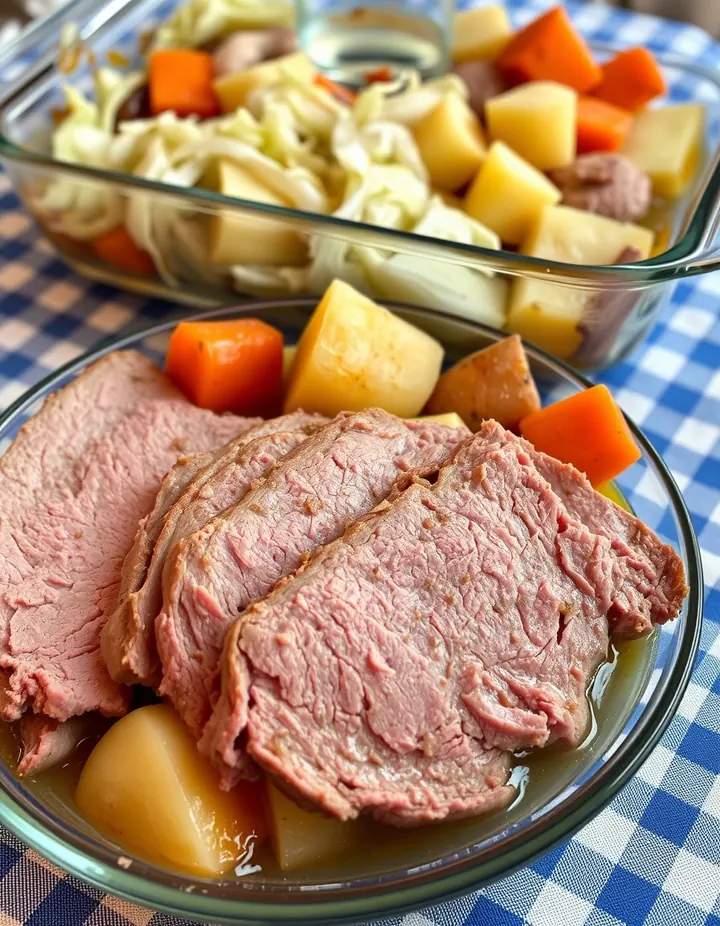
Why it works: Pork and beef match in chemistry and in kitchens. They rank in the top 1% of all ingredient pairs, and cooks put them together in 5,690 recipes. Both carry 12-methyltridecanal, which smells tallowy, beefy. The science ↓
Corned Beef
Ingredients
Directions
Corned beef is generally boiled. Soak the corned beef in cold water for some time, according to how salt it is.
Set it on the fire, covered with cold water, and boil gently till done.
_With Cabbage._--Blanch the cabbage for about five minutes, and drain. Then put it to cook with the corned beef when the latter is about half done; serve both on the same dish, or separately, according to taste.
Corned beef, when boiled as above, without cabbage, can be served and decorated, in every way, like boiled beef. It certainly makes sightly as well as good dishes for a family dinner.
A piece of corned beef, surrounded with a garniture as we have described above, decorated with skewers, is very often served as a _releve_ at an extra dinner.
_Cold Corned Beef._--A whole piece, or part of it, may be served _en Bellevue_, the same as a _fillet en Bellevue_; it is also excellent.
Clean and blanch it for about ten minutes--till the white skin can be easily removed. After ten minutes boiling, try if it comes off; if not, boil a little longer, then skin it well.
_To boil._--When skinned, put it in your soup-kettle with the beef, etc., to make broth, and leave it till done. When boiled, the tongue may be served and decorated exactly the same as boiled beef, in every way.
_Stewed._--Cut square fillets of bacon, which dredge in a mixture of chopped parsley, cives, salt, pepper, and a little allspice; lard the tongue with the fillets. Put in a crockery stewpan two ounces of bacon cut in dice, four sprigs of parsley, two of thyme, one of sweet basil, two bay-leaves, a clove of garlic, two cloves, two carrots cut in pieces, four small onions, salt, and pepper; lay the tongue on the whole, wet with half a glass of white wine and a glass of broth; set on a moderate fire, and simmer about five hours--keep it well covered; then put the tongue on a dish, strain the sauce on it, and serve. It is a delicious dish.
It may also be served with vegetables around, or with tomato-sauce.
_Another way._--When prepared as above directed, put it on the fire with the same seasonings as the preceding one; simmer four hours and take from the fire; put the tongue on a dish and let it cool, then place it on the spit before a good fire, and finish the cooking; serve it warm with an oil, or _piquante_ sauce.
If any is left of either of the two, put in a pan the next day, wet with a little broth, set on the fire, and when warm serve it on a _puree_; do not allow it to boil.
Soak it in lukewarm water and clean well, so as to have it free from blood, fibres, and thin skin; then soak it again in cold water for twelve hours in winter and six in summer. Put in a crockery stewpan one ounce of bacon cut in slices, one carrot cut in pieces, two sprigs of parsley, one of thyme, a bay-leaf, a clove, four small onions cut in slices, a teaspoonful of chopped cives, salt, pepper, a pint of white wine, as much of broth, and then the brain; set on a moderate fire for half an hour and take it off; dish the brain and place it in a warm place; then strain the sauce, put it back on the fire with the brain in it, add two or three mushrooms cut in pieces, leave on the fire from ten to fifteen minutes, and serve it, parted in two, with fried parsley around.
_Another way._--When the brain is cleaned and prepared as above, cut it in eight pieces. Mix well together a little flour, chopped parsley and cives, also a pinch of allspice; roll the pieces of brain in it, so as to allow the mixture to adhere to them; have some butter in a frying-pan on the fire, and when hot put the pieces of brain in it; fry gently, and serve with fried parsley around.
Soak it in lukewarm water for two hours, free it from blood and skin, drain and wipe dry; then stuff it with sausage-meat, to which you have added three or four onions chopped fine, put it in a rather quick oven, or on the spit before a good fire (if on the spit, envelop it with buttered paper), basting from time to time; it takes about an hour and a half to cook a middling-sized one; serve it with a _vinaigrette_, _piquante_, _poivrade_, or _ravigote_ sauce.
It may also be fried with butter, and cut in slices, but it is not as good as in the above way; it generally becomes hard in frying.
First split the kidneys in four pieces, trim off as carefully as possible the sinews and fat that are inside, then cut in small pieces.
_Saute._--The quicker this is done the better the kidney. For a whole one put about two ounces of butter in a frying-pan and set it on a very sharp fire, toss it round so as to melt the butter as fast as possible, but without allowing it to blacken; as soon as melted, turn the cut kidney in, stir now and then with a wooden spoon for about three minutes, then add a tablespoonful of flour, stir again the same as before for about one minute, when add a gill of white wine and about one of broth; stir again now and then till the kidney is rather underdone, and serve immediately.
If the kidney is allowed to boil till perfectly done, it will very seldom be tender.
It may be done with water instead of wine and broth; in that case, add a few drops of lemon-juice just before serving it.
Prepare and serve it also as calf's-kidney, in every way as directed for the same.
Cut the liver in slices a quarter of an inch in thickness, sprinkle on them salt and pepper, place them on a gridiron, and set on a sharp fire; turn over only once, and serve rather underdone, with butter and chopped parsley, kneaded together and spread between the slices.
A few drops of lemon-juice may be added.
_Another way._--When the liver is cut in slices, as above, put a piece of butter in a frying-pan on the fire, and when melted, lay the slices in; turn over only once, then serve, with salt, pepper, vinegar, and chopped parsley.
Cut the tail at the joint, so as to make as many pieces as there are joints; throw the pieces in boiling water for fifteen minutes, and drain them. When cold and dry, put them in a saucepan with a bay-leaf, two onions, with a clove stuck in each, two sprigs of parsley, and one of thyme, a clove of garlic, salt, pepper, half a wine-glass of white wine, and a few thin slices of salt pork; cover with broth or water, and set on a moderate fire for two hours. Dish the pieces, strain the sauce on them, and serve with a garniture of cabbage, or with any _puree_.
_How to clean and prepare._--Scrape and wash it well several times in boiling water, changing the water every time, then put in very cold water for about twelve hours, changing the water two or three times; place it in a pan, cover it with cold water; season with parsley, cives, onions, one or two cloves of garlic, cloves, salt, and pepper; boil gently five hours, take out and drain.
In case the water should boil away, add more.
You may save all the trouble of cleaning and preparing, by buying it ready prepared, as it is generally sold in cities.
_Broiled._--When prepared, dip it in lukewarm butter, roll in bread-crumbs, place on a gridiron, and set it on a moderate fire; turn over as many times as is necessary to broil it well, and serve with a _vinaigrette_, _piquante_, or Tartar sauce; also with a tomato-sauce.
_Stewed._--Put in a stewpan two ounces of salt pork, cut in dice, three carrots cut in slices, eight small onions, four cloves, two bay-leaves, two cloves of garlic, a piece of nutmeg, four sprigs of parsley, two of thyme, a dozen stalks of cives, six pepper-corns, the fourth part of an ox-foot cut in four pieces, salt, pepper, about two ounces of ham cut in dice, then three pounds of double tripe on the whole; spread two ounces of fat bacon cut in thin slices on the top; wet with half white wine and half water, or water only if you choose; put the cover on, and if not air-tight, put some paste around; set in a slow oven for six hours, then take the tripe out, strain the sauce, skim off the fat when cool, then put the sauce and tripe again in your pan, warm well, and serve in crockery plates or bowls placed on chafing-dishes, as it is necessary to keep it warm while eating. It is good with water only, but better with half wine. This is also called _a la mode de Caen_.
_In Poulette._--When cleaned and prepared as directed, cut one pound of tripe in strips about one and a half inches broad, then cut again contrariwise, so as to make small fillets. Put one ounce of butter in a saucepan with half a tablespoonful of flour, and mix cold; add two gills of water, mix again, set on the fire, stir now and then, give one boil, put the tripe in, salt and pepper to taste; boil two minutes and dish the whole; put a teaspoonful of chopped parsley all over, and serve hot.
_Aux Fines Herbes._--Broil the tripe, and serve it with sauce _fines herbes_.
Tripe may be bought pickled; it is then served at breakfast and lunch.
Nutrition, whole recipe (rough)
Counts 17 of 18 ingredients. The other 1 aren't in our nutrition table and add nothing above, so the real totals are higher.
What these numbers assume: 17 portions
| Ingredient | Portion assumed | kcal |
|---|---|---|
| Flour | 1 cup (125g) all-purpose | 455 |
| Beef | 100g cooked | 250 |
| Pork | 100g cooked | 242 |
| Butter | 1 tbsp (14g) | 102 |
| Onion | 1 medium (110g) | 44 |
| Bacon | 1 slice cooked (8g) | 43 |
| Wine | 2 tbsp cooking wine (30ml) | 25 |
| Carrot | 1 medium (61g) | 25 |
| Mushroom | 1/2 cup sliced (35g) | 15 |
| Nutmeg | 1 tsp ground (2.2g) | 12 |
| Clove | 1 tsp ground (2g) | 7 |
| Black Pepper | 1 tsp ground (2.3g) | 6 |
| Allspice | 1 tsp ground (1.9g) | 5 |
| Garlic | 1 clove (3g) | 4 |
| Thyme | 1 tsp dried (1.4g) | 4 |
| Parsley | 1 tbsp chopped fresh (3.8g) | 1 |
| Salt | 1 tsp (6g) | 0 |
| Water | not in our table | 0 |
One typical portion per ingredient; the recipe's quantities are not counted. A rough guide only, not for medical or dietary planning.
Transcribed from a scanned cookbook and modernised for today's kitchens. Where the book gave no heat or time, or said "a moderate oven", the temperatures and times here may be modern equivalents rather than the book's own figures. See the original page.
Photo for illustrative purposes only · Contact us to use it
Explore the science
The flavor team
The pairs that carry this dish. Each one is judged two ways: how much their aromas overlap, and how often cooks already put them together.
-
Pork + beeftop 1% of all pairsSmell alikestrongCooked together5,690 recipes
Shared aroma: 12-methyltridecanal (tallowy, beefy).
-
Parsley + garlictop 4% of all pairsSmell alikestrongCooked together9,308 recipes
Shared aroma: beta-phellandrene (minty, terpene).
-
Parsley + clovetop 6% of all pairsSmell alikestrongCooked together6,768 recipes
Shared aroma: cuminaldehyde (Spicy, cumin).
-
Butter + white winetop 9% of all pairsSmell alikemoderateCooked together5,083 recipes
Shared aroma: ethyl octanoate (fruity, wine).
-
Clove + garlictop 10% of all pairsSmell alikemoderateCooked together11,368 recipes
Shared aroma: linalool (floral, citrus).
Ranks compare each pair with 20,000 random ingredient pairs on CompKitchen. How we score pairs
Swap the clove
How well each one fits the dish's main ingredients (parsley, butter, garlic, pork, ham, beef, white wine):
- Thymefits better
- Marjoramfits better
- Pepperfits better
- Clovethe original
Fit is the average pairing score against parsley, butter, garlic, pork, ham, beef, white wine. Candidates are from the same food group and used in at least 100 recipes.
You might also like
 Roast Beef211 recipes
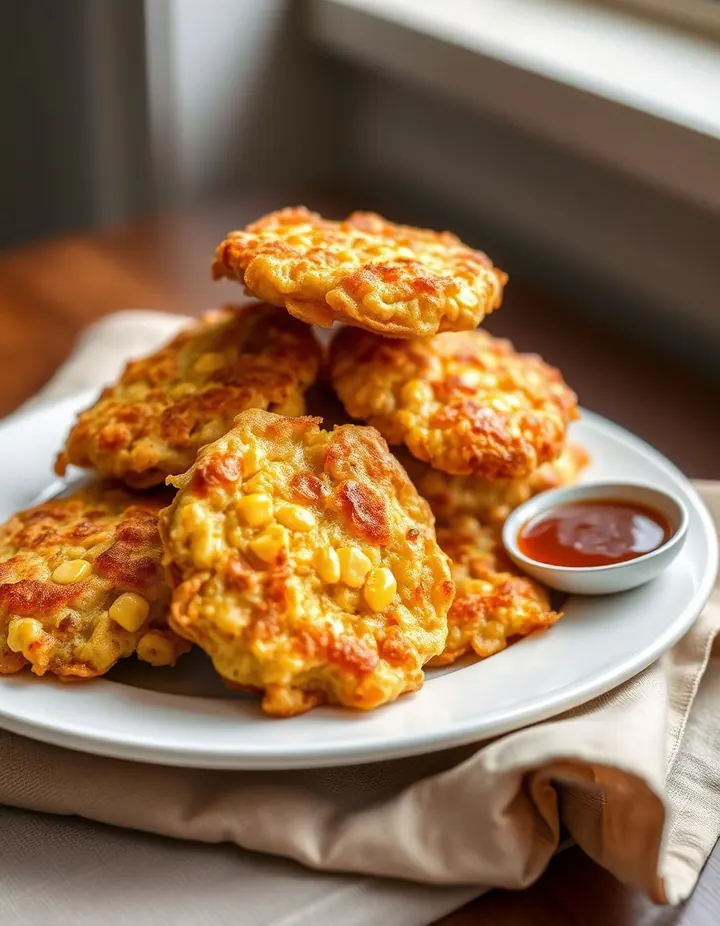 Corn Fritters203 recipes
 Beef Loaf175 recipes
 Carrot Soup134 recipes
The free Flavor Lab newsletter: one surprising pairing a week and the molecular reason it works, in 60 seconds. No spam, unsubscribe anytime.
Prefer an account? Create a free account to save pairings and unlock the full chemistry.