Why it works: Cheese and flour are a kitchen classic. They rank in the top 29% of all ingredient pairs, and cooks put them together in 4,860 recipes. Both carry isobutyraldehyde, which smells malty, green. The science ↓
3. Uses of Sour Milk.
Ingredients
Directions
Do not throw away any sour milk that is clean and not stale. Milk that has soured enough to set, is a delicious dessert, with cream and sugar. The acid is very pleasant, being the same as that of buttermilk. Sour milk is better for griddlecakes and muffins than sweet milk. (See Chapter XI.) Another excellent use for sour milk is to make it into cottage cheese. (See below.)
Matzoon= and other similar preparations are essentially soured milks, prepared under controlled conditions. These preparations are the common form of milk in certain parts of the Orient, where milk is never used sweet.
Kumyss= is milk slightly soured and fermented with one species of yeast. This is a Russian method. These preparations are excellent for invalids and exhausted people, for they can sometimes be assimilated because of the fine curds when sweet milk cannot.
Condensed milk= is a practical method of preserving milk. The milk is evaporated under pressure at a high temperature in apparatus constructed for the purpose. Cane sugar or glucose is sometimes added. A new patent process condenses the milk at low temperature, preserving it for a short period, as compared with the condensed milk in tins, but it keeps well for several days, and bears transportation. Condensed milk may be used in cooking, when clean fresh milk is not available. The unsweetened kinds are most useful, but, like pasteurized milk, must be treated with care after the cans are opened.
Cheese.=——Cheese is made from the curd of milk, and contains the most nutritive parts of the milk in highly concentrated form. In the process of manufacture, the milk is first curdled by rennet, and the whey strained out. The curds after preliminary treatment, varying according to the style of cheese to be made, are finally pressed together very slowly in a cheese press, which is screwed down more tightly as the cheese becomes dryer. The cheeses are then covered with cheesecloth and “ripened” slowly, the ripening process giving characteristic consistency and flavor. This ripening is due to the action of bacteria and molds. (See page 97.) Foreign varieties of cheese, made originally in some one locality, have marked colors, quality, and flavors, as Brie, Camembert, Roquefort, and the Swiss cheeses. Parmesan is an Italian cheese, excellent with macaroni and spaghetti.
_American cheeses_ vary in color, in strength of flavor, in creaminess, and in degree of hardness. Much the greater part is, however, of the general type known as “American cheddar” or “standard factory” cheese.
_Club cheese_ is an American cheese of good quality, put up in small jars. It is a soft cheese, excellent to serve with crackers, but is too expensive for common use.
_Cottage cheese_ is a home product made from sour milk, and used at once.
Composition and nutritive value.=——Cheese is high in protein, and usually in fat. (See Fig. 40.) Note the small amount of water, which makes cheese a very concentrated food. The protein content makes it a meat substitute, for those with whom cheese does not disagree. Being a dense as well as concentrated form of food, it should be eaten in small quantities, and in combination with other food materials in such a way that it will become finely divided, or it will not be easily digested. The ash content is high, the most valuable of the ash constituents of the milk being retained in the cheese.
The cost of cheese.=——The foreign cheeses are expensive, but American cheeses may be classed among the moderate priced foods and they compare favorably with other protein foods.
Cheese costs more than beans, and less than most cuts of meat. A good American cheese costs about twenty-five cents per pound. Taking account of composition as well as cost per pound, we find that a given amount of money buys about twice as much food value when spent for cheese as it would if spent for beef. See Fig. 45.
No. KIND WEIGHT OF PORTION, OUNCES
1. Swiss 0.8 2. Cream 0.9 3. American 0.8 4. Roquefort 1.0 5. Parmesan 1.9 6. Cottage 3.2
_A. Fowler, Photographer._]
Care of cheese in the pantry.=——Cheese should be kept dry and covered, that its odor may not be noticeable. Soft cheese should be kept in the ice box. The receptacle for cheese should be thoroughly sterilized before each new purchase is put away.
GENERAL METHODS AND RECIPES
1. Uncooked cheese.=——Serve a cream cheese with a salad of lettuce, and the imported cheeses with crackers and fruit for dessert. American cheese may be thinly sliced and used in sandwiches. A small piece of cheese with apple pie or pudding is an old-fashioned combination that is always agreeable, but sometimes difficult of digestion.
Nutrition, whole recipe (rough)
What these numbers assume: 2 portions
| Ingredient | Portion assumed | kcal |
|---|---|---|
| Flour | 1 cup (125g) all-purpose | 455 |
| Cheese | 1 oz (28g) cheddar | 113 |
One typical portion per ingredient; the recipe's quantities are not counted. A rough guide only, not for medical or dietary planning.
Transcribed from a scanned cookbook and modernised for today's kitchens. Where the book gave no heat or time, or said "a moderate oven", the temperatures and times here may be modern equivalents rather than the book's own figures. See the original page.
Explore the science
The flavor team
The pairs that carry this dish. Each one is judged two ways: how much their aromas overlap, and how often cooks already put them together.
-
Cheese + flourtop 29% of all pairsSmell alikelowCooked together4,860 recipes
Shared aroma: isobutyraldehyde (malty, green).
Ranks compare each pair with 20,000 random ingredient pairs on CompKitchen. How we score pairs
You might also like
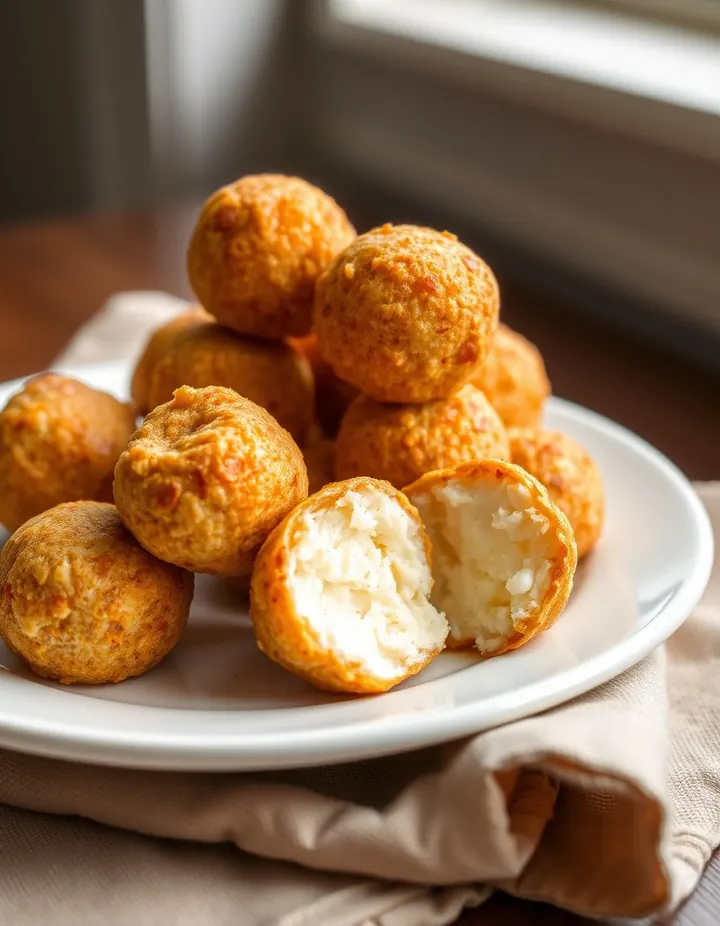 Cheese Balls97 recipes
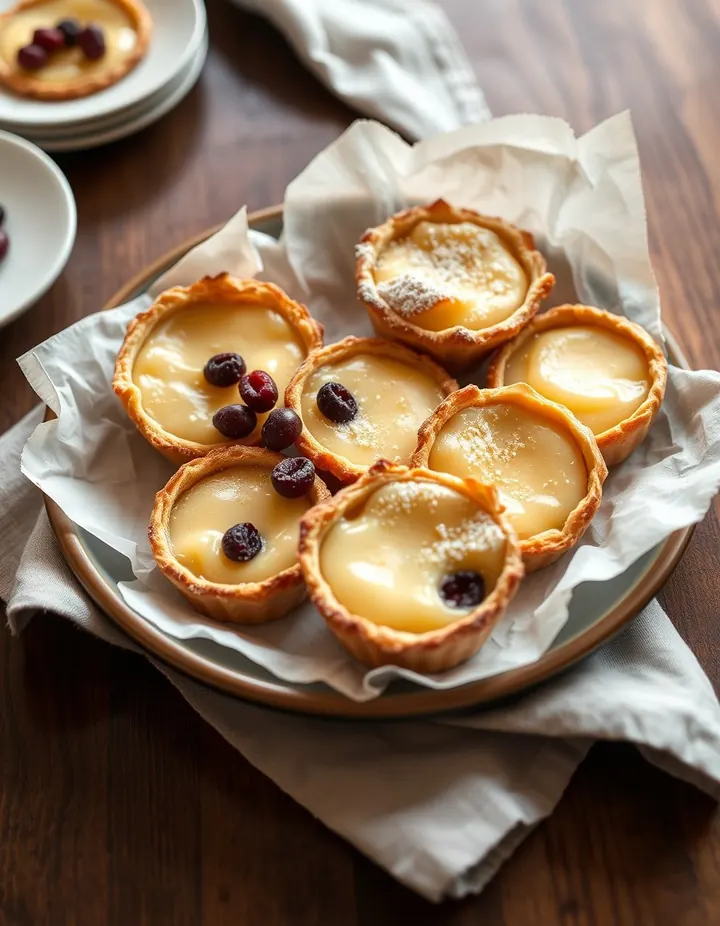 Cheese Cake55 recipes
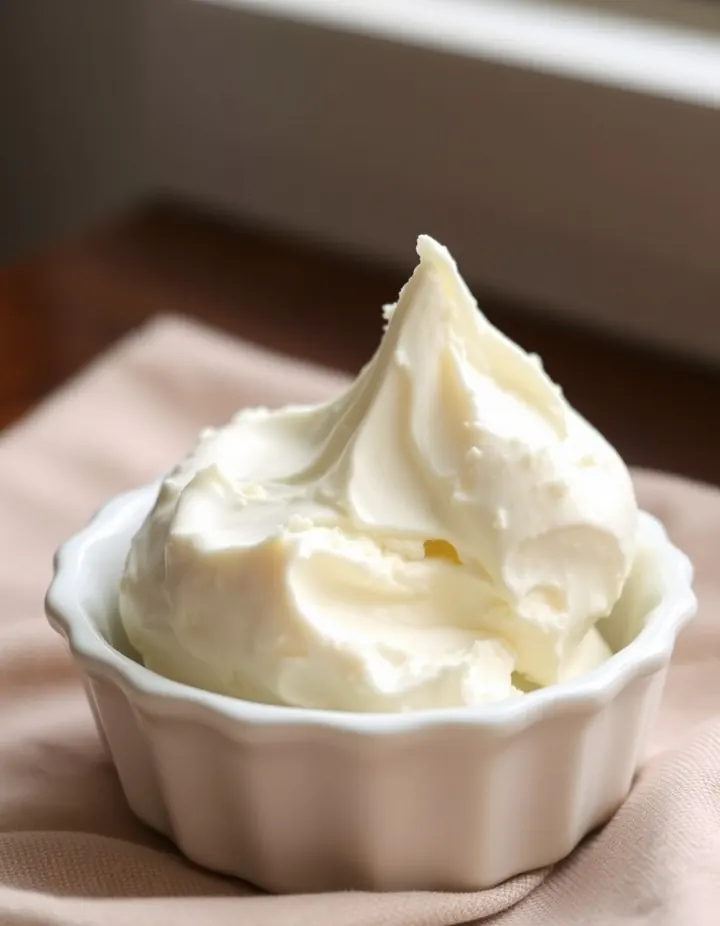 Cream Cheese46 recipes
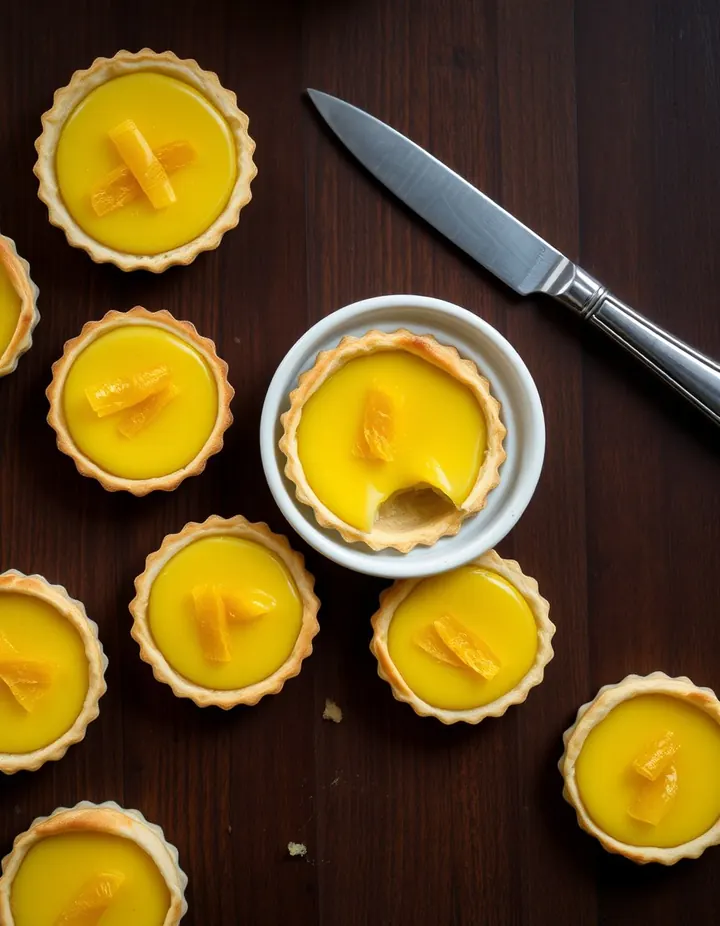 Lemon Pie37 recipes
The free Flavor Lab newsletter: one surprising pairing a week and the molecular reason it works, in 60 seconds. No spam, unsubscribe anytime.
Prefer an account? Create a free account to save pairings and unlock the full chemistry.