Why it works: Flour and sugar are a kitchen classic. They rank in the top 15% of all ingredient pairs, and cooks put them together in 92,116 recipes. Both carry phenylacetaldehyde, which smells hawthorne, honey. The science ↓
Orange Custard Pie
Ingredients
Directions
Make the filling
Use rind of 1 orange and juice of 2 oranges, 4 eggs, 4 tablespoons sugar, 1 pint rich milk.
Leave out 2 egg whites for meringue.
Mix flour, salt, and sugar; put into oiled saucepan; pour boiling milk over; stir until smooth; boil.
Add yolks of eggs; just heat; add vanilla.
Add coconut just before putting filling into crust, reserving enough to sprinkle the top of the meringue before baking.
Assemble and finish
Turn into baked granella or pastry crust.
Do not brown the meringue; just heat it until it puffs up and possibly tints the tips of the coconut.
Use chopped hickory or other nuts in place of coconut in Cocoanut Cream Pie.
Nutrition, whole recipe (rough)
Counts 5 of 6 ingredients. The other 1 aren't in our nutrition table and add nothing above, so the real totals are higher.
What these numbers assume: 5 portions
| Ingredient | Portion assumed | kcal |
|---|---|---|
| Flour | 1 cup (125g) all-purpose | 455 |
| Egg | 1 large egg (50g) | 78 |
| Orange | 1 medium (131g) | 62 |
| Sugar | 1 tbsp (12.5g) granulated | 49 |
| Salt | 1 tsp (6g) | 0 |
| Pie | not in our table | 0 |
One typical portion per ingredient; the recipe's quantities are not counted. A rough guide only, not for medical or dietary planning.
Transcribed from a scanned cookbook and modernised for today's kitchens. Where the book gave no heat or time, or said "a moderate oven", the temperatures and times here may be modern equivalents rather than the book's own figures. See the original page.
Explore the science
The flavor team
The pairs that carry this dish. Each one is judged two ways: how much their aromas overlap, and how often cooks already put them together.
-
Flour + sugartop 15% of all pairsSmell alikemoderateCooked together92,116 recipes
Shared aroma: phenylacetaldehyde (hawthorne, honey).
-
Flour + eggtop 15% of all pairsSmell alikelowCooked together106,462 recipes
Shared aroma: isobutyraldehyde (malty, green).
-
Sugar + orangetop 20% of all pairsSmell alikelowCooked together19,212 recipes
Shared aroma: beta-damascenone (apple, rose).
-
Sugar + eggtop 21% of all pairsSmell alikemoderateCooked together122,807 recipes
Shared aroma: 2-nonenal (fatty, green).
-
Flour + orangetop 21% of all pairsSmell alikemoderateCooked together6,821 recipes
Shared aroma: isobutyraldehyde (malty, green).
Flour and egg barely smell alike, yet cooks put them together in 106,462 recipes: they work on texture and structure more than aroma.
Ranks compare each pair with 20,000 random ingredient pairs on CompKitchen. How we score pairs
What each ingredient does
- Eggs
- Yolks thicken the custard and enrich it, while whites form the meringue topping.
- Flour
- Starch thickens the milk mixture into a smooth, sliceable custard.
- Milk (in the method)
- Forms the liquid base of the custard that the starch and yolks set.
- Sugar
- Sweetens the custard and helps the meringue stay glossy and tender.
- Desiccated cocoanut
- Adds flavour and chewy texture to the filling and topping.
The step that matters
Heating the egg yolks. Yolks thicken the custard when gently heated; boiling after adding them can curdle or scramble them, so heat only until the filling thickens.
Swap the orange
How well each one fits the dish's main ingredients (flour, sugar, egg):
- Raisinfits better
- Vanillafits better
- Lemonfits better
- Orangethe original
Fit is the average pairing score against flour, sugar, egg. Candidates are from the same food group and used in at least 100 recipes.
“What each ingredient does” and “The step that matters” were written by Claude from this recipe’s own method and reviewed in samples by CompKitchen.
You might also like
 Orange Bundt Cake349 recipes
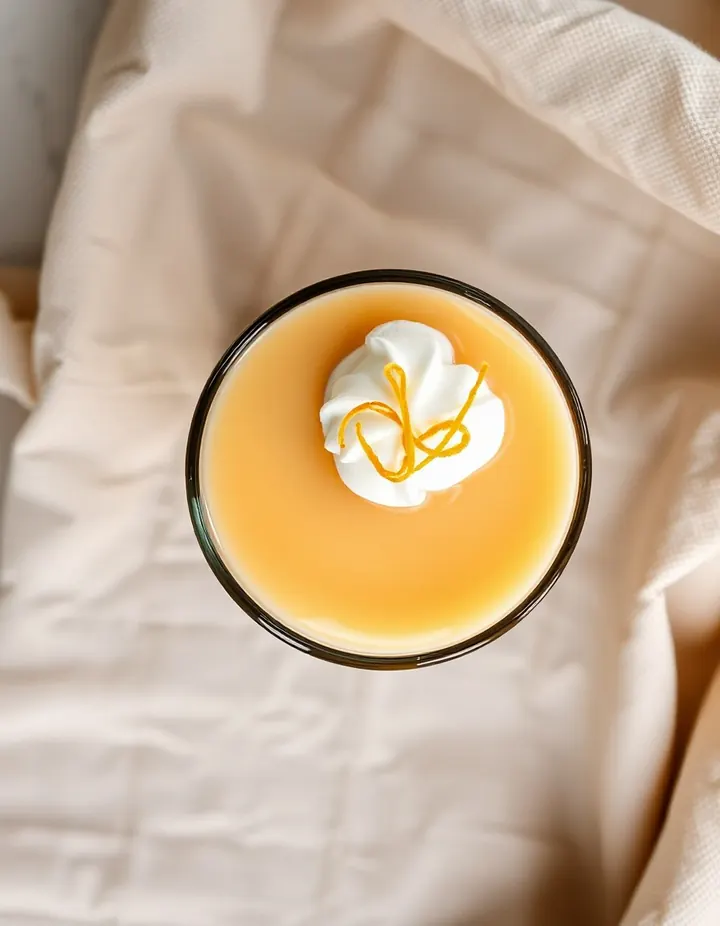 Orange Cream Rice Pudding121 recipes
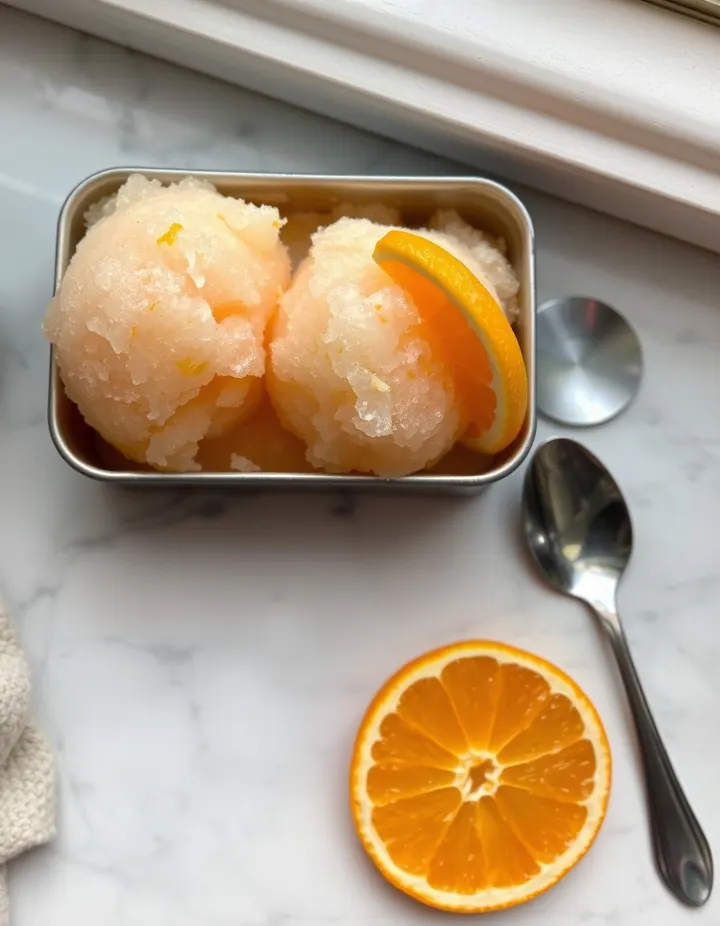 Orange Gelatin100 recipes
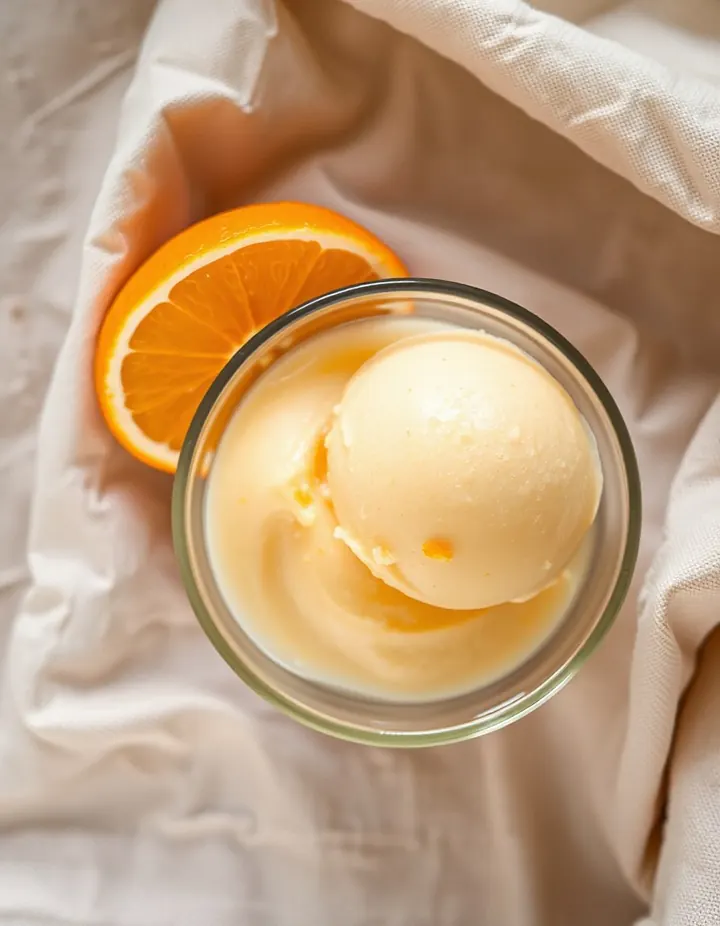 Orange Sherbet73 recipes
The free Flavor Lab newsletter: one surprising pairing a week and the molecular reason it works, in 60 seconds. No spam, unsubscribe anytime.
Prefer an account? Create a free account to save pairings and unlock the full chemistry.