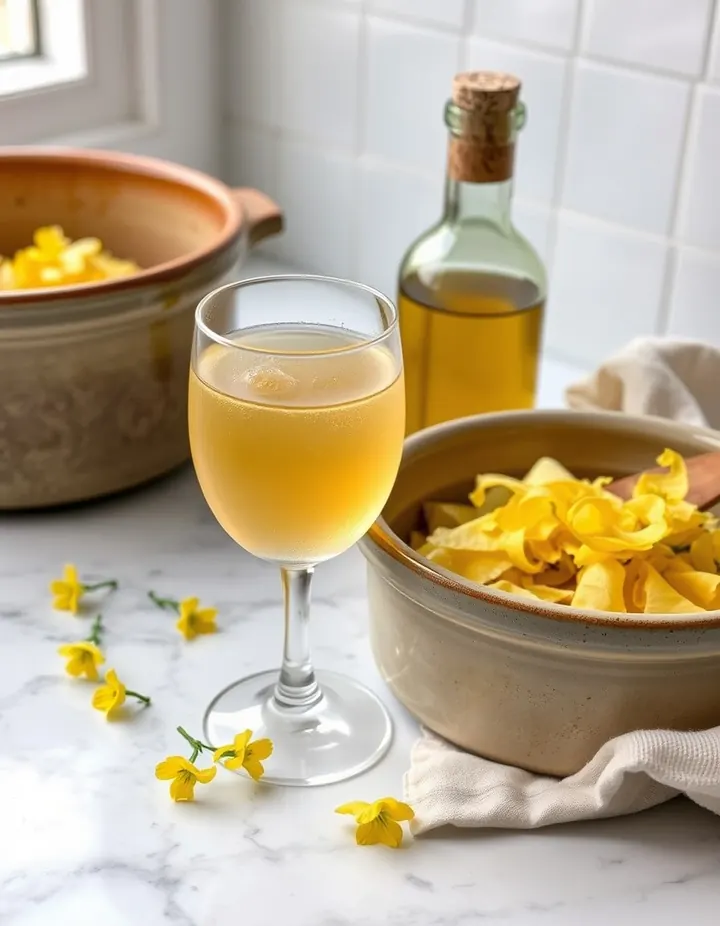
 Illustration
Why it works: Wine and brandy are a kitchen classic. They rank in the top 3% of all ingredient pairs, and 2,423 recipes mention both. Both carry gamma-nonanolactone, which smells coconut, sweet. The science ↓
The recipe
Ingredients
Contains: milk, wheat, shellfish (auto-detected from the ingredients and method; we can miss things, so check labels)
Directions
Sanitize all equipment: a fermenting vessel with an airlock, a hydrometer, a funnel and a strainer. Keep the vessel at room temperature, away from sunlight.
Boil the lump sugar and water together for 30 minutes, skimming off the scum as it rises. Let the syrup cool slightly.
Pour the hot syrup over the lemon rind and the orange rind, then add the strained juice of the lemon and the Seville orange. Strain out the rinds.
When the liquid is milk-warm (about 98°F/37C), add the cowslip pips or flowers, picked clean of stalks and seeds, with the fresh brewers' yeast. Ferment 3 to 4 days with the airlock fitted.
Transfer everything to a clean fermenting vessel with the airlock, and add the brandy. Leave for about 2 months, away from sunlight.
Check the hydrometer reading. Bottling is safe only when the reading is the same on 3 days in a row. Never bottle while bubbling continues.
Siphon the wine into clean bottles made for carbonated drinks, leaving a little headspace. Cap or cork them, then store in a cool, dark place.
Cook to a safe temperature. This method doesn't say how hot the inside should get. Check with a food thermometer in the thickest part:
- Shellfish: shrimp, lobster and scallops until pearly and opaque; clams, mussels and oysters until the shells open (throw away any that stay shut).
Figures from the USDA's safe minimum internal temperatures.
Original text from the book (13 steps)
_Ingredients._—To every gallon of water allow 3 lbs. of lump sugar, the rind of 2 lemons, the juice of 1, the rind and juice of 1 Seville orange, 1 gallon of cowslip pips. To every 4½ gallons of wine allow 1 bottle of brandy. _Mode._—Boil the sugar and water together for ½ hour, carefully removing all the scum as it rises. Pour this boiling liquor on the orange and lemon-rinds and the juice, which should be strained; when milk-warm, add the cowslip pips or flowers, picked from the stalks and seeds; and to 9 gallons of wine 3 tablespoonfuls of good fresh brewers’ yeast. Let it ferment 3 or 4 days, then put all together in a cask with the brandy, and let it remain for 2 months, when bottle it off for use. _Time._—To be boiled ½ hour; to ferment 3 or 4 days; to remain in the cask 2 months. _Average cost_, exclusive of the cowslips, which may be picked in the fields, 2_s._ 9_d._ per gallon. _Seasonable._ Make this in April or May.
CRAB, to Choose.
The middle-sized crab is the best; and the crab, like the lobster, should be judged by its weight; for if light, it is watery.
CRAB, to Dress.
_Ingredients._—1 crab, 2 tablespoonfuls of vinegar, 1 ditto of oil; salt, white pepper, and cayenne, to taste. _Mode._—Empty the shells, and thoroughly mix the meat with the above ingredients, and put it in the large shell. Garnish with slices of cut lemon and parsley. The quantity of oil may be increased when it is much liked. _Average cost_, from 10_d._ to 2_s._ _Seasonable_ all the year; but not so good in May, June, and July. _Sufficient_ for 3 persons.
CRAB, Hot.
_Ingredients._—1 crab, nutmeg, salt and pepper to taste, 3 oz. of butter, ¼ lb. of bread-crumbs, 3 tablespoonfuls of vinegar. _Mode._—After having boiled the crab, pick the meat out from the shells, and mix with it the nutmeg and seasoning. Cut up the butter in small pieces, and add the bread-crumbs and vinegar. Mix altogether, put the whole in the large shell, and brown before the fire or with a salamander. _Time._—1 hour. _Average cost_, from 10_d._ to 2_s._ _Sufficient_ for 3 persons, _Seasonable_ all the year; but not so good in May, June, and July.
CRAB SAUCE, for Fish (equal to Lobster Sauce).
_Ingredients._—1 crab; salt, pounded mace, and cayenne to taste; ½ pint of melted butter made with milk. _Mode._—Choose a nice fresh crab, pick all the meat away from the shell, and cut it into small square pieces. Make ½ pint of melted butter, put in the fish and seasoning; let it gradually warm through, and simmer for 2 minutes: it should not boil. _Average cost_, 1_s._ 2_d._
Crayfish should be thrown into boiling water, to which has been added a good seasoning of salt and a little vinegar. When done, which will be in ¼ hour, take them out and drain them. Let them cool, arrange them on a napkin, and garnish with plenty of double parsley.
_Note._—This fish is frequently used for garnishing boiled turkey, boiled fowl, calf’s head, turbot, and all kinds of boiled fish.
CRAYFISH, Potted.
_Ingredients._—100 crayfish; pounded mace, pepper, and salt to taste; 2 oz. butter. _Mode._—Boil the fish in salt and water, pick out all the meat, and pound it in a mortar to a paste. Whilst pounding, add the butter gradually, and mix in the spice and seasoning. Put it in small pots, and pour over it clarified butter, carefully excluding the air. _Time._—15 minutes to boil the crayfish. _Average cost_, 2_s._ 9_d._ _Seasonable_ all the year.
From a scanned old cookbook. The method has been rewritten by AI to follow current food-safety guidance (safe cooking temperatures, refrigeration, no raw-egg shortcuts). It hasn't been kitchen-tested. The original text is under the method. See the original page.
Found this recipe through an AI assistant? CompKitchen also shows which ingredients go well together and why, from the aroma molecules they share and how often recipes combine them. Try the pairing tools.
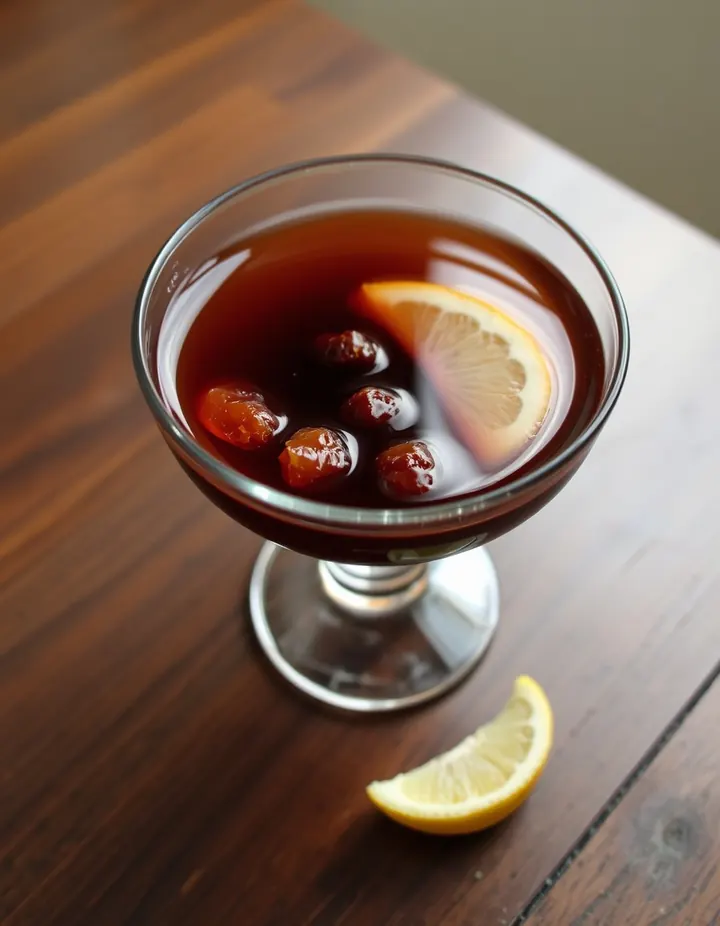
The picture is an illustration, not a photo of this recipe · Contact us to use it
Explore the science
The flavor team
The pairs that carry this dish. Each one is judged two ways: how much aroma chemistry they share, and how many recipes mention both.
-
Wine + brandytop 3% of all pairsAroma overlapmoderateMentioned together2,423 recipes
Shared aroma: gamma-nonanolactone (coconut, sweet).
-
Lemon + orangetop 1% of all pairsAroma overlapstrongMentioned together10,632 recipes
Shared aroma: 3-hexenal (apple, fruity).
-
Butter + crabtop 5% of all pairsAroma overlapstrongMentioned together812 recipes
Shared aroma: nonanal (fat, citrus).
-
Wine + buttertop 5% of all pairsAroma overlapmoderateMentioned together8,517 recipes
Shared aroma: delta-decalactone (sweet, creamy).
-
Wine + vinegartop 5% of all pairsAroma overlapmoderateMentioned together2,385 recipes
Shared aroma: sotolon (curry, maple).
Ranks compare each pair with 20,000 random ingredient pairs on CompKitchen. How we score pairs
Flavor stand-ins for the white pepper
How well each one fits the dish's main ingredients (wine, brandy, vinegar, butter, lemon, orange, crab):
- Thymebetter flavor fit
- Tarragonbetter flavor fit
- Cinnamonbetter flavor fit
- White pepperthe original
Fit is the average pairing score against wine, brandy, vinegar, butter, lemon, orange, crab. Candidates are from the same food group and used in at least 100 recipes. This compares flavor only: it does not check the job the ingredient does in the dish (bulk, moisture, acidity, structure).
Make it your own
Stand-ins, a drink, and quick taste fixes for this dish, ranked by how well each fits its other ingredients: shared aroma molecules and how often recipes combine them.
You might also like
 Illustration
 Illustration
 Illustration
 Illustration
The Sunday pairing: one pairing, the chemistry behind it, and how to cook it. No spam, unsubscribe anytime.
Prefer an account? Create a free account for sign-in; Pro adds the full results and chemistry.