Why it works: Clove and pepper match in chemistry and in kitchens. They rank in the top 5% of all ingredient pairs, and cooks put them together in 17,451 recipes. Both carry ethyl octanoate, which smells fruity, wine. The science ↓
Baked Halibut with Tomato Sauce
Ingredients
Directions
Make the sauce
Cook tomatoes, water, onion, cloves, and sugar for twenty minutes.
Melt butter, add flour, and stir into hot mixture.
Add salt and pepper, cook ten minutes, and strain.
Bake and serve
Clean fish, put in baking pan, pour around half the sauce, and bake thirty-five minutes, basting often.
Remove to hot platter, pour around remaining sauce, and garnish with parsley.
Nutrition, whole recipe (rough)
Counts 9 of 10 ingredients. The other 1 aren't in our nutrition table and add nothing above, so the real totals are higher.
What these numbers assume: 9 portions
| Ingredient | Portion assumed | kcal |
|---|---|---|
| Flour | 1 cup (125g) all-purpose | 455 |
| Halibut | 100g cooked | 140 |
| Butter | 1 tbsp (14g) | 102 |
| Sugar | 1 tbsp (12.5g) granulated | 49 |
| Onion | 1 medium (110g) | 44 |
| Tomato | 1 medium (123g) | 22 |
| Clove | 1 tsp ground (2g) | 7 |
| Black Pepper | 1 tsp ground (2.3g) | 6 |
| Salt | 1 tsp (6g) | 0 |
| Water | not in our table | 0 |
One typical portion per ingredient; the recipe's quantities are not counted. A rough guide only, not for medical or dietary planning.
Transcribed from a scanned cookbook and modernised for today's kitchens. Where the book gave no heat or time, or said "a moderate oven", the temperatures and times here may be modern equivalents rather than the book's own figures. See the original page.
Explore the science
The flavor team
The pairs that carry this dish. Each one is judged two ways: how much their aromas overlap, and how often cooks already put them together.
-
Clove + peppertop 5% of all pairsSmell alikestrongCooked together17,451 recipes
Shared aroma: ethyl octanoate (fruity, wine).
-
Tomato + peppertop 7% of all pairsSmell alikemoderateCooked together17,923 recipes
Shared aroma: 2-isopropyl-3-methoxypyrazine (earthy, pea).
-
Tomato + oniontop 8% of all pairsSmell alikemoderateCooked together20,633 recipes
Shared aroma: 2-isopropyl-3-methoxypyrazine (earthy, pea).
-
Onion + peppertop 11% of all pairsSmell alikemoderateCooked together68,474 recipes
Shared aroma: 2-isopropyl-3-methoxypyrazine (earthy, pea).
-
Tomato + clovetop 12% of all pairsSmell alikemoderateCooked together3,474 recipes
Shared aroma: ethyl caproate (fruity, apple peel).
Ranks compare each pair with 20,000 random ingredient pairs on CompKitchen. How we score pairs
What each ingredient does
- Halibut
- Forms the main body of the dish, cooking into flaky, tender pieces.
- Tomatoes
- Provide the base of the sauce, adding moisture and gentle acidity.
- Butter
- Enriches the sauce and carries flavour, cooked with flour to form a thickening roux.
- Flour
- Thickens the sauce by combining with melted butter and hot liquid.
The step that matters
Basting the fish while it bakes. Basting spoons sauce over the halibut as it cooks, adding moisture to a lean fish that dries out easily, so the flesh stays tender and moist.
Swap the tomato
How well each one fits the dish's main ingredients (onion, clove, sugar, butter, flour, pepper):
- Leekfits better
- Shallotfits better
- Chivefits better
- Tomatothe original
Fit is the average pairing score against onion, clove, sugar, butter, flour, pepper. Candidates are from the same food group and used in at least 100 recipes.
“What each ingredient does” and “The step that matters” were written by Claude from this recipe’s own method and reviewed in samples by CompKitchen.
You might also like
 Tomato Soup526 recipes
 Cream of Tomato Soup107 recipes
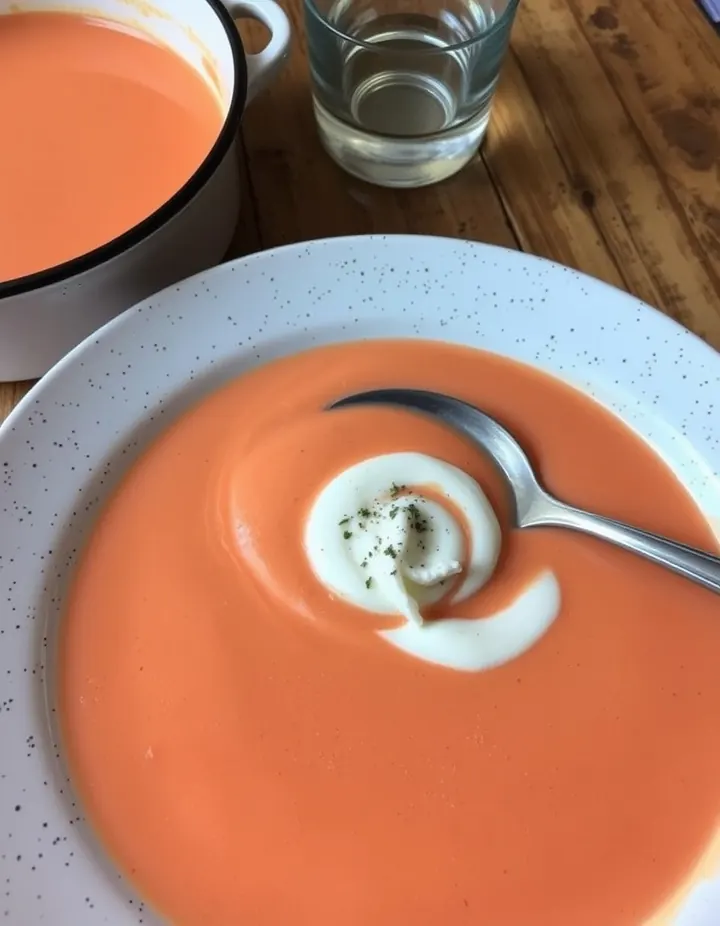 Tomato Bisque61 recipes
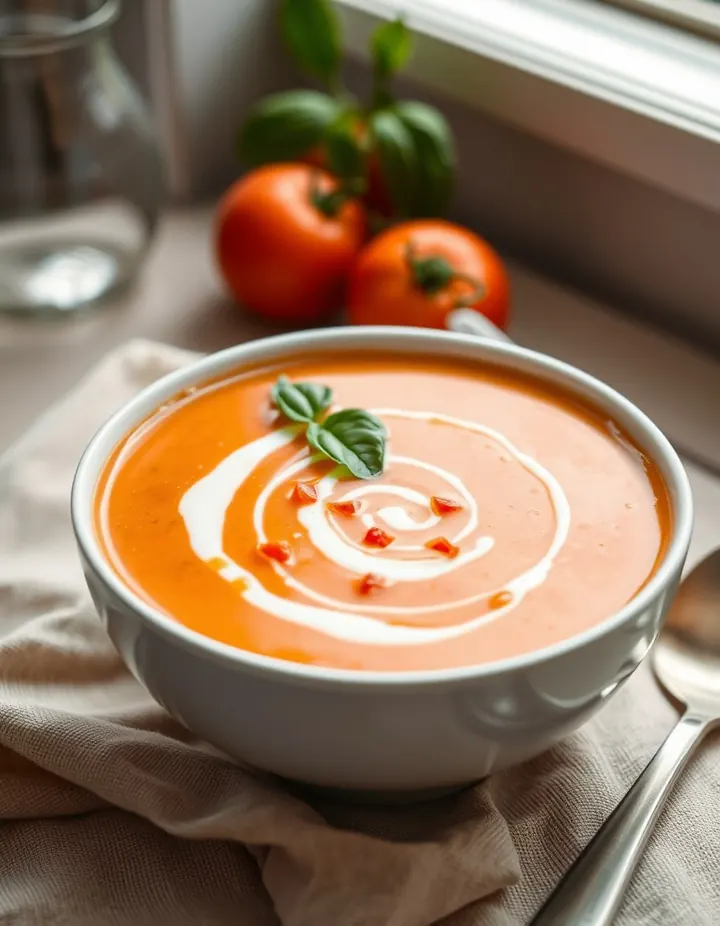 Cream Tomato Soup28 recipes
The free Flavor Lab newsletter: one surprising pairing a week and the molecular reason it works, in 60 seconds. No spam, unsubscribe anytime.
Prefer an account? Create a free account to save pairings and unlock the full chemistry.