Why it works: Butter and milk are a kitchen classic. They rank in the top 7% of all ingredient pairs, and cooks put them together in 81,283 recipes. Both carry (z)-4-heptenal, which smells biscuit, cream. The science ↓
White Roux, or French Thickening
Ingredients
Directions
Proceed exactly as for the preceding receipt, but dredge in the flour as soon as the butter is in full simmer, and be careful not to allow the thickening to take the slightest colour: this is used for white gravies or sauces.
SAUCE TOURNÉE, OR PALE THICKENED GRAVY.
Sauce tournée is nothing more than rich pale gravy made with veal or poultry (see _Consommé_, Chapter IV.) and thickened with delicate white _roux_. The French give it a flavouring of mushrooms and green onions, by boiling some of each in it for about half an hour before the sauce is served: it must then be strained, previously to being dished. Either first dissolve an ounce of butter, and then dredge gradually to it three-quarters of an ounce of flour, and proceed as for the preceding receipt; or blend the flour and butter perfectly with a knife before they are thrown into the stewpan, and keep them stirred without ceasing over a clear and gentle fire until they have simmered for some minutes, then place the stewpan high over the fire, and shake it constantly until the _roux_ has lost the raw taste of the flour; next, stir very gradually to it a pint of the gravy, which should be boiling. Set it by the side of the stove for a few minutes, skim it thoroughly, and serve it without delay.
Butter, 1 oz.; flour, 3/4 oz.; strong pale gravy, seasoned with mushrooms and green onions, 1 pint.
_Obs._ 3.—With the addition of three or four yolks of very fresh eggs, mixed with a seasoning of mace, cayenne, and lemon-juice, this becomes _German sauce_, now much used for fricassees, and other dishes; and minced parsley (boiled) and chili vinegar, each in sufficient quantity to flavour it agreeably, convert it into a good fish sauce.
This is a fine French white sauce, now very much served at good English tables. It may be made in various ways, and more or less expensively; but it should always be thick, smooth, and rich, though delicate in flavour. The most ready mode of preparing it is to take an equal portion of very strong, pale veal gravy, and of good cream (a pint of each for example), and then, by rapid boiling over a very clear fire, to reduce the gravy nearly half; next, to mix with part of the cream a tablespoonful of fine dry flour, to pour it to the remainder, when it boils, and to keep the whole stirred for five minutes or more over a slow fire, for if placed upon a fierce one it would be liable to burn; then to add the gravy, to stir and mix the sauce perfectly, and to simmer it for a few minutes longer. All the flavour should be given by the gravy, in which French cooks boil a handful of mushrooms, a _few_ green onions, and some branches of parsley before it is reduced: but a good _béchamel_ may be made without them, with a strong _consommé_ (see pale veal gravy, page 98) well reduced.
Strong pale veal gravy (flavoured with mushrooms or not), 1 pint: reduced half. Rich cream, 1 pint; flour, 1 tablespoonful: 5 minutes. With gravy, 4 or 5 minutes.
_Obs._—_Velouté_, which is a rather thinner sauce or gravy, is made by simply well reducing the cream and stock separately, and then mixing them together without any thickening.
BÉCHAMEL MAIGRE.
(_A cheap White Sauce._)
A good _béchamel_ may be made entirely without meat, when economy is an object, or when no gravy is at hand. Put into a stewpan, or a well-tinned and thick saucepan, with from two to three ounces of butter, a carrot, and a couple of small onions, cut in slices, with a handful of nicely-cleaned mushroom buttons, when these last can be easily procured; and when they have stewed slowly for half an hour, or until the butter is nearly dried up, stir in two tablespoonsful of flour, and pour in a pint of new milk, a little at a time, shaking the stewpan well round, that the sauce may be smooth. Boil the _béchamel_ gently for half an hour; add a little salt, and cayenne; strain, and reduce it, if not quite thick, or pour it boiling to the yolks of two fresh eggs.
ANOTHER COMMON BÉCHAMEL.
Cut half a pound of veal, and a slice of lean ham or smoked beef, into small dice, and stew them in butter, with vegetables, as directed in the foregoing receipt: stir in the same proportion of flour, then add the milk, and let the sauce boil very gently for an hour. It should not be allowed to thicken too much before it is strained.
_Obs._—Common _béchamel_, with the addition of a spoonful of made-mustard, is an excellent sauce for boiled mutton.
Nutrition, whole recipe (rough)
Counts 8 of 9 ingredients. The other 1 aren't in our nutrition table and add nothing above, so the real totals are higher.
What these numbers assume: 8 portions
| Ingredient | Portion assumed | kcal |
|---|---|---|
| Flour | 1 cup (125g) all-purpose | 455 |
| Pork | 100g cooked | 242 |
| Milk | 1 cup (244ml) whole | 149 |
| Butter | 1 tbsp (14g) | 102 |
| Eggs | 1 large egg (50g) | 78 |
| Mushroom | 1/2 cup sliced (35g) | 15 |
| Cayenne | 1 tsp (1.8g) | 6 |
| Salt | 1 tsp (6g) | 0 |
| Veal | not in our table | 0 |
One typical portion per ingredient; the recipe's quantities are not counted. A rough guide only, not for medical or dietary planning.
Transcribed from a scanned cookbook and modernised for today's kitchens. Where the book gave no heat or time, or said "a moderate oven", the temperatures and times here may be modern equivalents rather than the book's own figures. See the original page.
Explore the science
The flavor team
The pairs that carry this dish. Each one is judged two ways: how much their aromas overlap, and how often cooks already put them together.
-
Butter + milktop 7% of all pairsSmell alikemoderateCooked together81,283 recipes
Shared aroma: (z)-4-heptenal (biscuit, cream).
-
Butter + mushroomtop 7% of all pairsSmell alikemoderateCooked together12,525 recipes
Shared aroma: trans-2-decenal (waxy, orange).
-
Mushroom + milktop 12% of all pairsSmell alikemoderateCooked together2,231 recipes
Shared aroma: 1-hexanal (fruit).
-
Butter + flourtop 12% of all pairsSmell alikelowCooked together124,287 recipes
Shared aroma: isobutyraldehyde (malty, green).
-
Flour + mustardtop 13% of all pairsSmell alikemoderateCooked together5,066 recipes
Shared aroma: isobutyraldehyde (malty, green).
Butter and flour barely smell alike, yet cooks put them together in 124,287 recipes: they work on texture and structure more than aroma.
Ranks compare each pair with 20,000 random ingredient pairs on CompKitchen. How we score pairs
Swap the mustard
How well each one fits the dish's main ingredients (butter, flour, mushroom, milk, veal, ham, egg):
- Shallotfits better
- Asparagusfits better
- Leekfits better
- Mustardthe original
Fit is the average pairing score against butter, flour, mushroom, milk, veal, ham, egg. Candidates are from the same food group and used in at least 100 recipes.
You might also like
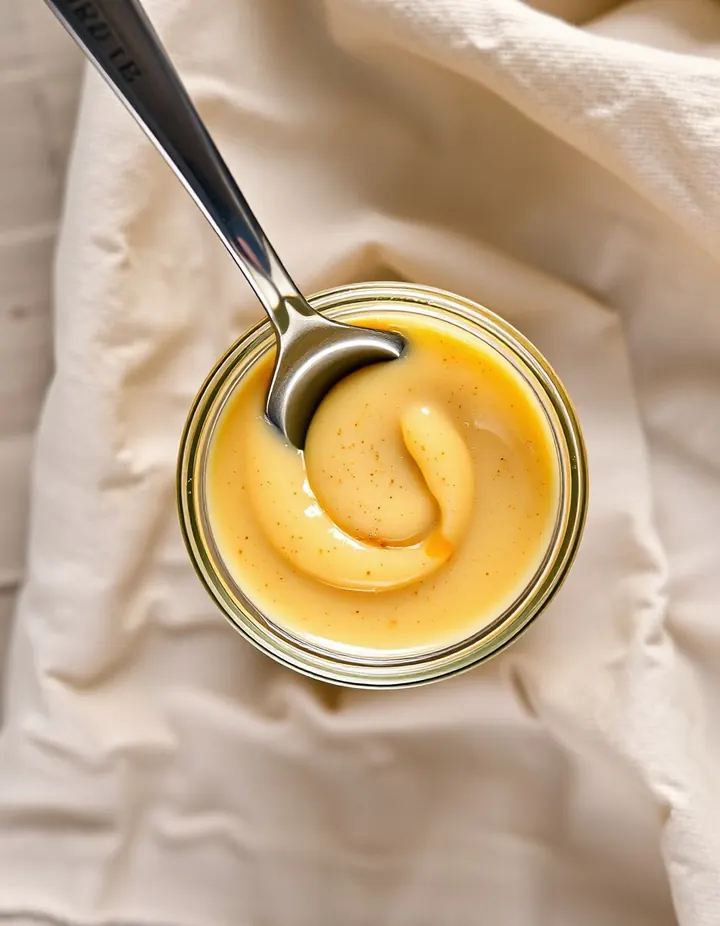 Mixed Mustard9 recipes
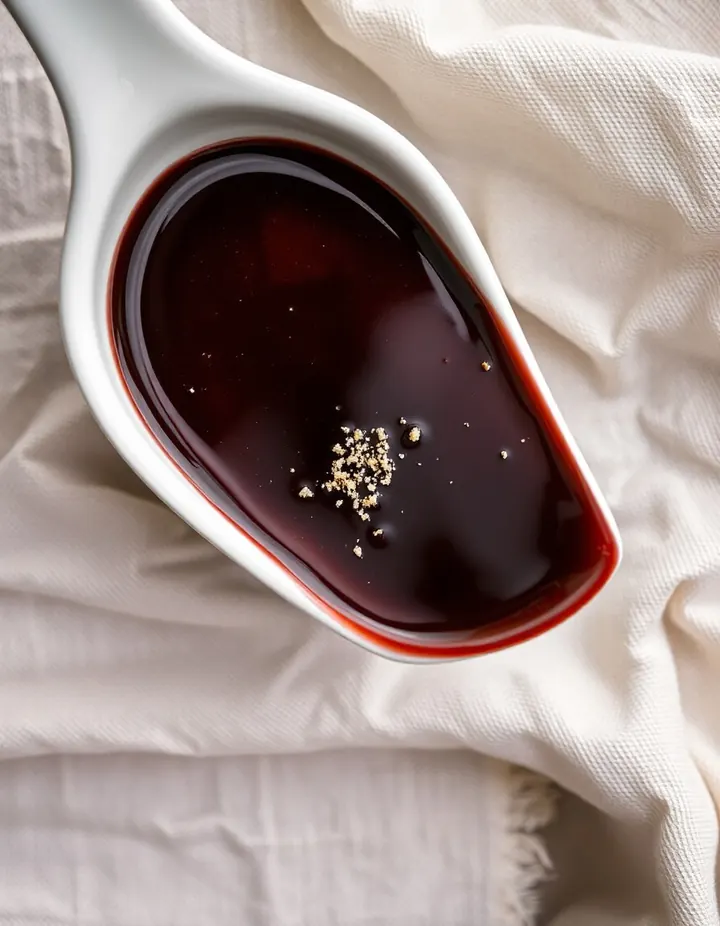 Wine Sauce (for stewed fruit)186 recipes
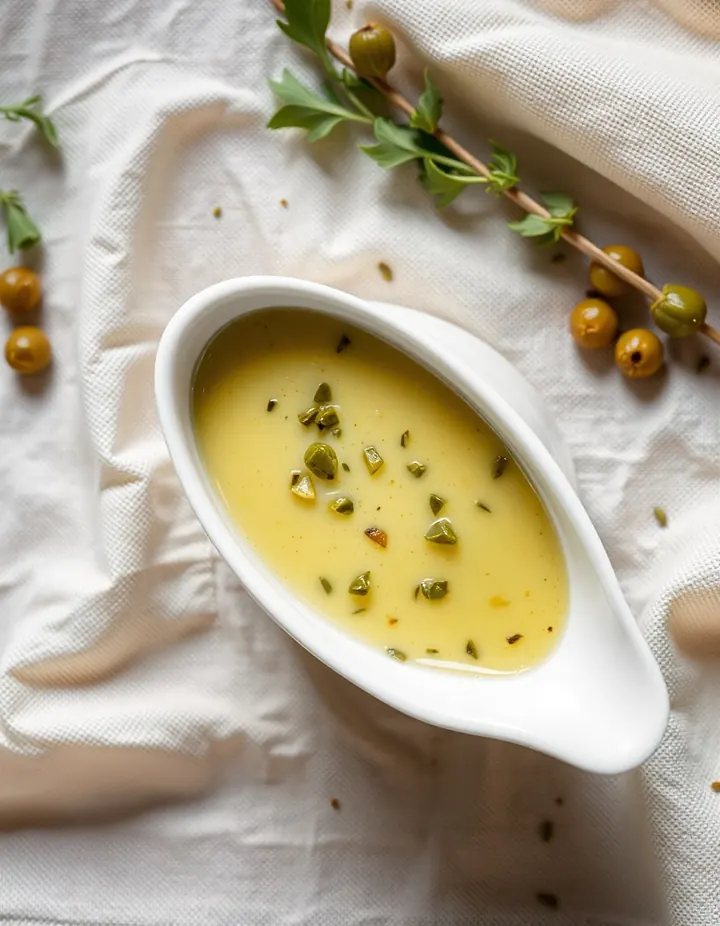 Caper Sauce180 recipes
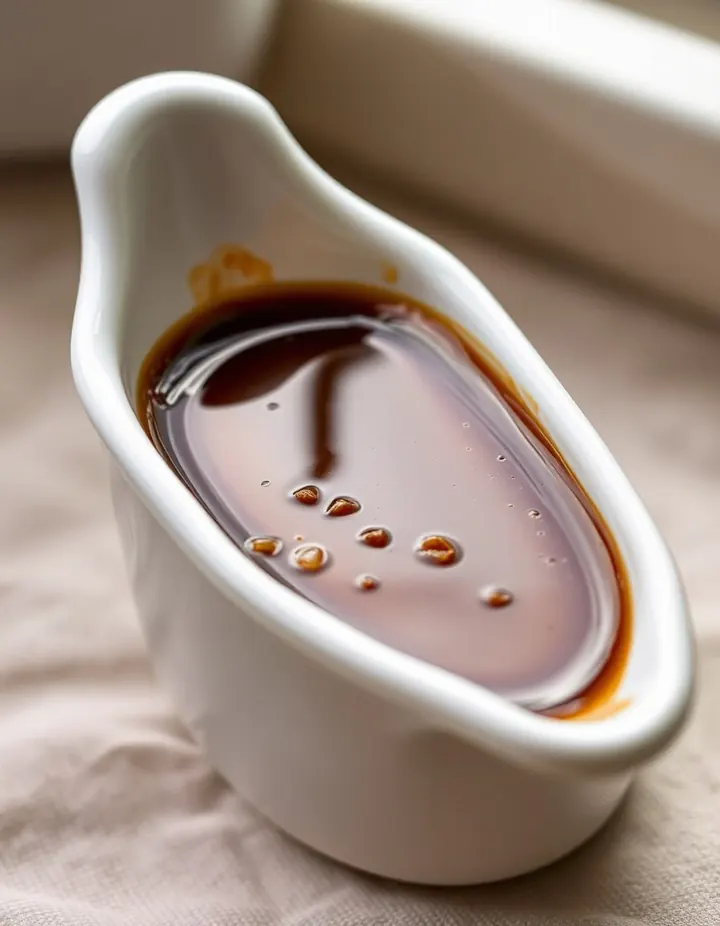 Brown Sauce141 recipes
The free Flavor Lab newsletter: one surprising pairing a week and the molecular reason it works, in 60 seconds. No spam, unsubscribe anytime.
Prefer an account? Create a free account to save pairings and unlock the full chemistry.