Why it works: Flour and butter are a kitchen classic. They rank in the top 12% of all ingredient pairs, and cooks put them together in 124,287 recipes. Both carry isobutyraldehyde, which smells malty, green. The science ↓
A Kentish Well Pudding
Ingredients
Directions
Make the paste
Make a firm smooth paste with cold water, one pound flour, six ounces finely minced beef suet, three quarters pound currants, and a small pinch salt, thoroughly mixed together.
Form the mixture into a ball and place six ounces of good butter inside, enclosing it securely in about a third of the paste rolled to a half inch thickness.
Roll out the remainder of the paste and place the portion containing the butter in the centre of it, with the part where the edge was drawn together turned downwards.
Gather the outer crust round it, and after moistened the edge, close it with great care.
Boil and serve
Tie the pudding tightly in a well-floured cloth.
Boil the pudding for two hours and a half.
Dish the pudding carefully to avoid breaking, cutting a small bit directly from the top as in a meat pudding.
Nutrition, whole recipe (rough)
What these numbers assume: 4 portions
| Ingredient | Portion assumed | kcal |
|---|---|---|
| Flour | 1 cup (125g) all-purpose | 455 |
| Butter | 1 tbsp (14g) | 102 |
| Grape | 1/2 cup (76g) | 62 |
| Salt | 1 tsp (6g) | 0 |
One typical portion per ingredient; the recipe's quantities are not counted. A rough guide only, not for medical or dietary planning.
Transcribed from a scanned cookbook and modernised for today's kitchens. Where the book gave no heat or time, or said "a moderate oven", the temperatures and times here may be modern equivalents rather than the book's own figures. See the original page.
Explore the science
The flavor team
The pairs that carry this dish. Each one is judged two ways: how much their aromas overlap, and how often cooks already put them together.
-
Flour + buttertop 12% of all pairsSmell alikelowCooked together124,287 recipes
Shared aroma: isobutyraldehyde (malty, green).
-
Beef + buttertop 16% of all pairsSmell alikemoderateCooked together10,847 recipes
Shared aroma: 2-furfurylthiol (coffee, roasted).
-
Butter + curranttop 17% of all pairsSmell alikemoderateCooked together7,856 recipes
Shared aroma: isoamyl acetate (banana, pear).
-
Flour + beeftop 25% of all pairsSmell alikelowCooked together10,677 recipes
Shared aroma: isobutyraldehyde (malty, green).
-
Flour + curranttop 26% of all pairsSmell alikelowCooked together8,077 recipes
Flour and butter barely smell alike, yet cooks put them together in 124,287 recipes: they work on texture and structure more than aroma.
Ranks compare each pair with 20,000 random ingredient pairs on CompKitchen. How we score pairs
What each ingredient does
- Flour
- Forms the paste's structure, holding the suet, butter and currants together while boiling.
- Beef suet
- Adds richness and a tender, moist texture to the paste.
- Butter
- Enclosed in the paste, it melts during boiling to add moisture and richness.
- Currants
- Provide sweetness and fruit flavour throughout the pudding.
The step that matters
Close the paste securely around the butter. If the edges are not moistened and sealed well, the paste can split and the butter can leak out during the long boil, and the pudding may burst.
Swap the currant
How well each one fits the dish's main ingredients (flour, beef, butter):
- Raisinfits better
- Coconutfits better
- Avocadofits better
- Currantthe original
Fit is the average pairing score against flour, beef, butter. Candidates are from the same food group and used in at least 100 recipes.
“What each ingredient does” and “The step that matters” were written by Claude from this recipe’s own method and reviewed in samples by CompKitchen.
You might also like
 Roast Beef211 recipes
 Beef Loaf175 recipes
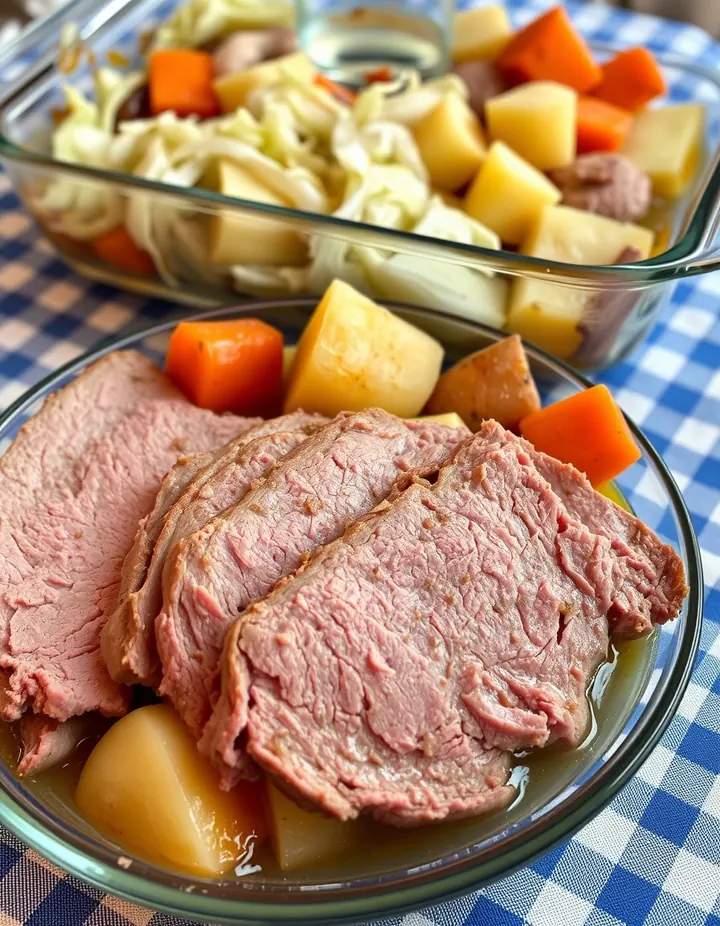 Corned Beef87 recipes
 Beef Broth67 recipes
The free Flavor Lab newsletter: one surprising pairing a week and the molecular reason it works, in 60 seconds. No spam, unsubscribe anytime.
Prefer an account? Create a free account to save pairings and unlock the full chemistry.