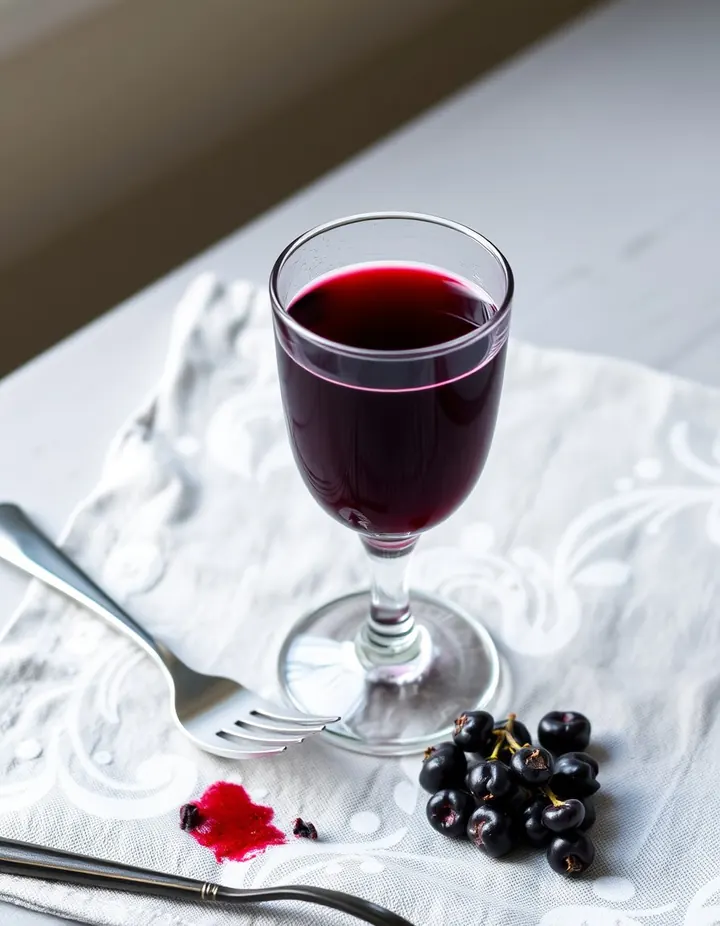
Elderberry Wine
Ingredients
Directions
Prepare the juice
Gather ripe elderberries.
Put them into a stone jar and mash with a round stick.
Set the jar in a warm oven, or in a large kettle of boiling water until the jar is hot through and the berries begin to simmer.
Take the jar out, press and strain the contents through a sieve.
Make the liquor
To each quart of juice, add a pound of Havana or Lisbon sugar and two quarts of cold soft water.
Put the sugar into a large kettle, pour the juice over it, and stir until dissolved.
Stir in the water.
Set the kettle over the fire, boil and skim until the scum ceases to rise.
Ferment and bottle
To four gallons of the liquor, add a pint and a half of brandy.
Put it into a keg, and let it stand with the bung loosely closed for four or five days until fermentation stops.
Stop it closely, plaster the bung with clay.
After six months, draw off a little of it; if not clear and bright, refine it with the whites and shells of three or four eggs beaten to a stiff froth and stirred into a quart of the wine, taken out for the purpose and then returned to the cask; or refine with an ounce or more of dissolved isinglass.
Let it stand a week or two, then bottle it.
Transcribed from a scanned cookbook and modernised for today's kitchens. Where the book gave no heat or time, or said "a moderate oven", the temperatures and times here may be modern equivalents rather than the book's own figures. See the original page.
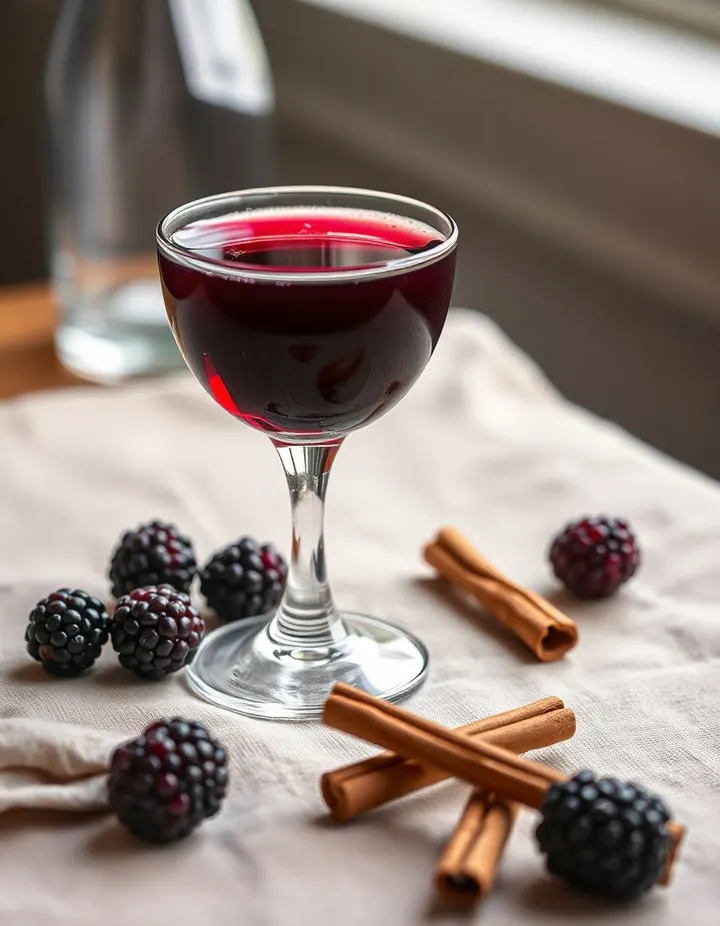
Photo for illustrative purposes only · Contact us to use it
Explore the science
What each ingredient does
- Elderberries (in the method)
- Provide the juice, flavour and colour that form the base of the wine.
- Sugar (in the method)
- Feeds the yeast during fermentation and sets the wine's sweetness and body.
- Brandy (in the method)
- Adds alcohol and strength, and helps stabilise the wine against spoilage.
- Eggs
- Their whites bind fining particles that carry haze out of the wine, clarifying it.
The step that matters
Skimming the boiling liquor. Scum rising during boiling carries impurities and proteins that can cloud or spoil the wine. Skimming until it stops rising keeps the liquor clean and clear.
“What each ingredient does” and “The step that matters” were written by Claude from this recipe’s own method and reviewed in samples by CompKitchen.
You might also like
 Vegetable Soup350 recipes
 Raspberry Vinegar214 recipes
 Brown Coffee with Egg175 recipes
 Blackberry Cordial129 recipes
The free Flavor Lab newsletter: one surprising pairing a week and the molecular reason it works, in 60 seconds. No spam, unsubscribe anytime.
Prefer an account? Create a free account to save pairings and unlock the full chemistry.