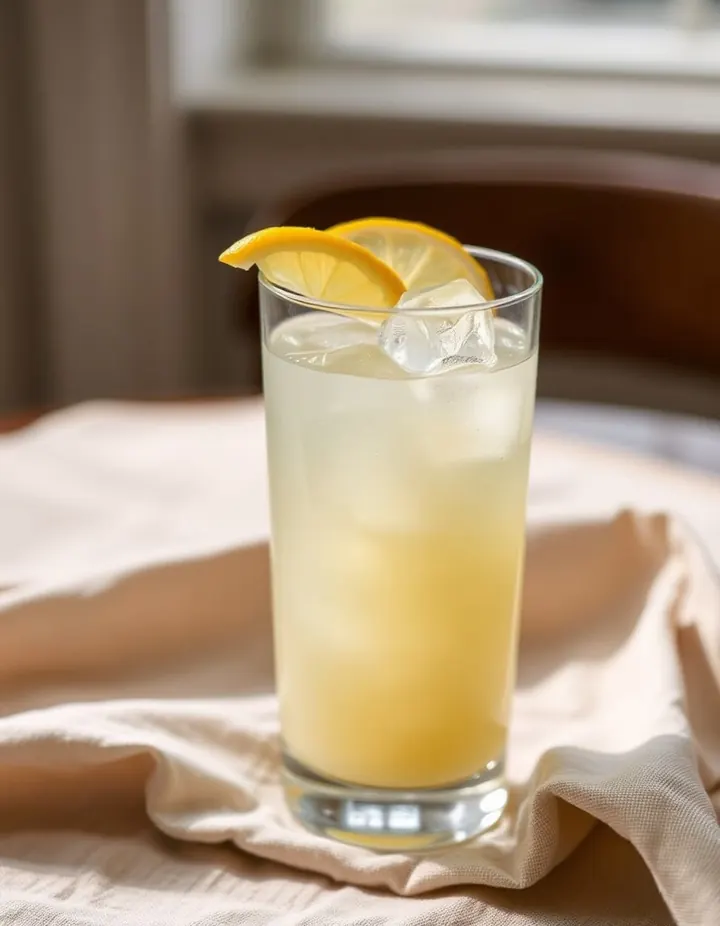
Turkish Sherbet
Ingredients
Directions
Make the base
Wash a fore-quarter or knuckle of veal and crack the bones.
Put the veal on to boil with two quarts and a pint of water.
Let it boil until the liquid is reduced to one quart, and skim it well.
Strain the liquid and set it away to cool.
Make the sherbet
When quite cold, mix in a pint and a half of clear lemon juice and a pint and a half of capillaire or clear sugar-syrup.
If you have no capillaire ready, boil two pounds of loaf-sugar in a pint and a half of water, clearing it with the beaten white of an egg mixed into the sugar and water before boiling.
Serve the sherbet cold or iced in glass mugs at dessert, or offer it as a refreshment at any other time.
Transcribed from a scanned cookbook and modernised for today's kitchens. Where the book gave no heat or time, or said "a moderate oven", the temperatures and times here may be modern equivalents rather than the book's own figures. See the original page.
Photo for illustrative purposes only · Contact us to use it
Explore the science
What each ingredient does
- Veal (in the method)
- Releases savory broth as it simmers, forming the body of the liquid base.
- Loaf-sugar
- Provides sweetness and, dissolved into syrup, body in the finished drink.
- Lemon juice (in the method)
- Adds acidity that gives the sherbet its sharp, refreshing flavor.
- Egg white (in the method)
- Clarifies the sugar syrup by binding impurities that are then skimmed away.
The step that matters
Skimming the veal broth. Reducing the broth concentrates any scum and fat from the bones, so skimming it well keeps the cooled liquid clear and clean-tasting.
“What each ingredient does” and “The step that matters” were written by Claude from this recipe’s own method and reviewed in samples by CompKitchen.
You might also like
 Vegetable Soup350 recipes
 Raspberry Vinegar214 recipes
 Brown Coffee with Egg175 recipes
 Blackberry Cordial129 recipes
The free Flavor Lab newsletter: one surprising pairing a week and the molecular reason it works, in 60 seconds. No spam, unsubscribe anytime.
Prefer an account? Create a free account to save pairings and unlock the full chemistry.