Why it works: Currant and sugar are a kitchen classic. They rank in the top 26% of all ingredient pairs, and cooks put them together in 12,256 recipes. The science ↓
Currant Win'e
Ingredients
Directions
Prepare the juice
Mash the ripe currants.
Strain the mash through a jelly bag.
Put the juice into a tub.
Let the juice stand for 3 days, skimming daily.
Add sugar and water
For each quart of juice, add 2 pounds of sugar.
Add enough water to make 1 gallon.
Fill a cask.
Ferment and age
Leave the bung out until fermentation ceases, usually in 12 to 15 days.
Daily, fill up the cask with water.
When fermentation stops, carefully rack off the wine using a siphon.
Clean the cask thoroughly with boiling water.
Return the wine to the cask.
Seal the cask tightly.
Let it stand for 4 to 5 months.
Transcribed from a scanned cookbook and modernised for today's kitchens. Where the book gave no heat or time, or said "a moderate oven", the temperatures and times here may be modern equivalents rather than the book's own figures.
Explore the science
The flavor team
The pairs that carry this dish. Each one is judged two ways: how much their aromas overlap, and how often cooks already put them together.
-
Currant + sugartop 26% of all pairsSmell alikelowCooked together12,256 recipes
Currant and sugar barely smell alike, yet cooks put them together in 12,256 recipes: they work on texture and structure more than aroma.
Ranks compare each pair with 20,000 random ingredient pairs on CompKitchen. How we score pairs
What each ingredient does
- Ripe currants
- Provide the fruit juice that forms the base and flavour of the wine.
- Sugar
- Feeds the yeast during fermentation, producing alcohol and adding sweetness to the finished wine.
The step that matters
Leave the bung out until fermentation ceases. Fermentation releases carbon dioxide, which must escape so the cask does not build pressure or burst. Keeping the cask topped up with water limits exposure to air, which could sour the wine. Sealing only after fermentation stops protects the finished wine.
“What each ingredient does” and “The step that matters” were written by Claude from this recipe’s own method and reviewed in samples by CompKitchen.
More currant wine recipes
You might also like
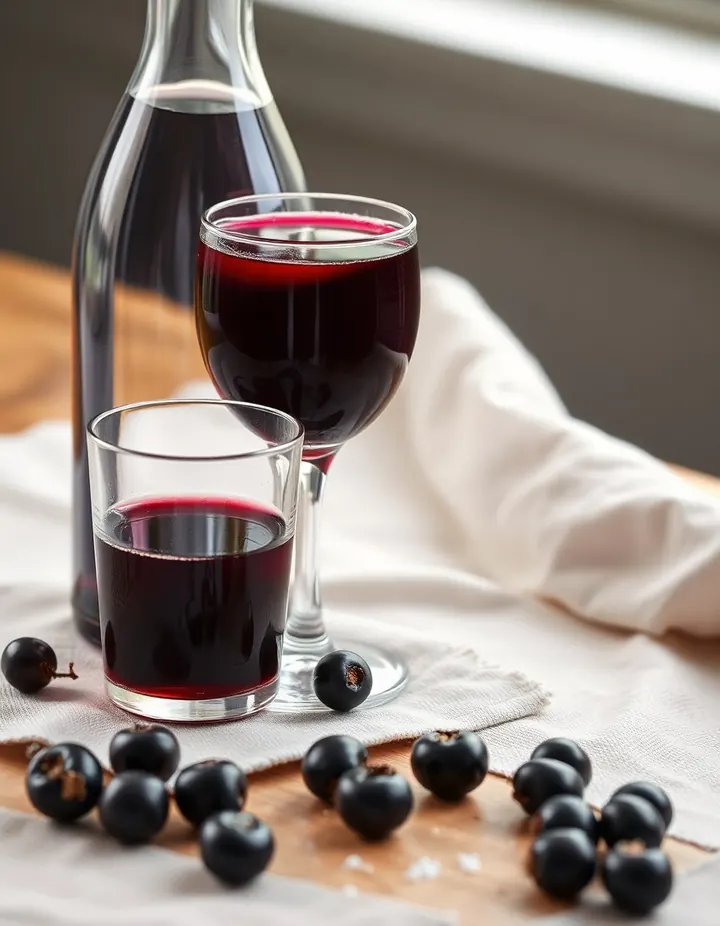 Black Currant Cordial11 recipes
 Vegetable Soup350 recipes
 Raspberry Vinegar214 recipes
 Brown Coffee with Egg175 recipes
The free Flavor Lab newsletter: one surprising pairing a week and the molecular reason it works, in 60 seconds. No spam, unsubscribe anytime.
Prefer an account? Create a free account to save pairings and unlock the full chemistry.