Why it works: Hazelnut and artichoke share more aroma than cooks usually use. They rank in the top 3% of all ingredient pairs, and cooks put them together in 9 recipes. Both carry coumarin, which smells sweet, hay. The science ↓
Artichokes
Ingredients
Directions
Prepare
Wash the artichokes thoroughly, ensuring no insects remain.
Trim the leaves and bottom, and cut off the stems.
Boil
In a pot, bring the water to a boil and dissolve the salt and baking soda.
Add the artichokes to the boiling water and boil uncovered until tender, about 20 to 25 minutes.
Remove the artichokes, drain for a minute or two, and serve in a napkin or with a little white sauce.
Serve with a tureen of melted butter.
Transcribed from a scanned cookbook and modernised for today's kitchens. Where the book gave no heat or time, or said "a moderate oven", the temperatures and times here may be modern equivalents rather than the book's own figures.
Explore the science
The flavor team
The pairs that carry this dish. Each one is judged two ways: how much their aromas overlap, and how often cooks already put them together.
-
Hazelnut + artichoketop 3% of all pairsSmell alikestrongCooked together9 recipes
Shared aroma: coumarin (sweet, hay).
Ranks compare each pair with 20,000 random ingredient pairs on CompKitchen. How we score pairs
What each ingredient does
- Artichokes
- The main vegetable; boiling softens its fibrous leaves and base until tender.
- Baking soda
- Raises the water's pH, which helps keep the artichoke's green color bright during boiling.
The step that matters
Boil until tender, not longer. Boiling time decides texture. Overcooking turns the leaves soft and mushy, while underdone leaves and base stay tough and fibrous. Checking tenderness near the 20-minute mark helps avoid both.
“What each ingredient does” and “The step that matters” were written by Claude from this recipe’s own method and reviewed in samples by CompKitchen.
You might also like
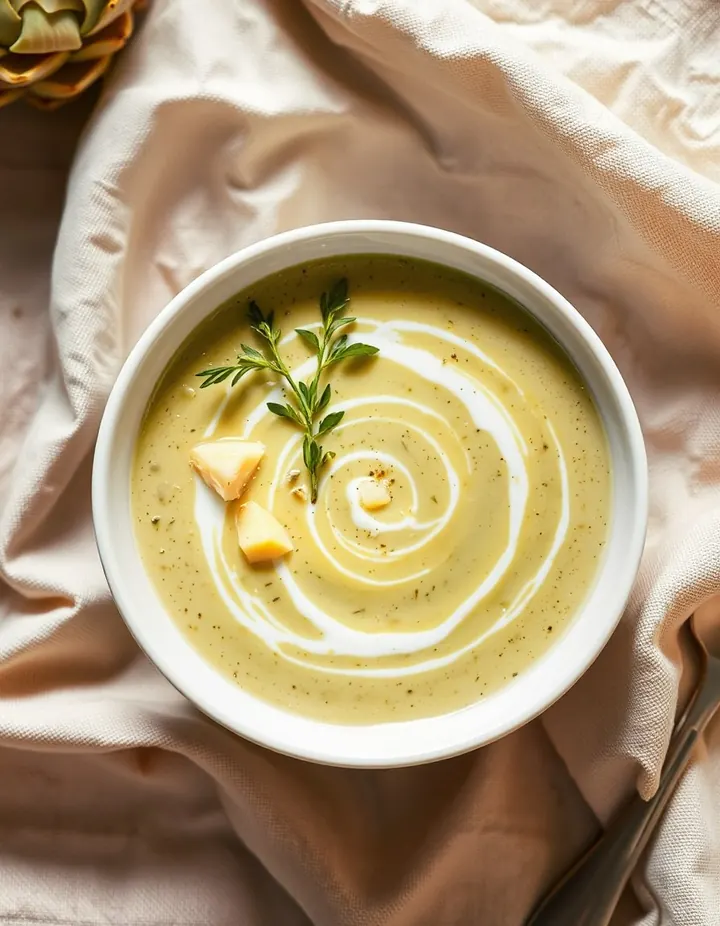 Artichoke Soup55 recipes
 Tomato Soup526 recipes
 Brown Bread461 recipes
 Mutton Broth292 recipes
The free Flavor Lab newsletter: one surprising pairing a week and the molecular reason it works, in 60 seconds. No spam, unsubscribe anytime.
Prefer an account? Create a free account to save pairings and unlock the full chemistry.