Why it works: Artichoke and lemon match in chemistry and in kitchens. They rank in the top 2% of all ingredient pairs, and cooks put them together in 636 recipes. Both carry 1-octen-3-ol, which smells mushroom, earthy. The science ↓
To Dry Artichoke Bottoms
Ingredients
Directions
The book gives no oven temperature. The 300°F in the steps was added when the recipe was transcribed, as a starting point.
Prepare the artichokes
Gather the largest firm artichokes in season.
Cut off the stalks.
Boil the artichokes until the leaves and choke can be removed.
Dry the bottoms
Place them on a baking plate in a slow oven (300 °F / 150 °C) or hang them in a warm place to dry.
Once dried, store them in paper bags.
Rehydrate and braise
Soak them in warm water until pliable.
Trim them neatly.
Braise in stock and lemon juice to keep them white.
Cut into pieces for ragout or serve whole with sauce.
Transcribed from a scanned cookbook and modernised for today's kitchens. Where the book gave no heat or time, or said "a moderate oven", the temperatures and times here may be modern equivalents rather than the book's own figures.
Explore the science
The flavor team
The pairs that carry this dish. Each one is judged two ways: how much their aromas overlap, and how often cooks already put them together.
-
Artichoke + lemontop 2% of all pairsSmell alikestrongCooked together636 recipes
Shared aroma: 1-octen-3-ol (mushroom, earthy).
Ranks compare each pair with 20,000 random ingredient pairs on CompKitchen. How we score pairs
What each ingredient does
- Large firm artichokes
- Provide the edible bottoms that are dried, then softened and braised.
- Stock
- Adds savoury liquid that braises the artichokes and flavours them as they soften.
- Lemon juice
- Its acidity helps keep the cut artichokes pale during braising.
The step that matters
Drying the bottoms. Drying must be thorough and slow, because damp artichoke bottoms can spoil in storage. A slow oven or warm spot removes moisture gradually, which keeps the texture even and makes the bottoms store well until they are soaked again.
“What each ingredient does” and “The step that matters” were written by Claude from this recipe’s own method and reviewed in samples by CompKitchen.
You might also like
 Lemon Sauce236 recipes
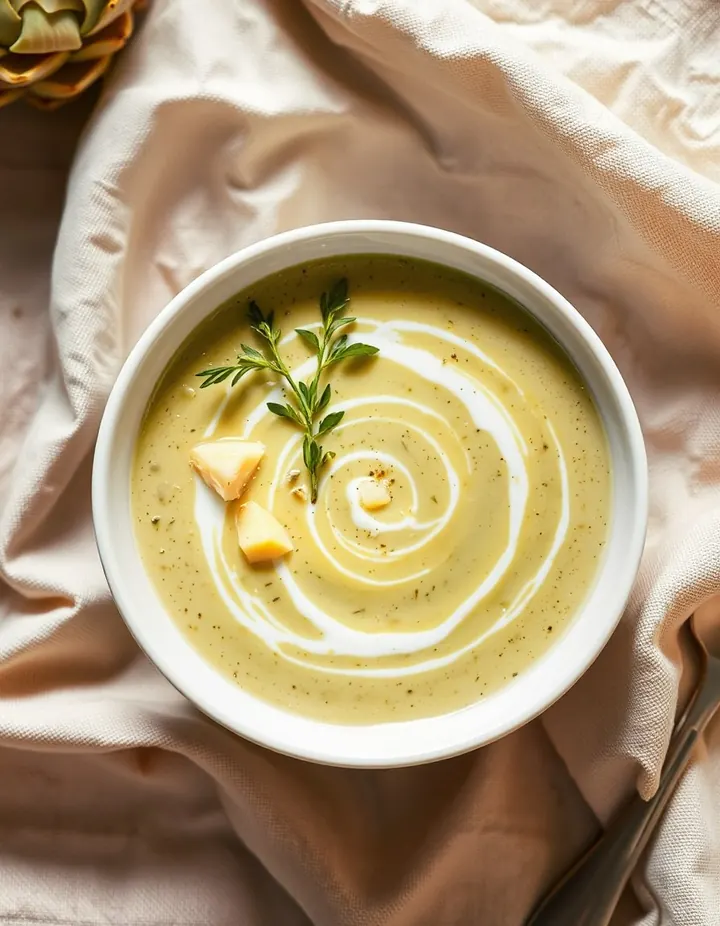 Artichoke Soup55 recipes
 Tomato Soup526 recipes
 Brown Bread461 recipes
The free Flavor Lab newsletter: one surprising pairing a week and the molecular reason it works, in 60 seconds. No spam, unsubscribe anytime.
Prefer an account? Create a free account to save pairings and unlock the full chemistry.