Why it works: Beef and onion are a kitchen classic. They rank in the top 7% of all ingredient pairs, and cooks put them together in 17,092 recipes. Both carry 2-isopropyl-3-methoxypyrazine, which smells earthy, pea. The science ↓
Beef Palates Au Gratin
Ingredients
Directions
The book gives no oven temperature. The 350°F (175°C) in the steps was added when the recipe was transcribed, as a starting point.
Prepare the palates
Rub the beef palates with a little coarse sea salt.
Let them sit for 12 to 24 hours.
Boil the palates in water with white fat, lemon slices, mace, and onions until tender enough to remove the skin.
Cut the palates in half.
Trim them to the same length and breadth.
Stuff and assemble
Spread veal farce on each palate.
Roll them so the farce is visible at both ends.
Place some veal farce in the center of a dish.
Arrange the rolled palates around the farce.
Cover the palates with layers of fat bacon.
Bake and serve
Bake in the oven at 350°F (175°C) until cooked but not browned.
Drain excess fat.
Remove the bacon layer.
Clean the dish.
Serve with clear Espagnole sauce.
Transcribed from a scanned cookbook and modernised for today's kitchens. Where the book gave no heat or time, or said "a moderate oven", the temperatures and times here may be modern equivalents rather than the book's own figures.
Explore the science
The flavor team
The pairs that carry this dish. Each one is judged two ways: how much their aromas overlap, and how often cooks already put them together.
-
Beef + oniontop 7% of all pairsSmell alikemoderateCooked together17,092 recipes
Shared aroma: 2-isopropyl-3-methoxypyrazine (earthy, pea).
-
Beef + vealtop 11% of all pairsSmell alikemoderateCooked together3,784 recipes
Shared aroma: 2,6-nonadienal (cucumber, green).
-
Mace + oniontop 17% of all pairsSmell alikelowCooked together7,078 recipes
Shared aroma: eugenol (clove, spicy).
-
Lemon + vealtop 17% of all pairsSmell alikelowCooked together4,580 recipes
Shared aroma: 3-hexenal (apple, fruity).
-
Onion + vealtop 17% of all pairsSmell alikelowCooked together6,841 recipes
Shared aroma: 2,4-decadienal (seaweed).
Ranks compare each pair with 20,000 random ingredient pairs on CompKitchen. How we score pairs
What each ingredient does
- Beef palates
- Provide the main meat, which becomes tender through boiling and is then rolled and baked.
- Veal farce
- Forms the moist, savoury filling spread inside each rolled palate and set in the dish.
- Fat bacon
- Lies over the palates during baking, adding fat that keeps the meat moist and flavourful.
- Clear espagnole sauce
- Serves as the rich brown sauce accompanying the finished dish.
The step that matters
Bake until cooked but not browned. Palates are already boiled tender, so extended oven heat dries and toughens them and browns the surface. Pulling them when just heated through keeps them moist.
Swap the mace
How well each one fits the dish's main ingredients (beef, lemon, onion, veal, sauce):
- Parsleyfits better
- Tarragonfits better
- Capersfits better
- Macethe original
Fit is the average pairing score against beef, lemon, onion, veal, sauce. Candidates are from the same food group and used in at least 100 recipes.
“What each ingredient does” and “The step that matters” were written by Claude from this recipe’s own method and reviewed in samples by CompKitchen.
You might also like
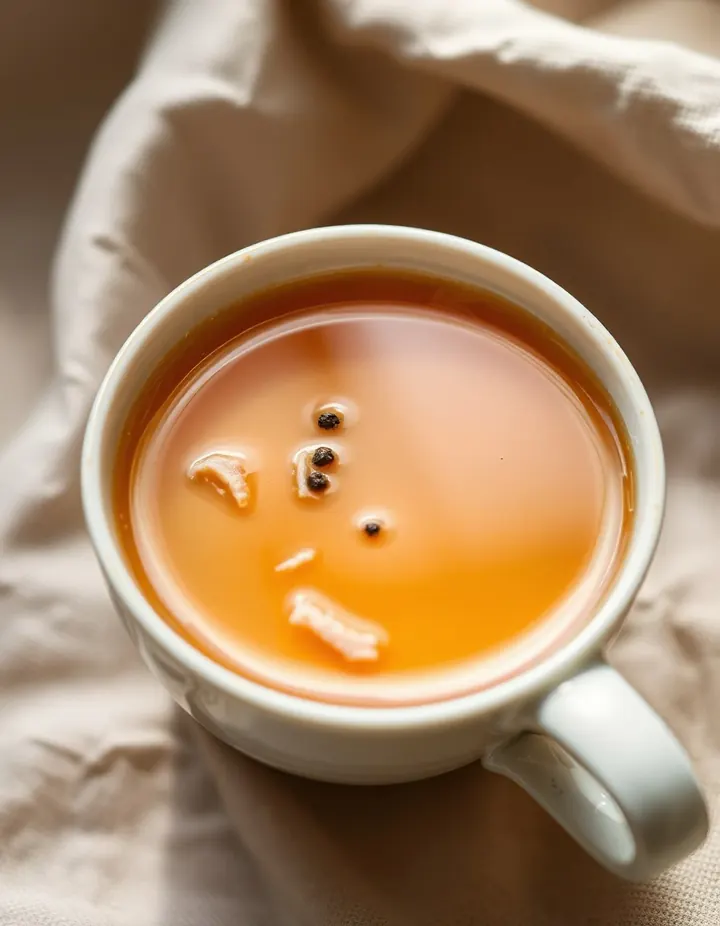 Beef, Mutton, or Veal Broth6 recipes
 Lemon Sauce236 recipes
 Roast Beef211 recipes
 Beef Loaf175 recipes
The free Flavor Lab newsletter: one surprising pairing a week and the molecular reason it works, in 60 seconds. No spam, unsubscribe anytime.
Prefer an account? Create a free account to save pairings and unlock the full chemistry.