Why it works: Nutmeg and allspice match in chemistry and in kitchens. They rank in the top 1% of all ingredient pairs, and cooks put them together in 3,331 recipes. Both carry estragole, which smells anise, licorice. The science ↓
Raised Pie of Poultry or Game
Ingredients
Directions
The book gives no oven temperature. The 350°F (175°C) in the steps was added when the recipe was transcribed, as a starting point.
Make the crust
Make a stiff short crust with flour, butter, water, and egg yolks.
Butter a raised-pie mold.
Line the mold with the crust.
Fill the fowl
Bone the fowl.
Season the inside of the fowl with mace, allspice, pepper, and salt.
Spread a layer of forcemeat inside the fowl.
Spread a layer of veal inside the fowl.
Spread a layer of ham inside the fowl.
Spread another layer of forcemeat inside the fowl.
Roll the fowl over to meet the skin at the back.
Assemble and bake
Line the pie with forcemeat.
Place the fowl inside the pie.
Fill the cavities with veal, ham, and forcemeat.
Wet the edges of the pie.
Cover the pie.
Pinch the edges together.
Decorate with leaves.
Brush the pie with beaten egg yolk.
Bake at 350°F (175°C) for 4 hours.
Gravy and serving
Make a strong gravy from the bones.
Pour the gravy through a funnel into the hole at the top.
Cover the hole with a small loaf.
Let the pie cool before serving.
Transcribed from a scanned cookbook and modernised for today's kitchens. Where the book gave no heat or time, or said "a moderate oven", the temperatures and times here may be modern equivalents rather than the book's own figures.
Explore the science
The flavor team
The pairs that carry this dish. Each one is judged two ways: how much their aromas overlap, and how often cooks already put them together.
-
Nutmeg + allspicetop 1% of all pairsSmell alikestrongCooked together3,331 recipes
Shared aroma: estragole (anise, licorice).
-
Flour + nutmegtop 8% of all pairsSmell alikemoderateCooked together18,623 recipes
Shared aroma: isobutyraldehyde (malty, green).
-
Flour + buttertop 12% of all pairsSmell alikelowCooked together124,287 recipes
Shared aroma: isobutyraldehyde (malty, green).
-
Flour + allspicetop 13% of all pairsSmell alikemoderateCooked together4,302 recipes
Shared aroma: isobutyraldehyde (malty, green).
-
Flour + pheasanttop 14% of all pairsSmell alikemoderateCooked together225 recipes
Shared aroma: acetaldehyde (pungent, ethereal).
Flour and butter barely smell alike, yet cooks put them together in 124,287 recipes: they work on texture and structure more than aroma.
Ranks compare each pair with 20,000 random ingredient pairs on CompKitchen. How we score pairs
What each ingredient does
- Flour
- Forms the structure of the stiff short crust that holds the pie's shape.
- Butter
- Adds fat to the crust, tenderising it and giving a short, crumbly texture.
- Egg yolks
- Enrich the crust and give the pie a glossy, browned surface when brushed on.
- Forcemeat
- Binds and moistens the filling around the fowl and lines the pie.
- Fowl or pheasant
- Provides the main meat that forms the centre of the pie.
The step that matters
Brush the pie with beaten egg yolk. Egg yolk proteins set and brown in the oven, giving the crust its golden colour and sheen. Uneven brushing leaves pale patches and can make the surface look unfinished.
Swap the allspice
How well each one fits the dish's main ingredients (flour, butter, egg, pheasant, veal, ham, nutmeg):
- Capersfits better
- Parsleyfits better
- Cinnamonfits about as well
- Allspicethe original
Fit is the average pairing score against flour, butter, egg, pheasant, veal, ham, nutmeg. Candidates are from the same food group and used in at least 100 recipes.
“What each ingredient does” and “The step that matters” were written by Claude from this recipe’s own method and reviewed in samples by CompKitchen.
You might also like
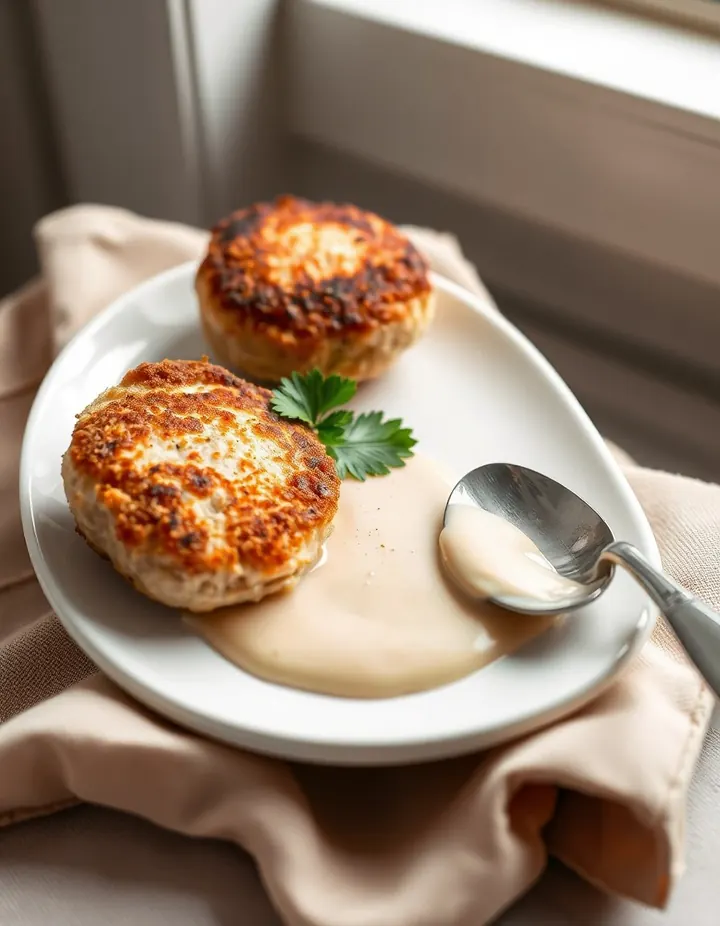 Veal Patties50 recipes
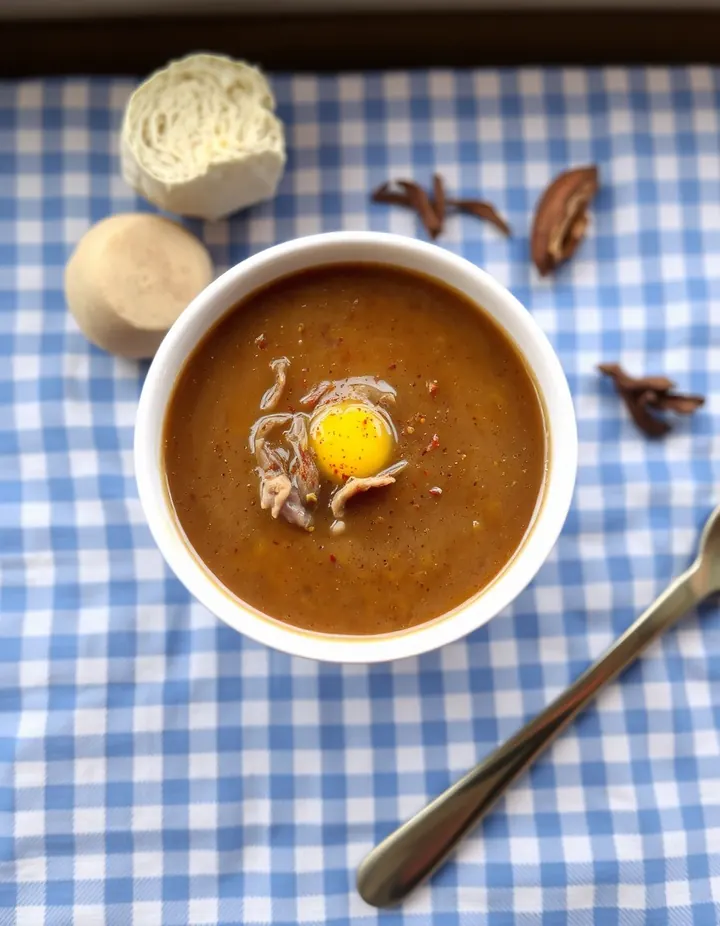 Pheasant Soup25 recipes
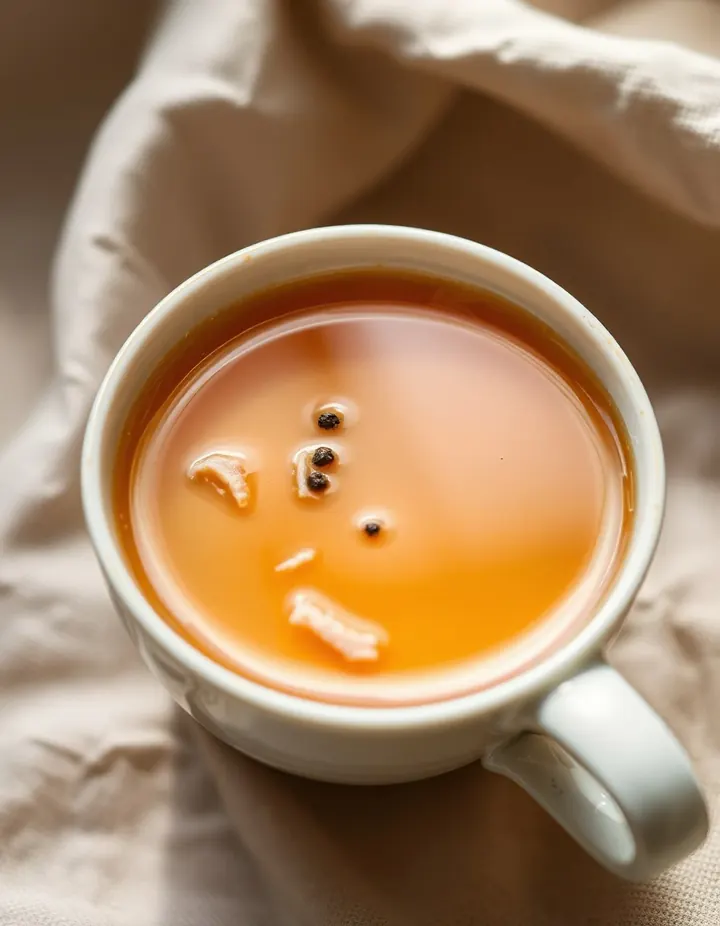 Beef, Mutton, or Veal Broth6 recipes
 Tomato Soup526 recipes
The free Flavor Lab newsletter: one surprising pairing a week and the molecular reason it works, in 60 seconds. No spam, unsubscribe anytime.
Prefer an account? Create a free account to save pairings and unlock the full chemistry.