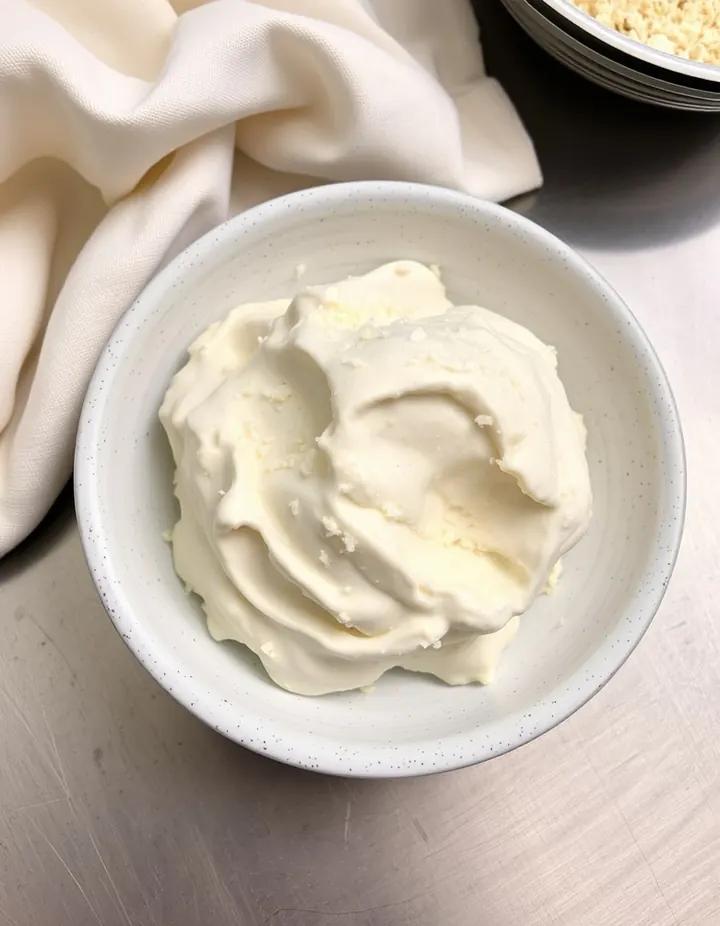
Why it works: Coconut and vanilla match in chemistry and in kitchens. They rank in the top 1% of all ingredient pairs, and cooks put them together in 2,294 recipes. Both carry ethyl caproate, which smells fruity, apple peel. The science ↓
Cocoanut Cream
Ingredients
Directions
Prepare
Peel, wash, and dry the coconut, then grate it.
Melt the gelatin in a small amount of water.
Whip the egg whites.
Make the custard
Mix the egg whites with the milk.
Stir the mixture over heat until thickened.
Sweeten the custard with sugar.
Stir in the melted gelatin and grated coconut.
Whip the cream until solid.
Fold the whipped cream into the custard.
Once the mixture is cold but not set, add flavoring.
Set and serve
Mold the mixture.
Set the molded mixture on ice.
Transcribed from a scanned cookbook and modernised for today's kitchens. Where the book gave no heat or time, or said "a moderate oven", the temperatures and times here may be modern equivalents rather than the book's own figures.
Photo for illustrative purposes only · Contact us to use it
Explore the science
The flavor team
The pairs that carry this dish. Each one is judged two ways: how much their aromas overlap, and how often cooks already put them together.
-
Coconut + vanillatop 1% of all pairsSmell alikestrongCooked together2,294 recipes
Shared aroma: ethyl caproate (fruity, apple peel).
-
Milk + vanillatop 5% of all pairsSmell alikemoderateCooked together19,187 recipes
Shared aroma: ethyl caproate (fruity, apple peel).
-
Gelatin + creamtop 7% of all pairsSmell alikestrongCooked together1,628 recipes
Shared aroma: acetic acid (sour, vinegar).
-
Sugar + gelatintop 7% of all pairsSmell alikemoderateCooked together2,778 recipes
Shared aroma: ethanol (alcoholic, ethereal).
-
Sugar + vanillatop 8% of all pairsSmell alikelowCooked together35,032 recipes
Shared aroma: beta-damascenone (apple, rose).
Sugar and vanilla barely smell alike, yet cooks put them together in 35,032 recipes: they work on texture and structure more than aroma.
Ranks compare each pair with 20,000 random ingredient pairs on CompKitchen. How we score pairs
What each ingredient does
- Gelatin
- Sets the custard so it holds its shape when molded and chilled.
- Egg whites (in the method)
- Whipped, they trap air and give the custard a light, airy structure.
- Thick cream
- Whipped and folded in, it adds fat and a smooth, rich texture.
- Milk
- Forms the liquid base that is thickened into the custard.
- Sugar
- Adds sweetness to balance the richness of the cream and coconut.
- Fresh coconut
- Grated, it adds moisture, body, and coconut flavor to the custard.
The step that matters
Adding flavoring once the mixture is cold but not set. Gelatin begins to set as it cools, so if the mixture gets too cold before flavoring and molding, it can turn lumpy or firm unevenly. Flavoring should be added while it is still fluid enough to blend evenly and pour into the mold.
Swap the coconut
How well each one fits the dish's main ingredients (sugar, gelatin, milk, cream, vanilla):
- Strawberryfits about as well
- Coconutthe original
- Figfits about as well
- Peachfits about as well
Fit is the average pairing score against sugar, gelatin, milk, cream, vanilla. Candidates are from the same food group and used in at least 100 recipes.
“What each ingredient does” and “The step that matters” were written by Claude from this recipe’s own method and reviewed in samples by CompKitchen.
More coconut custard recipes
You might also like
 Vanilla Ice Cream108 recipes
 White Cake431 recipes
 Pound Cake373 recipes
 Orange Bundt Cake349 recipes
The free Flavor Lab newsletter: one surprising pairing a week and the molecular reason it works, in 60 seconds. No spam, unsubscribe anytime.
Prefer an account? Create a free account to save pairings and unlock the full chemistry.