Why it works: Flour and biscuit match in chemistry and in kitchens. They rank in the top 9% of all ingredient pairs, and cooks put them together in 889 recipes. Both carry isobutyraldehyde, which smells malty, green. The science ↓
Round Steak on Biscuits
Ingredients
Directions
Prepare the steak
Cut the round steak into pieces about ½ inch square.
Cover the steak with water and cook just below boiling until tender, or boil for 5 minutes.
Finish and serve
Transfer the meat to a fireless cooker and leave it for 5 hours.
Thicken the gravy with 2 tablespoons of flour mixed with 1 cup of water.
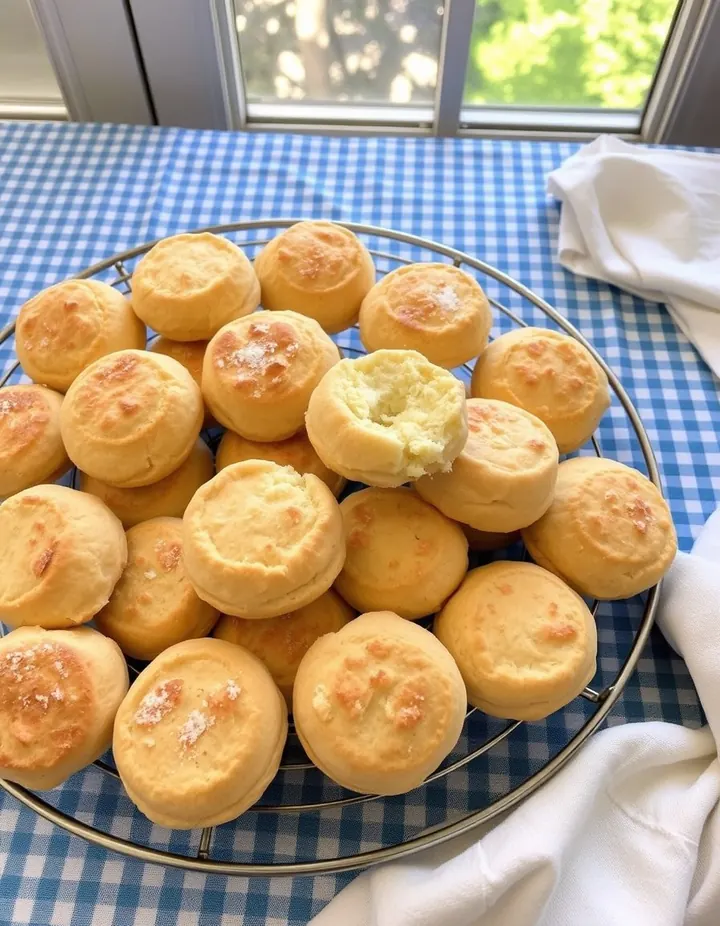
Pour the meat and gravy over split baking powder biscuits that are well-baked.
Transcribed from a scanned cookbook and modernised for today's kitchens. Where the book gave no heat or time, or said "a moderate oven", the temperatures and times here may be modern equivalents rather than the book's own figures.
Explore the science
The flavor team
The pairs that carry this dish. Each one is judged two ways: how much their aromas overlap, and how often cooks already put them together.
-
Flour + biscuittop 9% of all pairsSmell alikestrongCooked together889 recipes
Shared aroma: isobutyraldehyde (malty, green).
Ranks compare each pair with 20,000 random ingredient pairs on CompKitchen. How we score pairs
What each ingredient does
- Round steak
- Main protein; slow moist cooking breaks down its connective tissue to make it tender.
- Flour
- Thickens the cooking liquid into a smooth gravy as its starch swells with heat.
- Baking powder biscuits
- Serve as the base that soaks up the gravy and meat.
The step that matters
Cook just below boiling until tender. Holding the water just under a boil lets collagen in the steak slowly convert to gelatin without tightening the muscle fibres. A hard boil toughens and dries the meat, so the timing and temperature matter.
“What each ingredient does” and “The step that matters” were written by Claude from this recipe’s own method and reviewed in samples by CompKitchen.
You might also like
 Potato Biscuit32 recipes
 Tomato Soup526 recipes
 Brown Bread461 recipes
 Mutton Broth292 recipes
The free Flavor Lab newsletter: one surprising pairing a week and the molecular reason it works, in 60 seconds. No spam, unsubscribe anytime.
Prefer an account? Create a free account to save pairings and unlock the full chemistry.