Why it works: Chicken and cream are a kitchen classic. They rank in the top 23% of all ingredient pairs, and cooks put them together in 6,241 recipes. Both carry 1-octen-3-one, which smells mushroom, metallic. The science ↓
Chicken Pamada
Ingredients
Directions
Prepare the chicken
Clean the chicken as you would for roasting.
Cut the chicken in half down the middle of the back.
Remove the flesh from half the chicken and cut it into small pieces.
Simmer
Place the chicken pieces in a pot and sprinkle with salt.
Cover the pot with a piece of paper.
Fill a saucepan halfway with boiling water and place it on the stove.
Stand the pot in the saucepan and let it simmer for two hours without covering the pot with water.
After two hours, remove the pot from the saucepan.
Carefully take the chicken pieces out with a spoon, retaining the liquid.
Make the pulp and finish
Pound the chicken pieces in a mortar until they form a pulp.
Set a sieve over a basin and pass the pounded chicken through it, using a wooden spoon to help it through.
Add a little of the chicken liquid to the pulp to help it pass through.
Once all the chicken pulp is in the basin, stir in the cream.
Transcribed from a scanned cookbook and modernised for today's kitchens. Where the book gave no heat or time, or said "a moderate oven", the temperatures and times here may be modern equivalents rather than the book's own figures.
Explore the science
The flavor team
The pairs that carry this dish. Each one is judged two ways: how much their aromas overlap, and how often cooks already put them together.
-
Chicken + creamtop 23% of all pairsSmell alikelowCooked together6,241 recipes
Shared aroma: 1-octen-3-one (mushroom, metallic).
Ranks compare each pair with 20,000 random ingredient pairs on CompKitchen. How we score pairs
What each ingredient does
- Chicken
- Provides the main protein and flavor, and the pulp forms the body of the dish.
- Cream
- Adds richness and a smooth, creamy texture to the finished pulp.
The step that matters
Simmering in a water bath. The pot must sit in simmering water without its lid submerged, so the chicken cooks gently and stays moist. Boiling it directly or letting water enter the pot would make the liquid cloudy and the texture uneven.
“What each ingredient does” and “The step that matters” were written by Claude from this recipe’s own method and reviewed in samples by CompKitchen.
You might also like
 Chicken Broth257 recipes
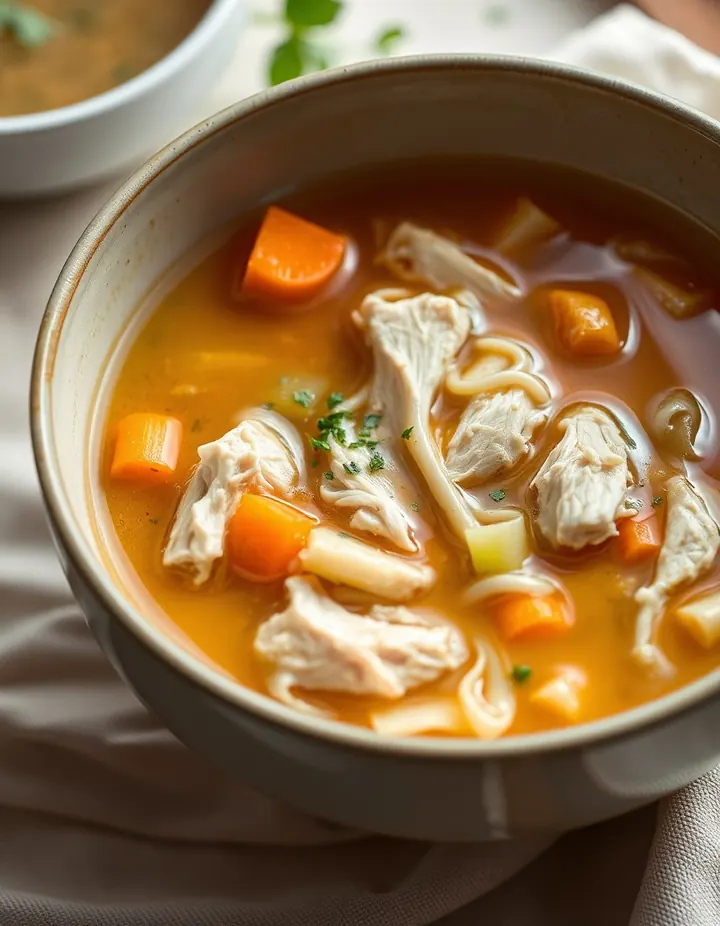 Chicken Soup156 recipes
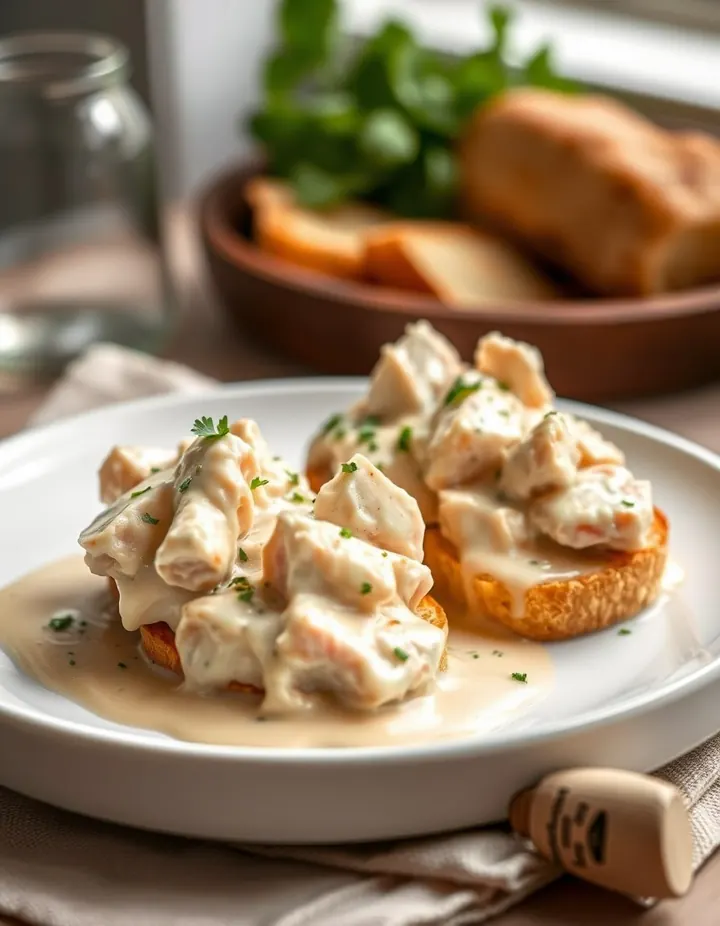 Creamed Chicken89 recipes
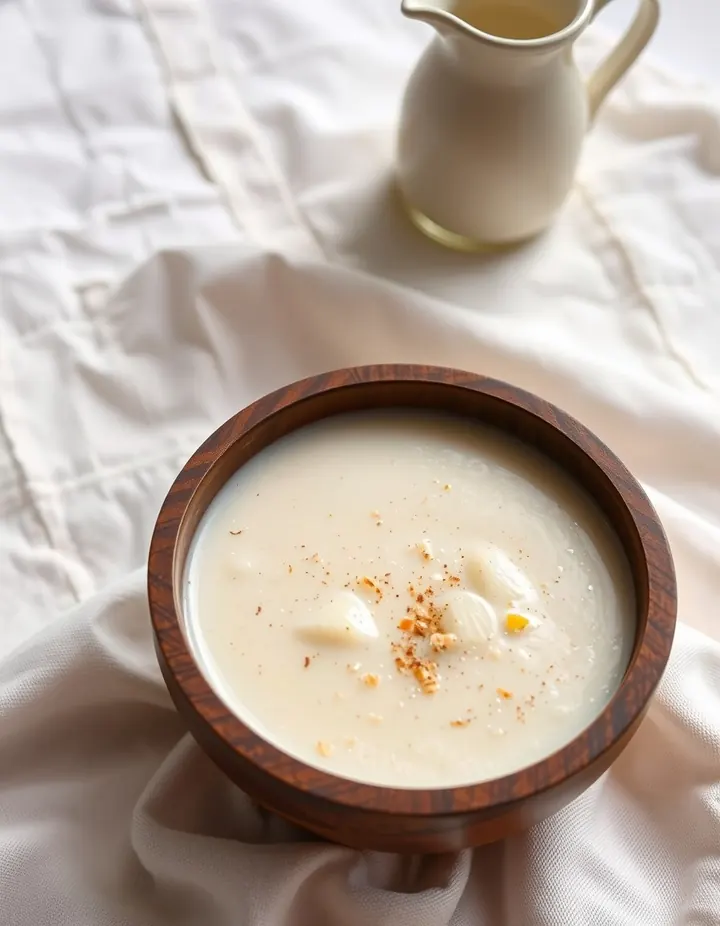 Chicken Panada75 recipes
The free Flavor Lab newsletter: one surprising pairing a week and the molecular reason it works, in 60 seconds. No spam, unsubscribe anytime.
Prefer an account? Create a free account to save pairings and unlock the full chemistry.