Why it works: Onion and beef are a kitchen classic. They rank in the top 7% of all ingredient pairs, and cooks put them together in 17,092 recipes. Both carry 2-isopropyl-3-methoxypyrazine, which smells earthy, pea. The science ↓
Jugged Hare
Ingredients
Directions
Prepare
Prepare the forcemeat by mixing breadcrumbs, salt, chopped suet, pepper, chopped parsley, anchovy essence, and thyme.
Cut the beef steak into strips.
Place a little forcemeat on each strip, roll up, tie with string, and fry in hot butter until browned.
Skin and clean the hare, saving the blood.
Cut the hare into neat joints and fry quickly in butter.
Stew
In a stew jar, combine the hare, prepared steak, onion, and seasonings.
Add the stock and a little seasoning.
Place the jar in a tin of water and cover tightly.
Bring to a boil, then simmer gently for 2 to 3 hours until tender.
While cooking, form the remaining forcemeat into balls, egg and crumb them, and fry in hot fat.
Add the forcemeat balls to the hare 20 minutes before it's done.
Make the gravy and serve
Once the hare is tender, remove the balls, joints, and steak.
Blend flour into the gravy, boil, season, and add jelly.
Incorporate the saved blood and heat through.
Add the port wine and anchovy essence if desired.
Remove strings from the steak and arrange the hare and steak on a hot dish.
Pour gravy over and garnish with forcemeat balls and glace cherries if desired.
Transcribed from a scanned cookbook and modernised for today's kitchens. Where the book gave no heat or time, or said "a moderate oven", the temperatures and times here may be modern equivalents rather than the book's own figures.
Explore the science
The flavor team
The pairs that carry this dish. Each one is judged two ways: how much their aromas overlap, and how often cooks already put them together.
-
Onion + beeftop 7% of all pairsSmell alikemoderateCooked together17,092 recipes
Shared aroma: 2-isopropyl-3-methoxypyrazine (earthy, pea).
-
Port wine + red curranttop 10% of all pairsSmell alikemoderateCooked together118 recipes
Shared aroma: isoamyl acetate (banana, pear).
-
Clove + red curranttop 11% of all pairsSmell alikemoderateCooked together128 recipes
Shared aroma: ethyl benzoate (fruity, sweet).
-
Port wine + clovetop 12% of all pairsSmell alikemoderateCooked together914 recipes
Shared aroma: ethyl cinnamate (sweet, balsamic).
-
Butter + flourtop 12% of all pairsSmell alikelowCooked together124,287 recipes
Shared aroma: isobutyraldehyde (malty, green).
Butter and flour barely smell alike, yet cooks put them together in 124,287 recipes: they work on texture and structure more than aroma.
Ranks compare each pair with 20,000 random ingredient pairs on CompKitchen. How we score pairs
What each ingredient does
- Hare
- Forms the main body of the stew, becoming tender during long, gentle simmering.
- Blood (in the method)
- Thickens and enriches the gravy, giving it body and a deeper colour.
- Flour
- Thickens the gravy as it is blended in and boiled.
- Beef steak
- Adds meaty richness and savoury flavour; its forcemeat roll stays moist during braising.
- Port wine
- Adds sweetness and depth of flavour to the finished gravy.
- Butter
- Browns the hare and steak when fried, building savoury flavour at the start.
The step that matters
Simmering the hare gently in a covered jar. A rolling boil toughens meat and dries it out. Gentle simmering in a sealed jar set in water lets the connective tissue break down slowly, keeping the hare tender and moist.
Swap the red currant
How well each one fits the dish's main ingredients (onion, butter, beef, flour, port wine, clove):
- Figfits better
- Plumfits better
- Raisinfits better
- Red currantthe original
Fit is the average pairing score against onion, butter, beef, flour, port wine, clove. Candidates are from the same food group and used in at least 100 recipes.
“What each ingredient does” and “The step that matters” were written by Claude from this recipe’s own method and reviewed in samples by CompKitchen.
You might also like
 Roast Beef211 recipes
 Beef Loaf175 recipes
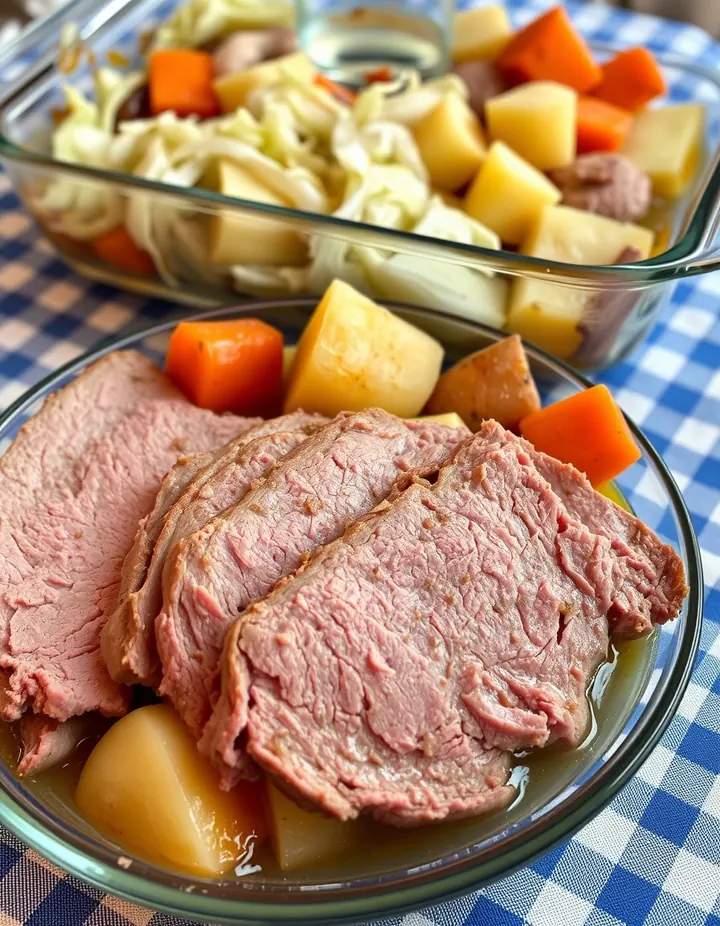 Corned Beef87 recipes
 Beef Broth67 recipes
The free Flavor Lab newsletter: one surprising pairing a week and the molecular reason it works, in 60 seconds. No spam, unsubscribe anytime.
Prefer an account? Create a free account to save pairings and unlock the full chemistry.