Why it works: Mutton and pepper are a kitchen classic. They rank in the top 16% of all ingredient pairs, and cooks put them together in 5,442 recipes. Both carry trans-2-nonenal, which smells cardboard, fatty. The science ↓
Boned Leg of Mutton
Ingredients
Directions
The book says “a hot oven”. The 400°F (200°C) in the steps is the modern equivalent, not the book's own figure.
Prepare the leg
Remove the bone from the leg of mutton and wipe the meat inside and out with a wet cloth.
Sprinkle the inside with coarse sea salt.
Stuff and sew the leg.
Roast
Place the leg on a rack in a dripping pan.
Add some kidney suet on the meat and in the pan.
Dredge the meat with salt, pepper, and flour.
Bake in a hot oven at 400°F (200°C).
Baste as soon as the flour is browned, then repeat basting often.
Bake for one hour for rare or one hour and a quarter for well done.
Transcribed from a scanned cookbook and modernised for today's kitchens. Where the book gave no heat or time, or said "a moderate oven", the temperatures and times here may be modern equivalents rather than the book's own figures.
Explore the science
The flavor team
The pairs that carry this dish. Each one is judged two ways: how much their aromas overlap, and how often cooks already put them together.
-
Mutton + peppertop 16% of all pairsSmell alikelowCooked together5,442 recipes
Shared aroma: trans-2-nonenal (cardboard, fatty).
-
Pepper + flourtop 19% of all pairsSmell alikemoderateCooked together50,459 recipes
Shared aroma: isobutyraldehyde (malty, green).
-
Mutton + flourtop 29% of all pairsSmell alikelowCooked together2,695 recipes
Shared aroma: hexanal (grass, green).
Ranks compare each pair with 20,000 random ingredient pairs on CompKitchen. How we score pairs
What each ingredient does
- Leg of mutton
- Forms the main body of the roast, and its lean meat cooks to tenderness and juiciness.
- Kidney suet
- Adds fat that bastes the meat as it melts, keeping it moist and adding richness.
- Flour
- Dredged over the meat, it browns in the oven to form a crisp, golden crust.
The step that matters
Basting once the flour is browned. Basting too early can wash off the flour coating before it sets, while waiting until it browns builds a crust. Repeated basting then keeps the surface moist and the browning even.
“What each ingredient does” and “The step that matters” were written by Claude from this recipe’s own method and reviewed in samples by CompKitchen.
More boned leg of mutton recipes
You might also like
 Mutton Broth292 recipes
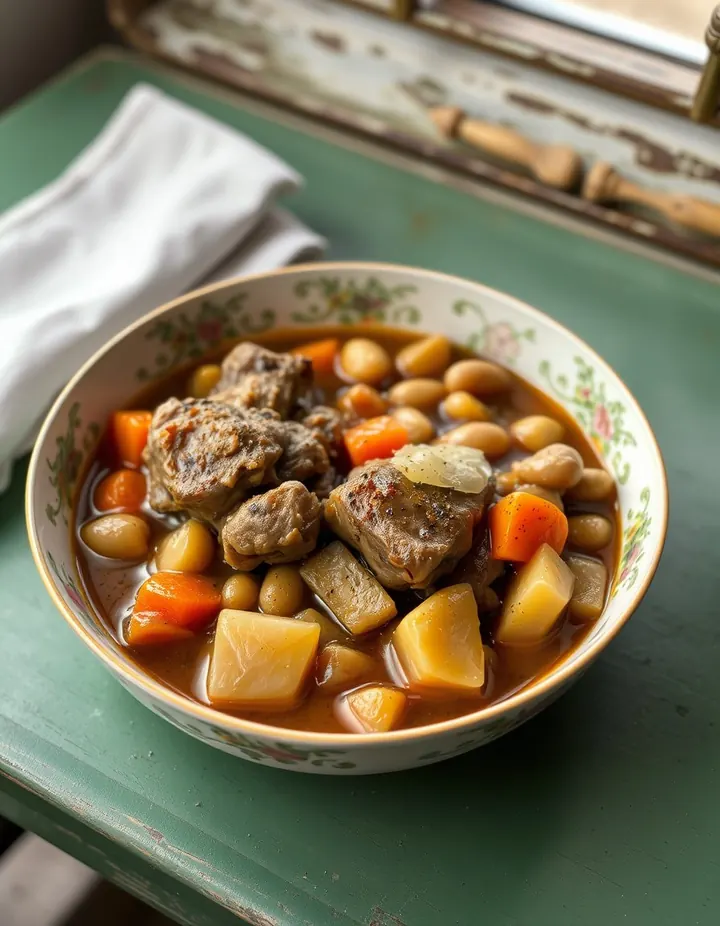 Haricot Mutton59 recipes
 Mutton Soup56 recipes
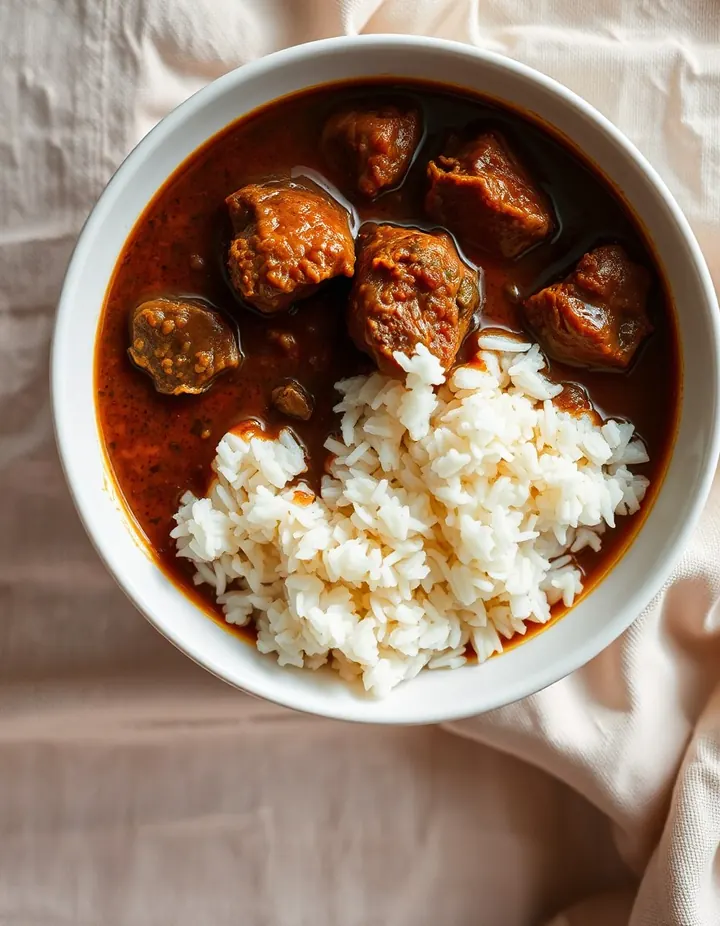 Curried Mutton9 recipes
The free Flavor Lab newsletter: one surprising pairing a week and the molecular reason it works, in 60 seconds. No spam, unsubscribe anytime.
Prefer an account? Create a free account to save pairings and unlock the full chemistry.