Why it works: Tarragon and chervil match in chemistry and in kitchens. They rank in the top 1% of all ingredient pairs, and cooks put them together in 824 recipes. Both carry estragole, which smells anise, licorice. The science ↓
Haddock Creams
Ingredients
Directions
The book gives no cooking times; the times in the steps were added in transcription, so check for doneness rather than trusting the clock.
Prepare the moulds
Decorate small dariole moulds with a thin layer of aspic and tarragon and chervil leaves.
Make the haddock puree
Place the haddock in the oven with butter on top and cook for 10 minutes.
Remove skin and bones, then pound the fish in a mortar until smooth and let cool.
Make the cream mixture
Melt the gelatine in the tomato pulp.
Whip the cream until stiff, then fold in the mayonnaise and remaining aspic jelly.
Strain the tomato sauce into the cream mixture and stir in the haddock puree.
Set and serve
Fill the moulds with the mixture and refrigerate to set.
Turn out onto a cold dish, decorate with chopped aspic and small salad, and serve.
Transcribed from a scanned cookbook and modernised for today's kitchens. Where the book gave no heat or time, or said "a moderate oven", the temperatures and times here may be modern equivalents rather than the book's own figures.
Explore the science
The flavor team
The pairs that carry this dish. Each one is judged two ways: how much their aromas overlap, and how often cooks already put them together.
-
Tarragon + cherviltop 1% of all pairsSmell alikestrongCooked together824 recipes
Shared aroma: estragole (anise, licorice).
-
Haddock + creamtop 6% of all pairsSmell alikemoderateCooked together181 recipes
Shared aroma: ethanol (alcoholic, ethereal).
-
Tomato + tarragontop 6% of all pairsSmell alikemoderateCooked together391 recipes
Shared aroma: beta-phellandrene (minty, terpene).
-
Cream + buttertop 8% of all pairsSmell alikemoderateCooked together41,516 recipes
Shared aroma: delta-dodecalactone (sweet, creamy).
-
Tomato + cherviltop 12% of all pairsSmell alikemoderateCooked together152 recipes
Shared aroma: coumarin (sweet, hay).
Ranks compare each pair with 20,000 random ingredient pairs on CompKitchen. How we score pairs
What each ingredient does
- Haddock
- Forms the main flavour and body of the creams once pounded smooth.
- Heavy cream
- Whipped to give the set creams a light, airy texture.
- Gelatine
- Sets the mixture so the creams hold their shape when turned out.
- Aspic jelly
- Adds savoury flavour and a glossy, set jelly coating to the creams.
- Mayonnaise
- Adds fat and richness to the cream mixture.
- Tomato pulp
- Adds acidity and colour, and carries the dissolved gelatine.
The step that matters
Whip the cream until stiff. Cream that is under-whipped stays runny and will not give a light set texture, while over-whipping turns it grainy and can cause it to split when folded. Stop when it holds firm peaks.
Swap the tomato
How well each one fits the dish's main ingredients (haddock, cream, tarragon, chervil, butter):
- Chivefits better
- Shallotfits better
- Lettucefits better
- Tomatothe original
Fit is the average pairing score against haddock, cream, tarragon, chervil, butter. Candidates are from the same food group and used in at least 100 recipes.
“What each ingredient does” and “The step that matters” were written by Claude from this recipe’s own method and reviewed in samples by CompKitchen.
You might also like
 Tomato Soup526 recipes
 Cream of Tomato Soup107 recipes
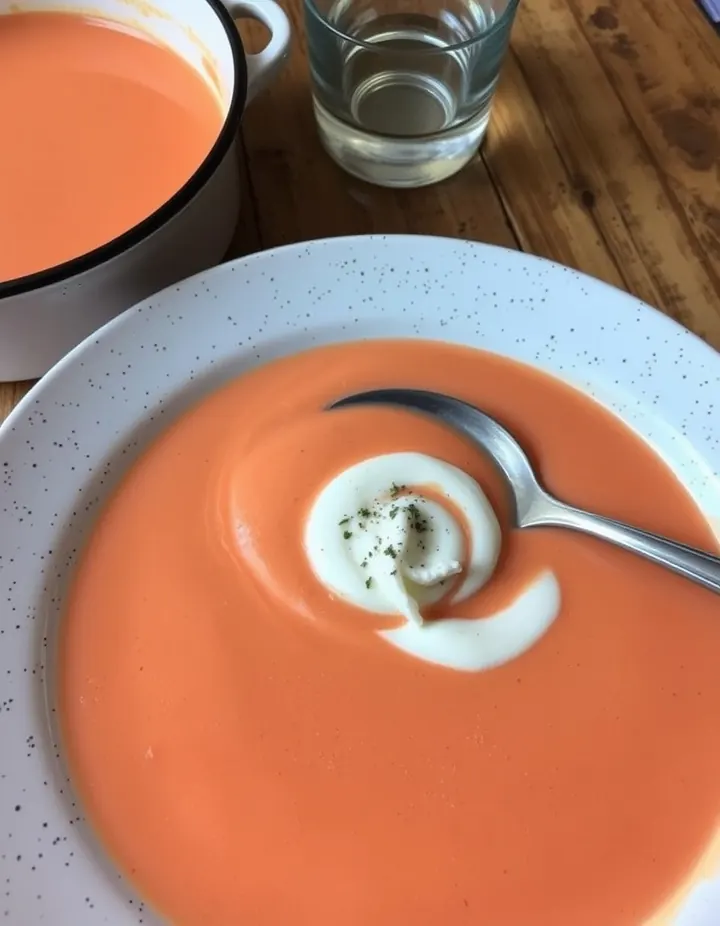 Tomato Bisque61 recipes
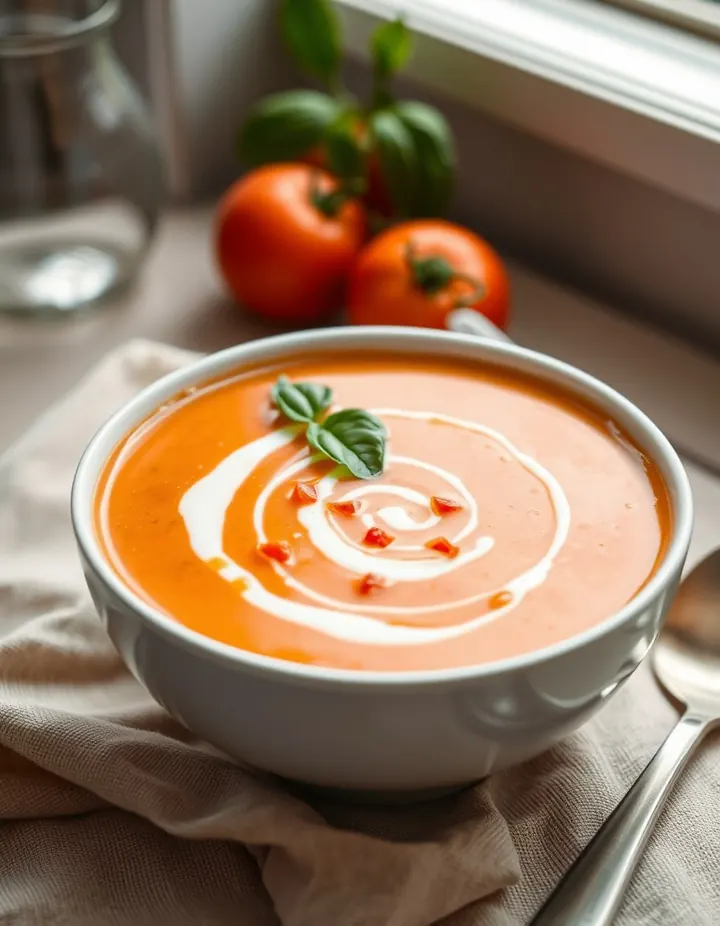 Cream Tomato Soup28 recipes
The free Flavor Lab newsletter: one surprising pairing a week and the molecular reason it works, in 60 seconds. No spam, unsubscribe anytime.
Prefer an account? Create a free account to save pairings and unlock the full chemistry.