Why it works: Parsley and lemon match in chemistry and in kitchens. They rank in the top 1% of all ingredient pairs, and cooks put them together in 14,037 recipes. Both carry beta-phellandrene, which smells minty, terpene. The science ↓
Sardines with Poached Eggs
Ingredients
Directions
The book gives no oven temperature. The 350°F (175°C) in the steps was added when the recipe was transcribed, as a starting point.
Prepare the bread
Cut the bread into even-sized oval shapes.
Beat the egg with milk.
Dip the bread slices in the egg mixture.
Fry the bread slices in butter until golden brown.
Make the yolk mixture
Chop the yolks of the hard-boiled eggs.
Place the chopped yolks in a saucepan with butter.
Add parsley, beetroot, tarragon, lemon juice, mustard, and capers to the saucepan.
Stir the mixture over low heat for a few minutes.
Thicken the mixture with breadcrumbs.
Assemble and serve
Poach the eggs.
Mask the poached eggs with the yolk mixture.
Arrange the poached eggs in the center of the dish and garnish with sardine fillets.
Spread half of the fried bread rounds with the yolk mixture.
Spread the other half of the fried bread rounds with sardine paste.
Arrange the bread around the dish, overlapping them to form a border.
Season the dish with cayenne pepper.
Place the dish in the oven at 350°F (175°C) for a few minutes to heat through.
Serve immediately.
Transcribed from a scanned cookbook and modernised for today's kitchens. Where the book gave no heat or time, or said "a moderate oven", the temperatures and times here may be modern equivalents rather than the book's own figures.
Explore the science
The flavor team
The pairs that carry this dish. Each one is judged two ways: how much their aromas overlap, and how often cooks already put them together.
-
Parsley + lemontop 1% of all pairsSmell alikestrongCooked together14,037 recipes
Shared aroma: beta-phellandrene (minty, terpene).
-
Beetroot + tarragontop 1% of all pairsSmell alikestrongCooked together184 recipes
Shared aroma: coumarin (sweet, hay).
-
Parsley + tarragontop 1% of all pairsSmell alikestrongCooked together1,563 recipes
Shared aroma: estragole (anise, licorice).
-
Tarragon + lemontop 1% of all pairsSmell alikestrongCooked together1,137 recipes
Shared aroma: beta-phellandrene (minty, terpene).
-
Parsley + beetroottop 5% of all pairsSmell alikestrongCooked together745 recipes
Shared aroma: coumarin (sweet, hay).
Ranks compare each pair with 20,000 random ingredient pairs on CompKitchen. How we score pairs
What each ingredient does
- Eggs
- Egg and milk coating helps the bread brown and crisp when fried.
- Hard-boiled egg yolks
- Mashed yolks with butter form a rich, thick mask for the poached eggs.
- Breadcrumbs
- Starch in the breadcrumbs thickens the yolk mixture as it heats.
- Sardine paste
- Adds a salty, savoury fish flavour to the bread spread.
- Lemon juice
- Acidity brightens the rich yolk mixture and balances its fat.
The step that matters
Thicken the mixture with breadcrumbs. Breadcrumbs absorb liquid and swell as they heat, so the mask thickens. Adding too many or stirring unevenly leaves it stiff or lumpy, while too little leaves it runny and unable to coat the eggs.
Swap the beetroot
How well each one fits the dish's main ingredients (bread, egg, milk, butter, parsley, tarragon, lemon):
- Shallotfits better
- Asparagusfits better
- Chivefits better
- Beetrootthe original
Fit is the average pairing score against bread, egg, milk, butter, parsley, tarragon, lemon. Candidates are from the same food group and used in at least 100 recipes.
“What each ingredient does” and “The step that matters” were written by Claude from this recipe’s own method and reviewed in samples by CompKitchen.
You might also like
 Brown Bread461 recipes
 Lemon Sauce236 recipes
 White Bread80 recipes
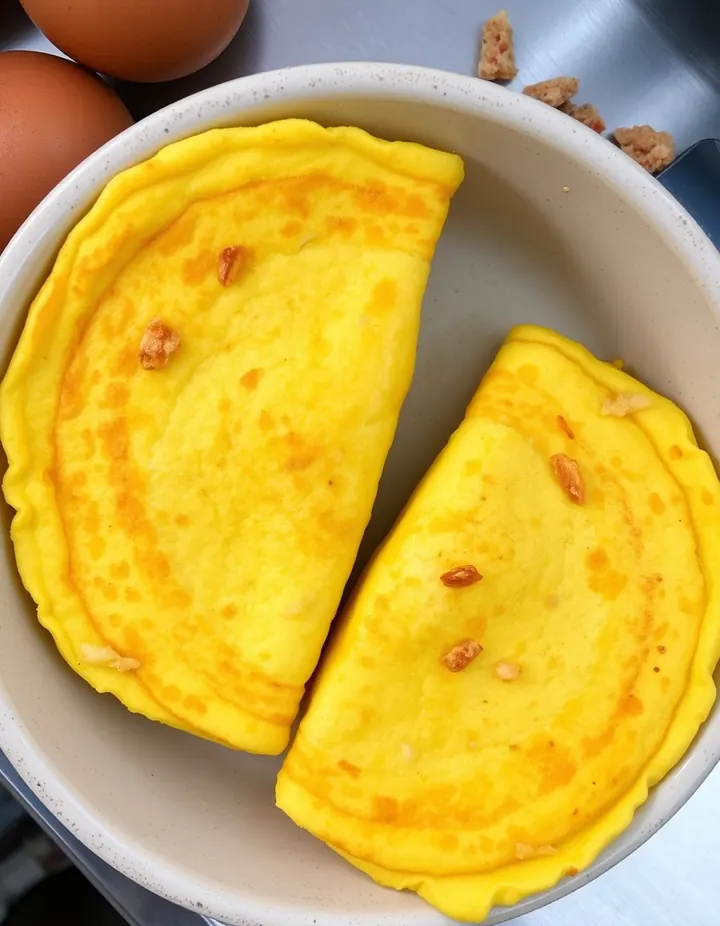 Bread Omelette60 recipes
The free Flavor Lab newsletter: one surprising pairing a week and the molecular reason it works, in 60 seconds. No spam, unsubscribe anytime.
Prefer an account? Create a free account to save pairings and unlock the full chemistry.