Why it works: Pepper and lemon match in chemistry and in kitchens. They rank in the top 3% of all ingredient pairs, and cooks put them together in 27,047 recipes. Both carry trans-2-nonenal, which smells cardboard, fatty. The science ↓
Fieldfare Pasties
Ingredients
Directions
The book says “a good oven”. The 400°F (200°C) in the steps is the modern equivalent, not the book's own figure.
Prepare the birds
Draw the birds.
Remove any grit from the gizzards.
In a stewpan, melt 2 tablespoons of butter.
Steam the insides of the birds without browning them.
Remove the insides.
Lightly brown the birds in the same pan.
Add more butter.
Stir in 3-4 beaten eggs and 1 cup of milk.
Make the forcemeat
Prepare a forcemeat by mixing 1.5 pounds of minced veal, 0.5 pound of minced bacon, and 0.5 pound of minced calf's liver.
Season the forcemeat with pepper, coarse sea salt, and spice.
Stir the forcemeat into the stewpan until thickened.
Spread a layer of the thickened forcemeat in a dish.
If available, cut boiled sweetbread into small pieces and mix with the forcemeat.
Assemble and bake
Layer the birds and their insides on top of the forcemeat, seasoning with salt, pepper, and a squeeze of lemon juice.
Cover with the remaining forcemeat.
Top with pastry.
Bake in a 400°F (200°C) oven for 45 minutes to 1 hour.
When done, pour a little rich gravy into the dish using a funnel.
Transcribed from a scanned cookbook and modernised for today's kitchens. Where the book gave no heat or time, or said "a moderate oven", the temperatures and times here may be modern equivalents rather than the book's own figures.
Explore the science
The flavor team
The pairs that carry this dish. Each one is judged two ways: how much their aromas overlap, and how often cooks already put them together.
-
Pepper + lemontop 3% of all pairsSmell alikestrongCooked together27,047 recipes
Shared aroma: trans-2-nonenal (cardboard, fatty).
-
Veal + livertop 3% of all pairsSmell alikestrongCooked together392 recipes
Shared aroma: enoic acid (butter, cheesy).
-
Butter + milktop 7% of all pairsSmell alikemoderateCooked together81,283 recipes
Shared aroma: (z)-4-heptenal (biscuit, cream).
-
Milk + lemontop 15% of all pairsSmell alikemoderateCooked together19,053 recipes
Shared aroma: 2-nonenal (fatty, green).
-
Quail + buttertop 16% of all pairsSmell alikemoderateCooked together512 recipes
Shared aroma: decanal (soap, orange peel).
Ranks compare each pair with 20,000 random ingredient pairs on CompKitchen. How we score pairs
What each ingredient does
- Eggs
- Bind the milk and forcemeat, helping the mixture set and hold together when cooked.
- Veal
- Provides the main minced body of the forcemeat, giving a firm, tender texture.
- Bacon
- Adds fat to the forcemeat, keeping it moist and richly flavoured as it bakes.
- Calf's liver
- Adds a deep, savoury flavour and a softer texture to the forcemeat.
- Milk
- Adds moisture to the egg mixture, keeping the forcemeat tender rather than dry.
The step that matters
Browning the birds lightly without cooking them through. The birds finish cooking in the oven, so over-browning them in the pan can leave them dry and tough once baked.
“What each ingredient does” and “The step that matters” were written by Claude from this recipe’s own method and reviewed in samples by CompKitchen.
You might also like
 Lemon Sauce236 recipes
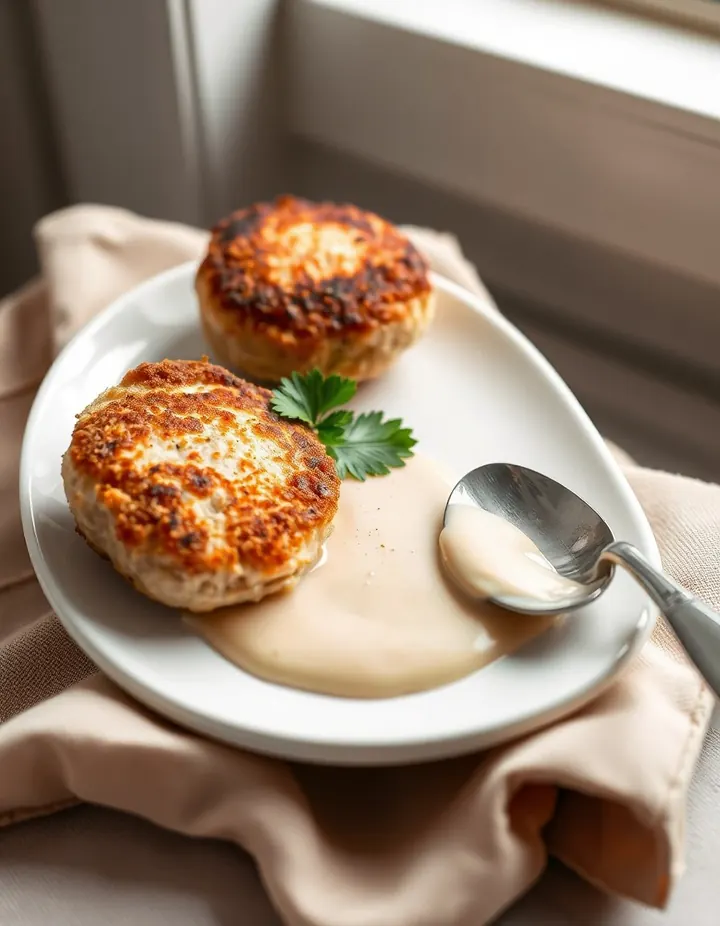 Veal Patties50 recipes
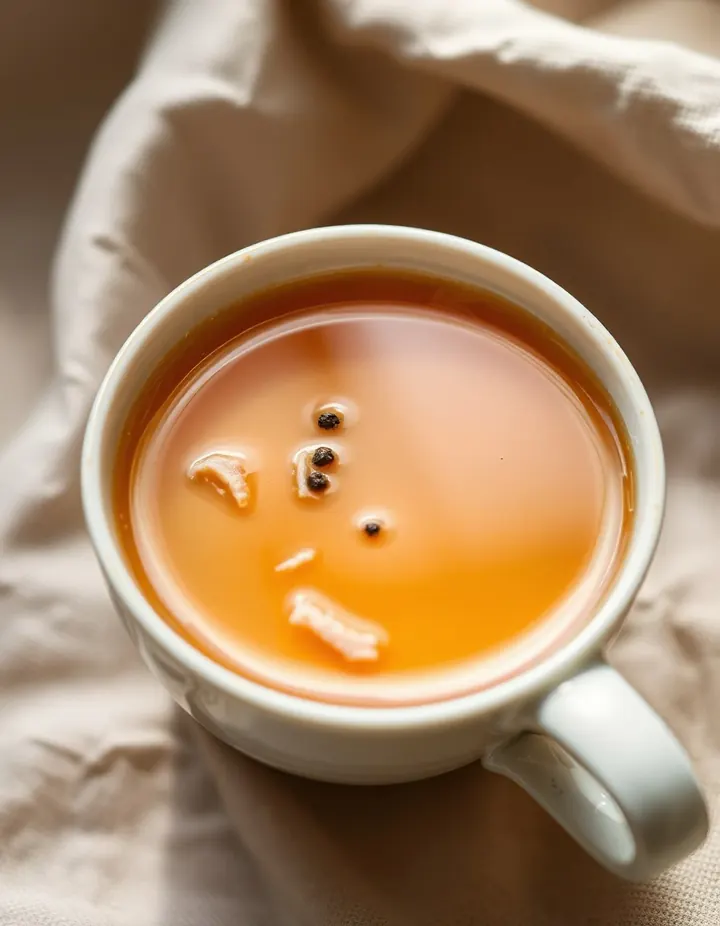 Beef, Mutton, or Veal Broth6 recipes
 Tomato Soup526 recipes
The free Flavor Lab newsletter: one surprising pairing a week and the molecular reason it works, in 60 seconds. No spam, unsubscribe anytime.
Prefer an account? Create a free account to save pairings and unlock the full chemistry.