Why it works: Shallot and parsley match in chemistry and in kitchens. They rank in the top 1% of all ingredient pairs, and cooks put them together in 3,737 recipes. Both carry 2,4-decadienal, which smells seaweed. The science ↓
Pheasant, Stuffed and Roasted
Ingredients
Directions
Prepare the pheasant
Pick, draw, and singe the pheasant, then truss it for roasting.
Wash the liver, fry it in hot fat until cooked, then mince finely.
In a mortar, pound the liver and mix with breadcrumbs, ham, mushrooms, shallot, parsley, pepper, salt, and butter.
Bind the mixture with the egg yolk and stuff it into the pheasant.
Cover the breast with bacon slices and secure with twine.
Roast the pheasant
Roast the pheasant before a clear fire until done.
Make the sauce
For the sauce, heat olive oil in a stewpan and add minced mushrooms, garlic, shallots, and capers.
Add cloves, bay leaf, thyme, parsley, and peppercorns, stirring over gentle heat for 5-6 minutes.
Pour in stock and sherry, then simmer gently for 15 minutes.
Remove cloves, herbs, and garlic, add more stock, and simmer for 5 minutes.
Skim the sauce, strain it through a fine sieve, and add lemon juice.
Heat the sauce again before serving.
Optionally, add tomatoes and simmer until they can be pressed through a sieve.
Transcribed from a scanned cookbook and modernised for today's kitchens. Where the book gave no heat or time, or said "a moderate oven", the temperatures and times here may be modern equivalents rather than the book's own figures.
Explore the science
The flavor team
The pairs that carry this dish. Each one is judged two ways: how much their aromas overlap, and how often cooks already put them together.
-
Shallot + parsleytop 1% of all pairsSmell alikestrongCooked together3,737 recipes
Shared aroma: 2,4-decadienal (seaweed).
-
Parsley + peppertop 2% of all pairsSmell alikestrongCooked together34,122 recipes
Shared aroma: 4'-methylacetophenone (bitter almond).
-
Mushroom + shallottop 4% of all pairsSmell alikemoderateCooked together1,982 recipes
Shared aroma: 2,4-decadienal (seaweed).
-
Mushroom + buttertop 7% of all pairsSmell alikemoderateCooked together12,525 recipes
Shared aroma: trans-2-decenal (waxy, orange).
-
Pheasant + shallottop 11% of all pairsSmell alikemoderateCooked together89 recipes
Shared aroma: geraniol (rose, geranium).
Ranks compare each pair with 20,000 random ingredient pairs on CompKitchen. How we score pairs
What each ingredient does
- Pheasant
- Is the main protein that the stuffing and bacon wrap surround during roasting.
- Breadcrumbs
- Absorb the liver and butter, giving the stuffing body and a moist, soft texture.
- Egg yolk
- Binds the stuffing mixture together so it holds its shape inside the bird.
- Butter
- Adds richness and moisture to the stuffing as it cooks.
- Mushrooms
- Contribute savory, earthy flavour and moisture to both the stuffing and the sauce.
- Sherry
- Adds acidity and depth of flavour to the sauce as it simmers and reduces.
The step that matters
Simmering the sauce after adding stock and sherry. Simmering gently concentrates the liquid and mellows the alcohol and acidity, so the sauce becomes rich rather than thin or sharp. Adding more stock later needs a short simmer to keep the flavour balanced.
Swap the parsley
How well each one fits the dish's main ingredients (pheasant, ham, mushroom, shallot, pepper, butter, egg):
- Thymefits about as well
- Parsleythe original
- Capersfits about as well
- Tarragonfits about as well
Fit is the average pairing score against pheasant, ham, mushroom, shallot, pepper, butter, egg. Candidates are from the same food group and used in at least 100 recipes.
“What each ingredient does” and “The step that matters” were written by Claude from this recipe’s own method and reviewed in samples by CompKitchen.
You might also like
 Tomato Soup526 recipes
 Lemon Sauce236 recipes
 Cream of Tomato Soup107 recipes
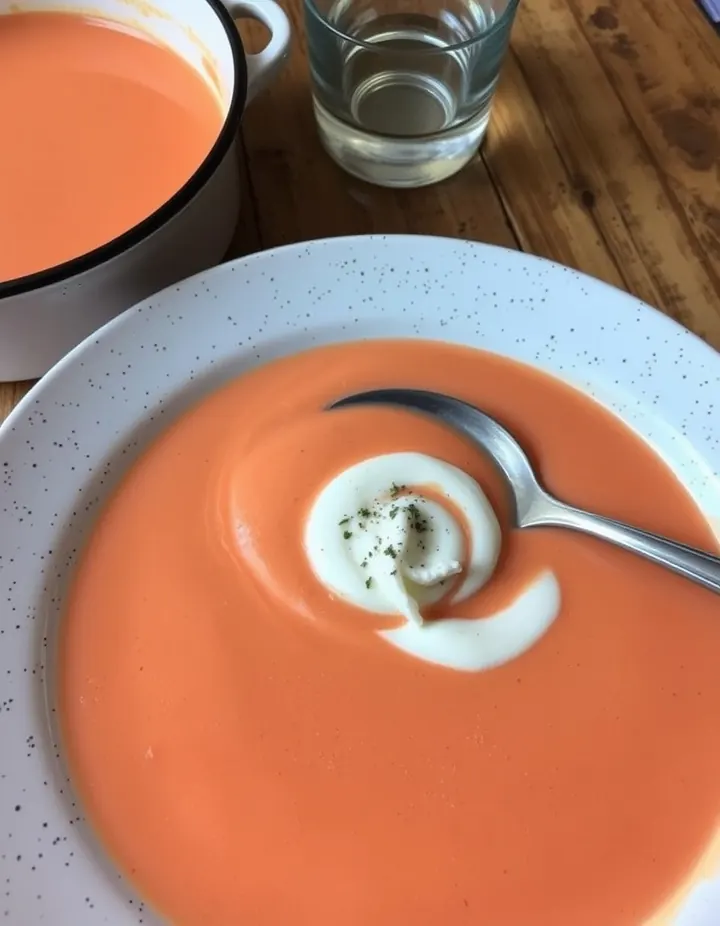 Tomato Bisque61 recipes
The free Flavor Lab newsletter: one surprising pairing a week and the molecular reason it works, in 60 seconds. No spam, unsubscribe anytime.
Prefer an account? Create a free account to save pairings and unlock the full chemistry.