Why it works: Honey and sage work together. They rank in the top 15% of all ingredient pairs, and 127 recipes mention both. Both carry eucalyptol, which smells eucalyptus, herbal. The science ↓
The recipe
Ingredients
Contains: egg (auto-detected from the ingredients and method; we can miss things, so check labels)
Directions
Make the must
Boil honey with water and beaten egg whites for 1 hour, skimming until clear.
Pour hot mixture over raisins and sage leaves, cover, and stir occasionally for 48 hours.
Press fruit in a hair bag and strain liquid into a clean vessel.
Ferment and clarify
The next day, draw off clear liquid into a cask and filter the lees.
Add lemon and orange rinds and their strained juices to the cask.
Keep the cask open for 4-5 days, ensuring it is well filled.
When the liquid stops hissing, wait a day.
Add brandy and dissolved isinglass.
Secure the bung.
Age and bottle
Store in a cool, dry cellar for 12 months.
If fine, bottle the wine.
If not, rack it off into a clean vessel and filter the dregs.
Add 1 pint more brandy and sugar candy.
Seal the cask.
Bottle the wine after 3 months.
Transcribed from a scanned cookbook and modernised for today's kitchens. Where the book gave no heat or time, or said "a moderate oven", the temperatures and times here may be modern equivalents rather than the book's own figures.
Explore the science
The flavor team
The pairs that carry this dish. Each one is judged two ways: how much aroma chemistry they share, and how many recipes mention both.
-
Honey + sagetop 15% of all pairsAroma overlapmoderateMentioned together127 recipes
Shared aroma: eucalyptol (eucalyptus, herbal).
-
Lemon + orangetop 1% of all pairsAroma overlapstrongMentioned together10,632 recipes
Shared aroma: 3-hexenal (apple, fruity).
-
Sage + lemontop 2% of all pairsAroma overlapstrongMentioned together887 recipes
Shared aroma: 3-hexenal (apple, fruity).
-
Raisin + brandytop 5% of all pairsAroma overlapmoderateMentioned together2,768 recipes
Shared aroma: beta-damascenone (apple, rose).
-
Honey + orangetop 5% of all pairsAroma overlapstrongMentioned together1,068 recipes
Shared aroma: beta-damascenone (apple, rose).
Ranks compare each pair with 20,000 random ingredient pairs on CompKitchen. How we score pairs
What each ingredient does
- Honey
- Provides the sugar that feeds fermentation and gives the wine its sweetness and body.
- Malaga raisins
- Supply sugars, flavour and body, and nutrients that keep fermentation going.
- Egg whites
- Collect impurities as they are skimmed off, leaving the liquid clear.
- Isinglass
- A fining agent that draws suspended particles out of the wine so it clears.
- Brandy
- Raises the alcohol content, stabilising the wine and adding warmth.
- Sage leaves
- Contribute aromatic oils that flavour the wine.
The step that matters
Keeping the cask full and open while fermenting. Fermentation pushes foam and gas out of the vessel, and air exposure can sour the wine if the cask is underfilled. Keeping it topped up limits oxidation and spoilage.
Flavor stand-ins for the raisin
How well each one fits the dish's main ingredients (honey, egg, sage, lemon, orange, brandy, sugar):
- Figbetter flavor fit
- Blackberrybetter flavor fit
- Applebetter flavor fit
- Raisinthe original
Fit is the average pairing score against honey, egg, sage, lemon, orange, brandy, sugar. Candidates are from the same food group and used in at least 100 recipes. This compares flavor only: it does not check the job the ingredient does in the dish (bulk, moisture, acidity, structure).
“What each ingredient does” and “The step that matters” were written by Claude from this recipe’s own method and reviewed in samples by CompKitchen.
You might also like
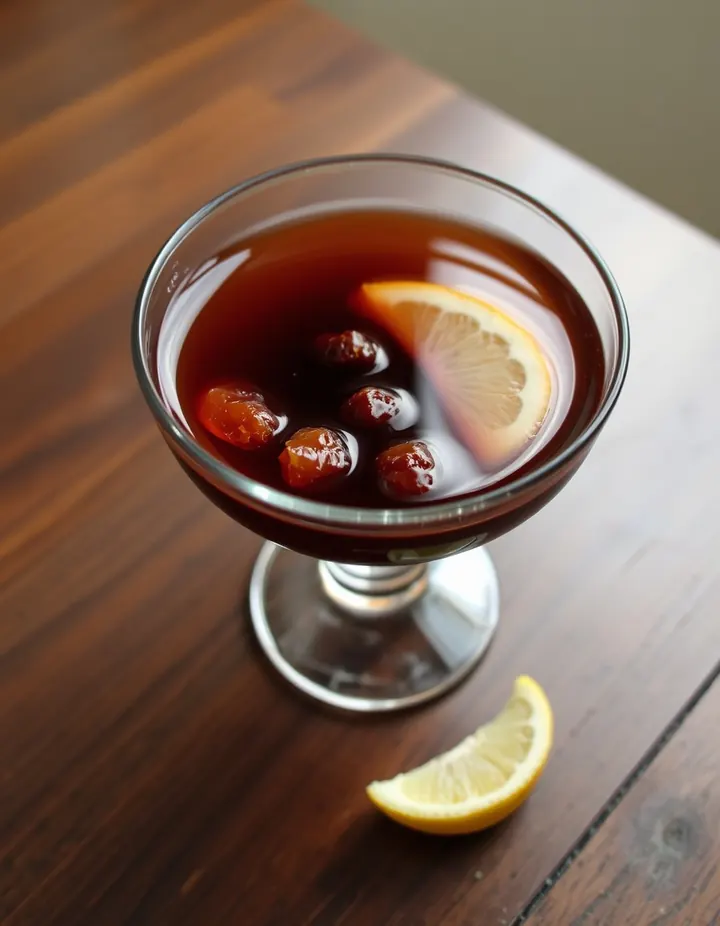 Illustration
 Illustration
 Illustration
 Illustration
The Sunday pairing: one pairing, the chemistry behind it, and how to cook it. No spam, unsubscribe anytime.
Prefer an account? Create a free account for sign-in; Pro adds the full results and chemistry.