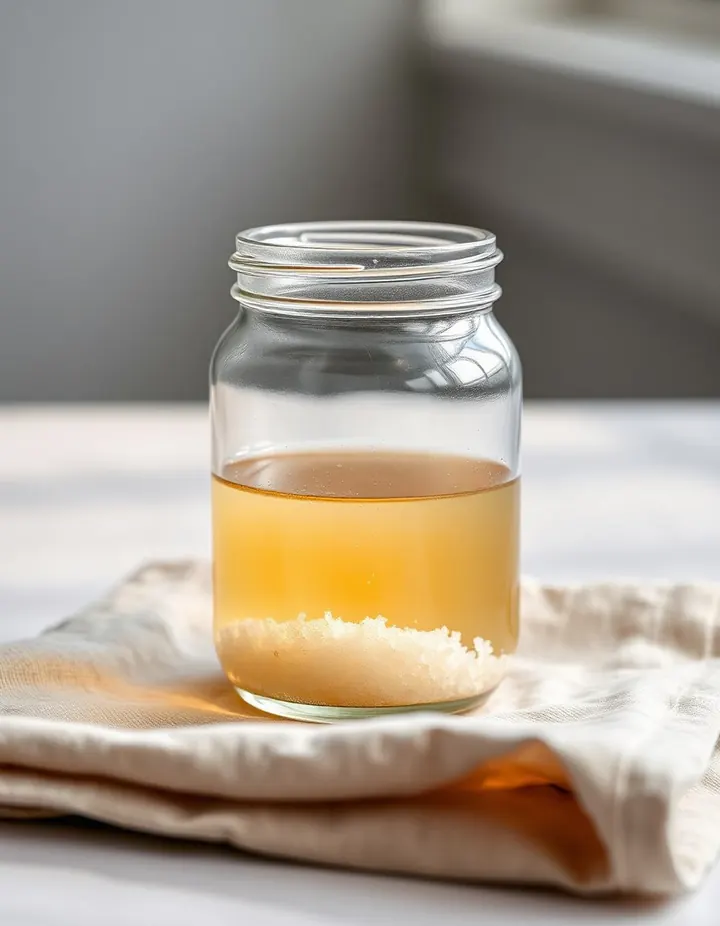
Sugar Vinegar
Ingredients
Directions
Prepare the liquid
Dissolve the sugar in the water and stir well.
Boil the mixture, skimming off the scum until it stops rising.
Pour the liquid into a cask and let it cool to lukewarm.
Ferment
Add the toast covered with fresh yeast to the cask.
Leave it open for 4 to 5 days.
Cover the bung-hole with paper and prick it in 3 or 4 places with a pin.
Store in a warm, dry place until ready.
Bottle
Draw off the vinegar and bottle it.
Boil the vinegar for 15 seconds before bottling to prevent cloudiness.
Do not fill the bottles completely and allow some air exposure.
Transcribed from a scanned cookbook and modernised for today's kitchens. Where the book gave no heat or time, or said "a moderate oven", the temperatures and times here may be modern equivalents rather than the book's own figures.
Photo for illustrative purposes only · Contact us to use it
Explore the science
What each ingredient does
- Coarse moist sugar
- Provides the sugars that yeast converts into alcohol, which bacteria then turn into acetic acid.
- Fresh yeast
- Starts the fermentation that converts the sweet liquid into alcohol.
- Toast
- Carries the yeast and gives the fermenting liquid a surface to work from.
The step that matters
Boil the mixture and skim the scum. Skimming removes impurities that would otherwise spoil the flavour and clarity of the finished vinegar. Cooling to lukewarm before adding yeast matters because very hot liquid would kill the yeast.
“What each ingredient does” and “The step that matters” were written by Claude from this recipe’s own method and reviewed in samples by CompKitchen.
You might also like
 Vegetable Soup350 recipes
 Raspberry Vinegar214 recipes
 Brown Coffee with Egg175 recipes
 Blackberry Cordial129 recipes
The free Flavor Lab newsletter: one surprising pairing a week and the molecular reason it works, in 60 seconds. No spam, unsubscribe anytime.
Prefer an account? Create a free account to save pairings and unlock the full chemistry.