Why it works: Pepper and lemon match in chemistry and in kitchens. They rank in the top 3% of all ingredient pairs, and cooks put them together in 27,047 recipes. Both carry trans-2-nonenal, which smells cardboard, fatty. The science ↓
Turbot Fillets
Ingredients
Directions
The book says “a brisk oven”. The 400°F in the steps is the modern equivalent, not the book's own figure.
Prepare the fish
Clean and dry the turbot.
Remove the flesh from the bones with a sharp knife.
Take off the dark skin, leaving the white skin intact.
Cut the meat into small cutlet-sized pieces.
Fry
To fry, dip the pieces in beaten egg and breadcrumbs.
Fry in hot fat until lightly browned, then drain and serve on a folded napkin, garnished with fried parsley.
Bake
To bake, arrange 1 pound of filleted meat in a baking dish with 2 ounces of butter, a little pepper and salt, and the strained juice of a lemon.
Bake in a brisk oven (400°F) for about 20 minutes, basting well.
Stew
To stew, remove all skin from the fish, dredge the fillets in flour, and fry until lightly browned.
Place in a stewpan and cover with seasoned stock.
Stew gently for 10 to 15 minutes.
Lift the fillets out with a fish-slicer and keep warm.
Skim the gravy, thicken with a spoonful of brown thickening, add a spoonful of mushroom ketchup and a glass of light wine.
Boil and strain over the fish before serving hot.
Transcribed from a scanned cookbook and modernised for today's kitchens. Where the book gave no heat or time, or said "a moderate oven", the temperatures and times here may be modern equivalents rather than the book's own figures.
Explore the science
The flavor team
The pairs that carry this dish. Each one is judged two ways: how much their aromas overlap, and how often cooks already put them together.
-
Pepper + lemontop 3% of all pairsSmell alikestrongCooked together27,047 recipes
Shared aroma: trans-2-nonenal (cardboard, fatty).
-
Turbot + ketchuptop 4% of all pairsSmell alikestrongCooked together11 recipes
Shared aroma: ethanol (alcoholic, ethereal).
-
Butter + mushroomtop 7% of all pairsSmell alikemoderateCooked together12,525 recipes
Shared aroma: trans-2-decenal (waxy, orange).
-
Mushroom + winetop 8% of all pairsSmell alikemoderateCooked together2,632 recipes
Shared aroma: 2-methoxy-4-propylphenol (allspice, anise).
-
Pepper + mushroomtop 11% of all pairsSmell alikemoderateCooked together13,580 recipes
Shared aroma: 2-nonenal (fatty, green).
Ranks compare each pair with 20,000 random ingredient pairs on CompKitchen. How we score pairs
What each ingredient does
- Turbot
- Provides the firm white flesh that forms the main body of each dish.
- Butter
- Adds richness and moisture, carrying flavour and helping the fish brown while baking.
- Flour
- Dusts the fillets so they brown evenly and helps thicken the stewing gravy.
- Egg (in the method)
- Binds the breadcrumb coating so it adheres to the fish while frying.
- Lemon juice
- Adds acidity that brightens the mild flavour of the fish.
- Light wine
- Adds acidity and depth to the gravy as it reduces.
The step that matters
Fry in hot fat until lightly browned. Fish is delicate and flakes easily, so the fat must be hot enough to brown the coating quickly while the flesh cooks through without absorbing grease or breaking apart.
“What each ingredient does” and “The step that matters” were written by Claude from this recipe’s own method and reviewed in samples by CompKitchen.
More turbot fillets recipes
You might also like
 Lemon Sauce236 recipes
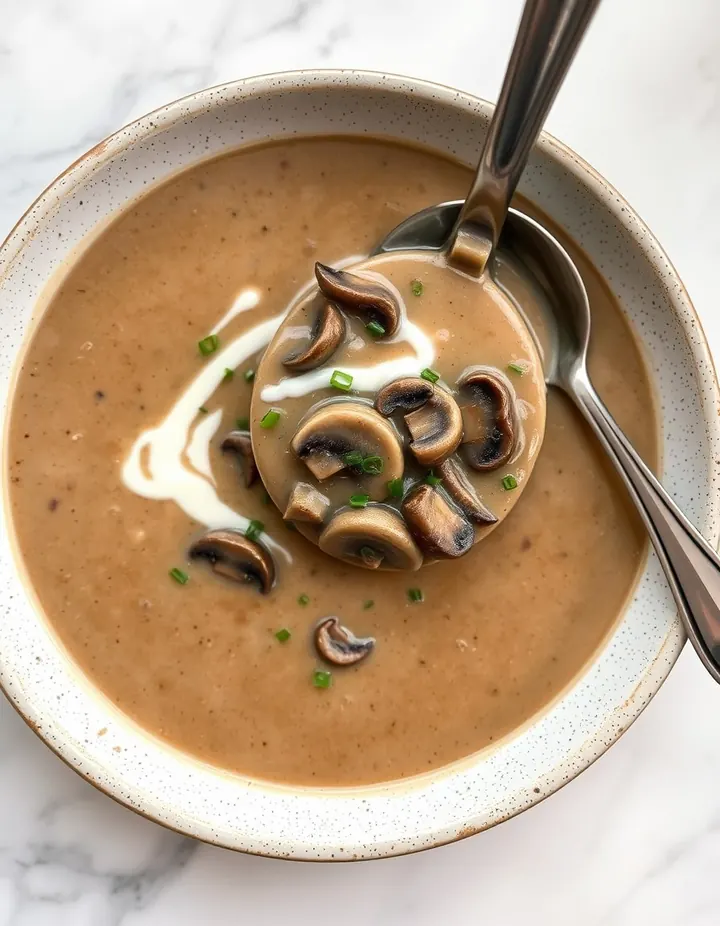 Mushroom Soup60 recipes
 Tomato Soup526 recipes
 Brown Bread461 recipes
The free Flavor Lab newsletter: one surprising pairing a week and the molecular reason it works, in 60 seconds. No spam, unsubscribe anytime.
Prefer an account? Create a free account to save pairings and unlock the full chemistry.