Why it works: Pepper and clove match in chemistry and in kitchens. They rank in the top 5% of all ingredient pairs, and cooks put them together in 17,451 recipes. Both carry ethyl octanoate, which smells fruity, wine. The science ↓
Turkey, Galantine of
Ingredients
Directions
Prepare the turkey
Pluck, draw, and singe the turkey.
Cut it in half down the breast.
Bone it carefully, removing the backbone.
Remove some flesh from inside the turkey and legs, especially the sinews.
Lay the turkey flat, skin side down, and truss the legs inside.
Fill and roll
Spread a layer of veal forcemeat on the turkey, then add a layer of turkey meat, strips of ham, bacon, veal, boiled tongue, and truffles for contrast.
Top with another layer of forcemeat and season with pepper and salt.
Roll the turkey into a large sausage shape and sew it securely.
Wrap thin slices of bacon around the turkey and tie it in a cloth.
Simmer and finish
Place it in a stewpan and cover with seasoned stock.
Simmer gently for four hours with onions, cloves, bay leaf, carrots, parsley, and thyme.
In a separate pan, simmer the turkey bones with a few spoonfuls of stock for one hour.
Strain the liquid and stir in the white wine.
Pour this broth over the turkey and let it cook until done.
Remove from heat and let it sit in the broth for one hour.
Tie it in a fresh cloth and place it on a dish.
Transcribed from a scanned cookbook and modernised for today's kitchens. Where the book gave no heat or time, or said "a moderate oven", the temperatures and times here may be modern equivalents rather than the book's own figures.
Explore the science
The flavor team
The pairs that carry this dish. Each one is judged two ways: how much their aromas overlap, and how often cooks already put them together.
-
Pepper + clovetop 5% of all pairsSmell alikestrongCooked together17,451 recipes
Shared aroma: ethyl octanoate (fruity, wine).
-
Clove + carrottop 5% of all pairsSmell alikestrongCooked together5,873 recipes
Shared aroma: cuminaldehyde (Spicy, cumin).
-
Pepper + carrottop 6% of all pairsSmell alikestrongCooked together14,555 recipes
Shared aroma: 2-isopropyl-3-methoxypyrazine (earthy, pea).
-
Onion + carrottop 6% of all pairsSmell alikemoderateCooked together21,601 recipes
Shared aroma: 2-isopropyl-3-methoxypyrazine (earthy, pea).
-
Veal + truffletop 11% of all pairsSmell alikelowCooked together815 recipes
Shared aroma: 2,4-nonadienal (fatty, green).
Ranks compare each pair with 20,000 random ingredient pairs on CompKitchen. How we score pairs
What each ingredient does
- Turkey
- Forms the main body of the galantine and provides the lean meat that is rolled and cooked.
- Veal forcemeat
- Adds a soft, moist stuffing layer that keeps the rolled meat juicy as it cooks.
- Cooked lean ham
- Adds savoury flavour and contrast in colour and texture within the rolled slices.
- Fat bacon
- Adds fat that bastes the lean meats and contributes savoury flavour during the long simmer.
- White wine
- Adds acidity and aroma to the broth that is poured over the turkey.
The step that matters
Simmering the rolled turkey gently. A rolling boil toughens the proteins and can break up the forcemeat, so the liquid should stay at a gentle simmer for the full four hours.
Swap the onion
How well each one fits the dish's main ingredients (turkey, veal, ham, truffle, pepper, clove, carrot):
- Capsicumfits better
- Leekfits better
- Turnipfits better
- Onionthe original
Fit is the average pairing score against turkey, veal, ham, truffle, pepper, clove, carrot. Candidates are from the same food group and used in at least 100 recipes.
“What each ingredient does” and “The step that matters” were written by Claude from this recipe’s own method and reviewed in samples by CompKitchen.
You might also like
 Carrot Soup134 recipes
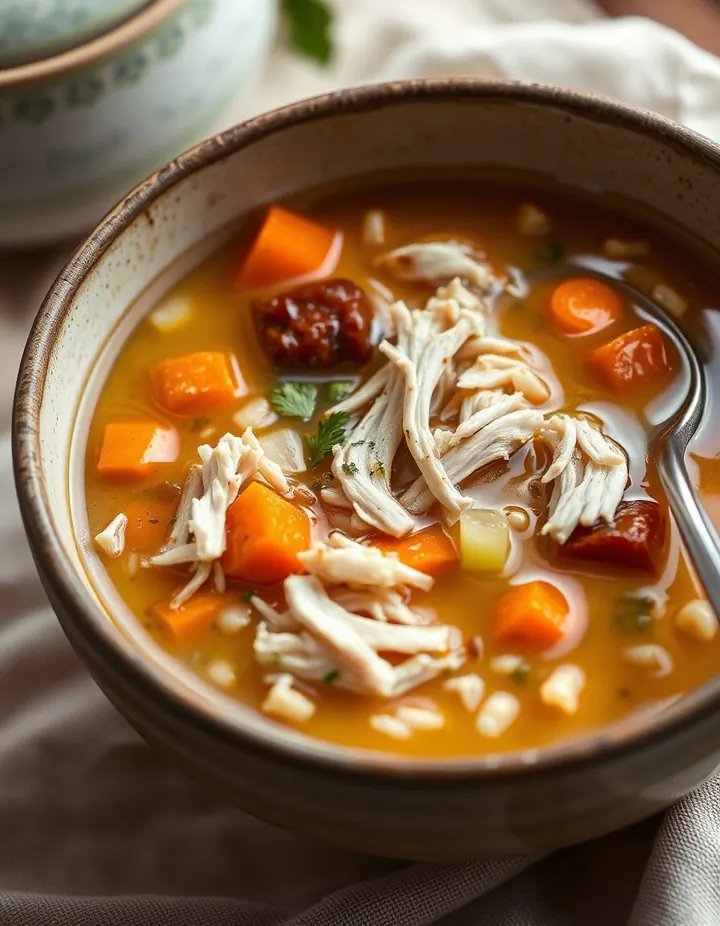 Turkey Soup71 recipes
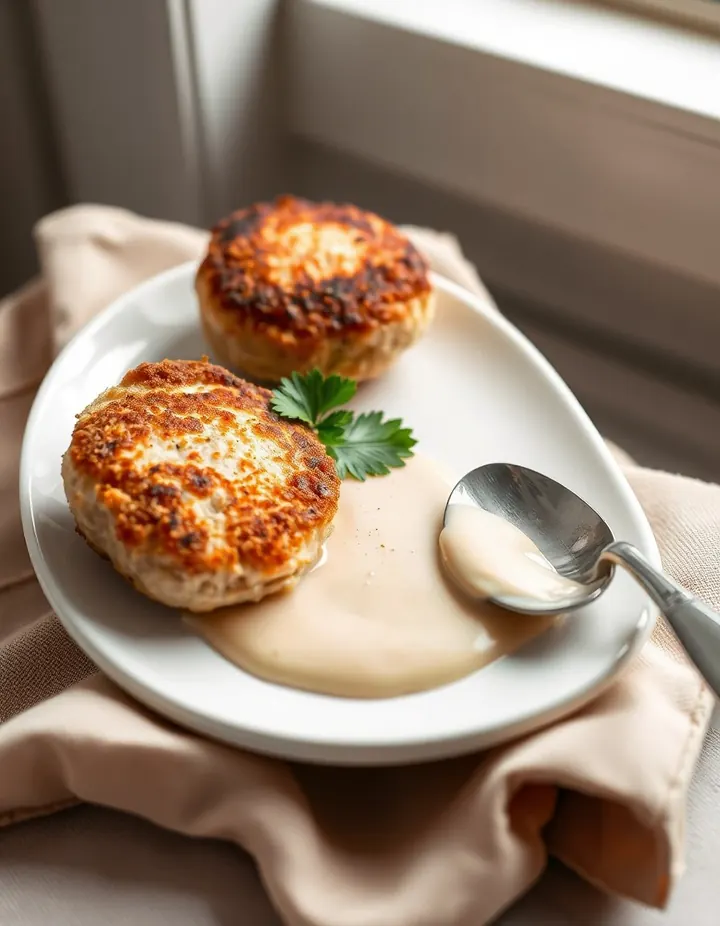 Veal Patties50 recipes
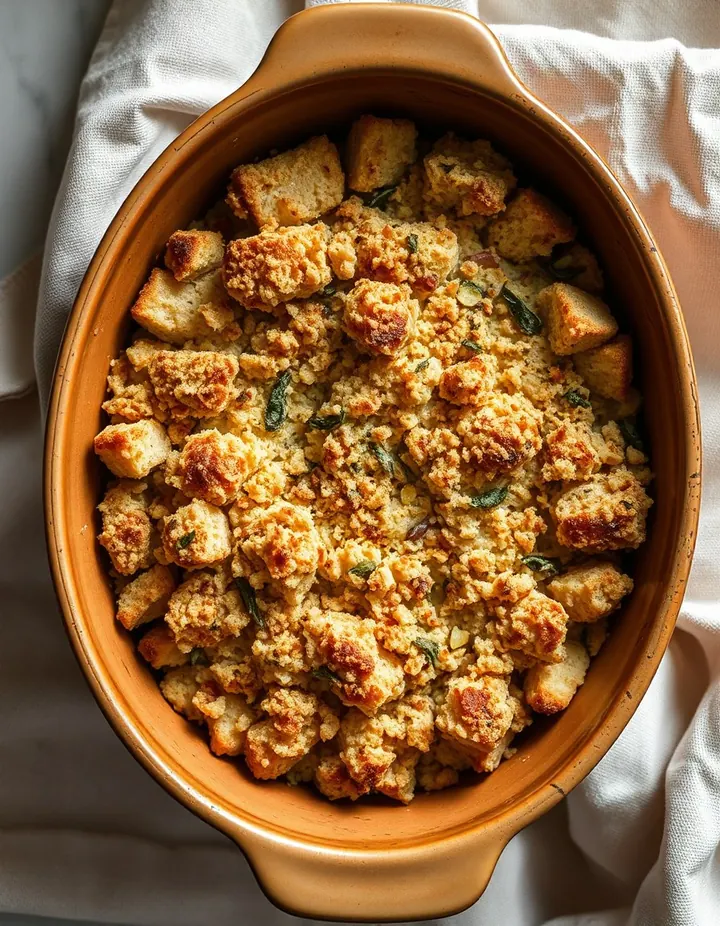 Turkey Stuffing26 recipes
The free Flavor Lab newsletter: one surprising pairing a week and the molecular reason it works, in 60 seconds. No spam, unsubscribe anytime.
Prefer an account? Create a free account to save pairings and unlock the full chemistry.