Why it works: Butter and egg are a kitchen classic. They rank in the top 17% of all ingredient pairs, and cooks put them together in 118,967 recipes. Both carry decanal, which smells soap, orange peel. The science ↓
Forcemeat Puddings
Ingredients
Directions
Prepare the molds
Grease small molds with butter.
Line the molds with minced veal or chicken.
Fill and poach
Fill the center with minced duck or game, then cover with more minced veal or chicken.
Smooth the top with a knife and poach in boiling water for 10 minutes.
Remove from water and let cool slightly, then unmold the puddings.
Coat and fry
Dip each pudding in beaten egg, then coat with breadcrumbs.
Fry in butter or cooking fat until golden brown.
Transcribed from a scanned cookbook and modernised for today's kitchens. Where the book gave no heat or time, or said "a moderate oven", the temperatures and times here may be modern equivalents rather than the book's own figures.
Explore the science
The flavor team
The pairs that carry this dish. Each one is judged two ways: how much their aromas overlap, and how often cooks already put them together.
-
Butter + eggtop 17% of all pairsSmell alikemoderateCooked together118,967 recipes
Shared aroma: decanal (soap, orange peel).
-
Butter + vealtop 23% of all pairsSmell alikemoderateCooked together9,381 recipes
Shared aroma: 3-hexenal (apple, fruity).
-
Veal + eggtop 28% of all pairsSmell alikelowCooked together6,845 recipes
Shared aroma: 2-nonenal (fatty, green).
Ranks compare each pair with 20,000 random ingredient pairs on CompKitchen. How we score pairs
What each ingredient does
- Minced veal or chicken
- Forms the outer meat layer that holds the pudding together and gives it a tender texture.
- Minced duck or game
- Forms the richer centre filling, adding flavour and moisture to the pudding.
- Beaten egg
- Binds the breadcrumb coating to the pudding so it adheres during frying.
- Breadcrumbs
- Form a crisp outer crust that browns when fried.
The step that matters
Unmolding after poaching. The puddings are poached, then must cool slightly before unmolding. Unmolding too early, while the meat is still hot and soft, can make them break apart, while letting them cool too long can make them stick to the mold.
“What each ingredient does” and “The step that matters” were written by Claude from this recipe’s own method and reviewed in samples by CompKitchen.
You might also like
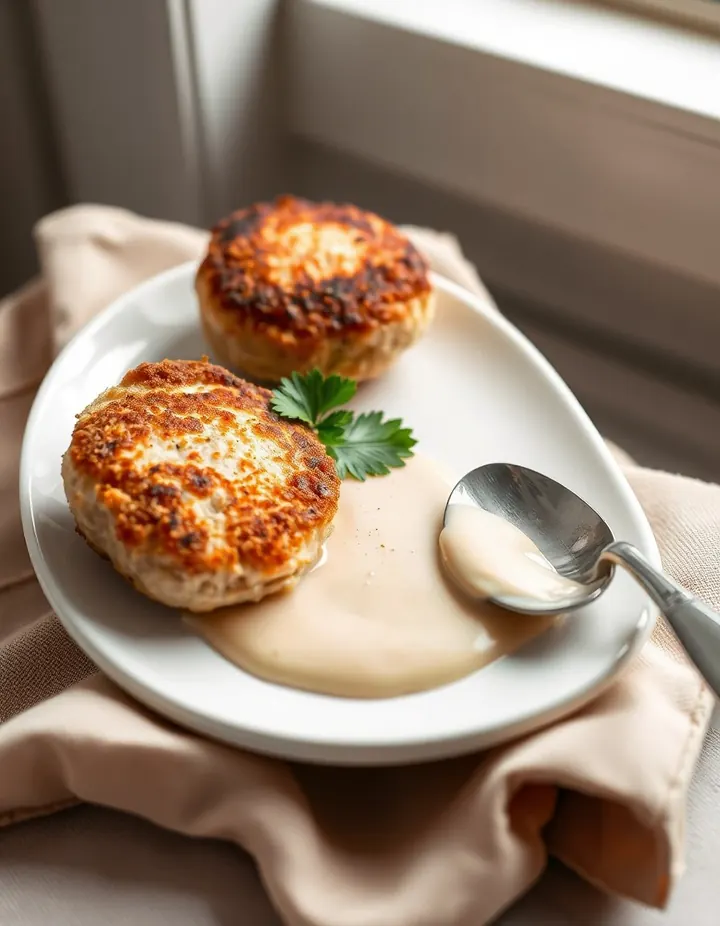 Veal Patties50 recipes
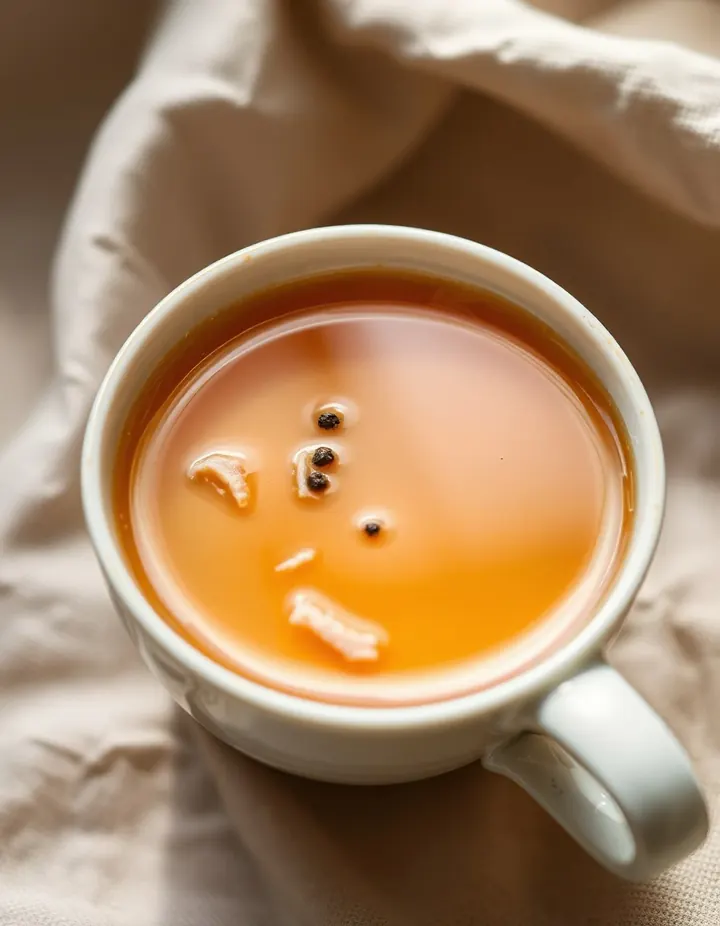 Beef, Mutton, or Veal Broth6 recipes
 Tomato Soup526 recipes
 Brown Bread461 recipes
The free Flavor Lab newsletter: one surprising pairing a week and the molecular reason it works, in 60 seconds. No spam, unsubscribe anytime.
Prefer an account? Create a free account to save pairings and unlock the full chemistry.