Why it works: Pork and butter are a kitchen classic. They rank in the top 13% of all ingredient pairs, and cooks put them together in 13,933 recipes. Both carry 2-furfurylthiol, which smells coffee, roasted. The science ↓
Roast Plover
Ingredients
Directions
The book says “a hot oven”. The 400°F (200°C) in the steps is the modern equivalent, not the book's own figure.
Pluck the birds carefully and cut off the claws.
Twist the feet close to the body and truss the head under one wing.
Wipe the birds with a wet towel.
Tie a thin slice of fat salt pork or bacon over the breast of each bird.
Roast them on a spit before an open fire with toast laid under them to catch the drippings, or lay them on slices of toast and bake in a hot oven at 400°F (200°C).
Cook for about fifteen minutes.
When done, add a little butter, pepper, and coarse sea salt, and serve hot.
Transcribed from a scanned cookbook and modernised for today's kitchens. Where the book gave no heat or time, or said "a moderate oven", the temperatures and times here may be modern equivalents rather than the book's own figures.
Explore the science
The flavor team
The pairs that carry this dish. Each one is judged two ways: how much their aromas overlap, and how often cooks already put them together.
-
Pork + buttertop 13% of all pairsSmell alikemoderateCooked together13,933 recipes
Shared aroma: 2-furfurylthiol (coffee, roasted).
-
Pork + peppertop 16% of all pairsSmell alikemoderateCooked together22,121 recipes
Shared aroma: 2-isopropyl-3-methoxypyrazine (earthy, pea).
-
Butter + peppertop 21% of all pairsSmell alikemoderateCooked together85,593 recipes
Shared aroma: trans-2-nonenal (cardboard, fatty).
Ranks compare each pair with 20,000 random ingredient pairs on CompKitchen. How we score pairs
You might also like
 Pork Cake107 recipes
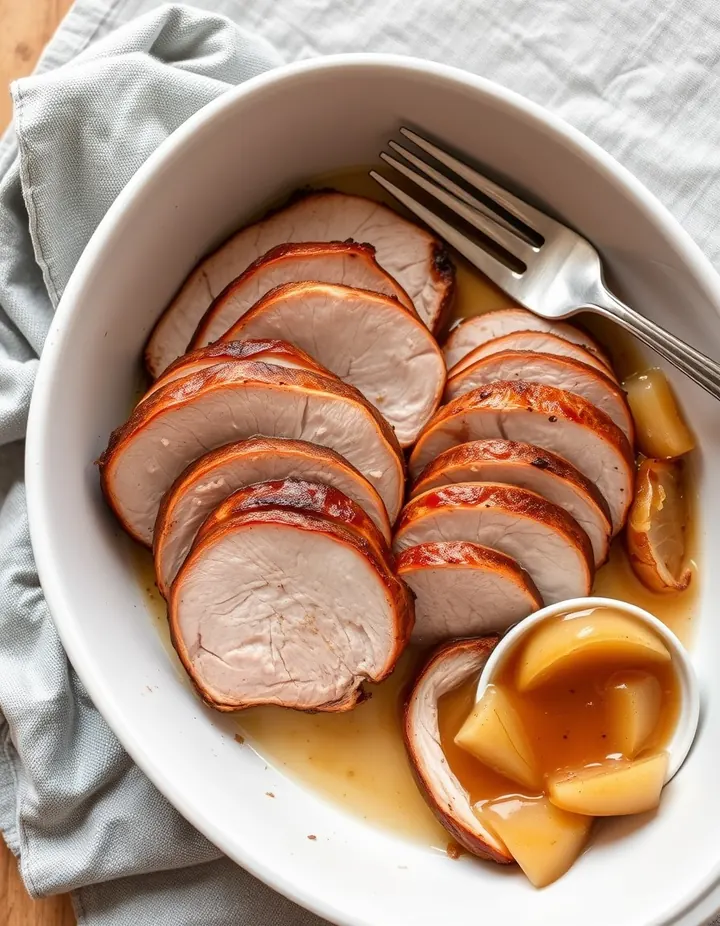 Roast Pork82 recipes
 Tomato Soup526 recipes
 Brown Bread461 recipes
The free Flavor Lab newsletter: one surprising pairing a week and the molecular reason it works, in 60 seconds. No spam, unsubscribe anytime.
Prefer an account? Create a free account to save pairings and unlock the full chemistry.