Why it works: Wine and brandy are a kitchen classic. They rank in the top 9% of all ingredient pairs, and cooks put them together in 2,427 recipes. Both carry gamma-nonanolactone, which smells coconut, sweet. The science ↓
Florida Orange Wine
Ingredients
Directions
Prepare the juice
Wipe the oranges with a wet cloth and peel off the yellow rind very thin.
Squeeze the oranges and strain the juice through a fine sieve.
Measure the juice and for each gallon combine 3 pounds of sugar, the crushed egg white and shell, and ⅓ gallon of cold water in a pot.
Make the syrup
Heat the mixture, stirring every 2 minutes until the egg begins to harden, then boil until the syrup looks clear under the froth.
Strain the syrup and pour it over the orange rind, letting it stand overnight.
The next day, add the orange juice and let it stand overnight again.
Strain it again and transfer to a tight cask, adding a small cake of compressed yeast.
Ferment and age
Leave the bung out until fermentation ceases, indicated by the hissing noise.
Once fermentation stops, close the cask and let the wine stand for about 9 months before bottling.
Optionally add a glass of brandy to each gallon after fermentation.
After bottling, wait 3 months before using.
Transcribed from a scanned cookbook and modernised for today's kitchens. Where the book gave no heat or time, or said "a moderate oven", the temperatures and times here may be modern equivalents rather than the book's own figures.
Explore the science
The flavor team
The pairs that carry this dish. Each one is judged two ways: how much their aromas overlap, and how often cooks already put them together.
-
Wine + brandytop 9% of all pairsSmell alikemoderateCooked together2,427 recipes
Shared aroma: gamma-nonanolactone (coconut, sweet).
-
Orange + winetop 14% of all pairsSmell alikemoderateCooked together2,046 recipes
Shared aroma: beta-damascenone (apple, rose).
-
Orange + brandytop 15% of all pairsSmell alikelowCooked together2,706 recipes
Shared aroma: beta-damascenone (apple, rose).
-
Egg + brandytop 17% of all pairsSmell alikemoderateCooked together7,340 recipes
Shared aroma: acetoin (butter, cream).
-
Sugar + brandytop 19% of all pairsSmell alikelowCooked together11,939 recipes
Shared aroma: beta-damascenone (apple, rose).
Sugar and brandy barely smell alike, yet cooks put them together in 11,939 recipes: they work on texture and structure more than aroma.
Ranks compare each pair with 20,000 random ingredient pairs on CompKitchen. How we score pairs
What each ingredient does
- Oranges
- Provide the juice and flavor that make up the body of the wine.
- Granulated sugar
- Supplies the sugar that yeast ferments into alcohol and carbonation.
- Egg white and shell
- Egg white is heated to coagulate and gather impurities, clarifying the syrup.
- Compressed yeast
- Ferments the sugars into alcohol and carbon dioxide to start the wine.
The step that matters
Leave the bung out during fermentation. Fermentation releases carbon dioxide, and a sealed cask can build pressure and burst or spoil the wine. Leaving the bung loose lets gas escape while the wine works. Close the cask only once the hissing stops.
Swap the orange
How well each one fits the dish's main ingredients (sugar, egg, wine, brandy):
- Vanillafits better
- Apricotfits better
- Applefits better
- Orangethe original
Fit is the average pairing score against sugar, egg, wine, brandy. Candidates are from the same food group and used in at least 100 recipes.
“What each ingredient does” and “The step that matters” were written by Claude from this recipe’s own method and reviewed in samples by CompKitchen.
You might also like
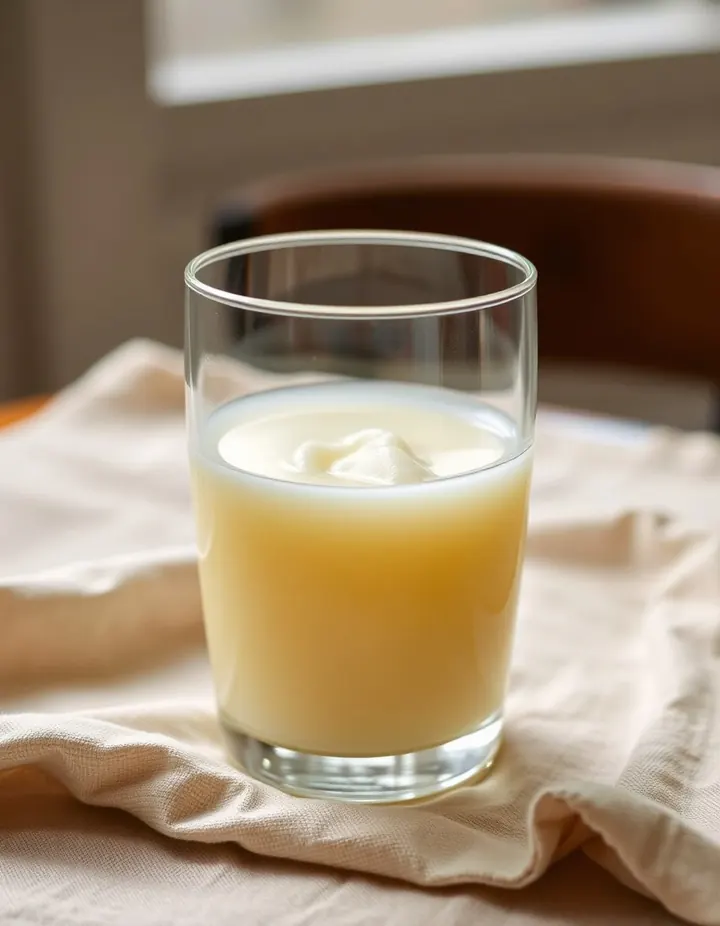 Wine Whey111 recipes
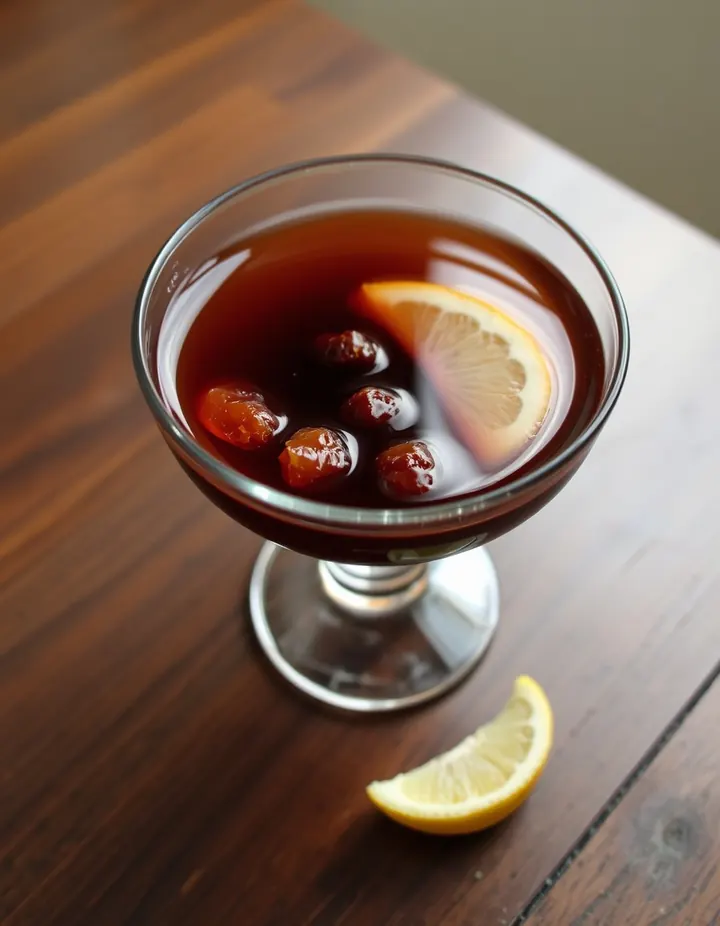 Raisin Wine64 recipes
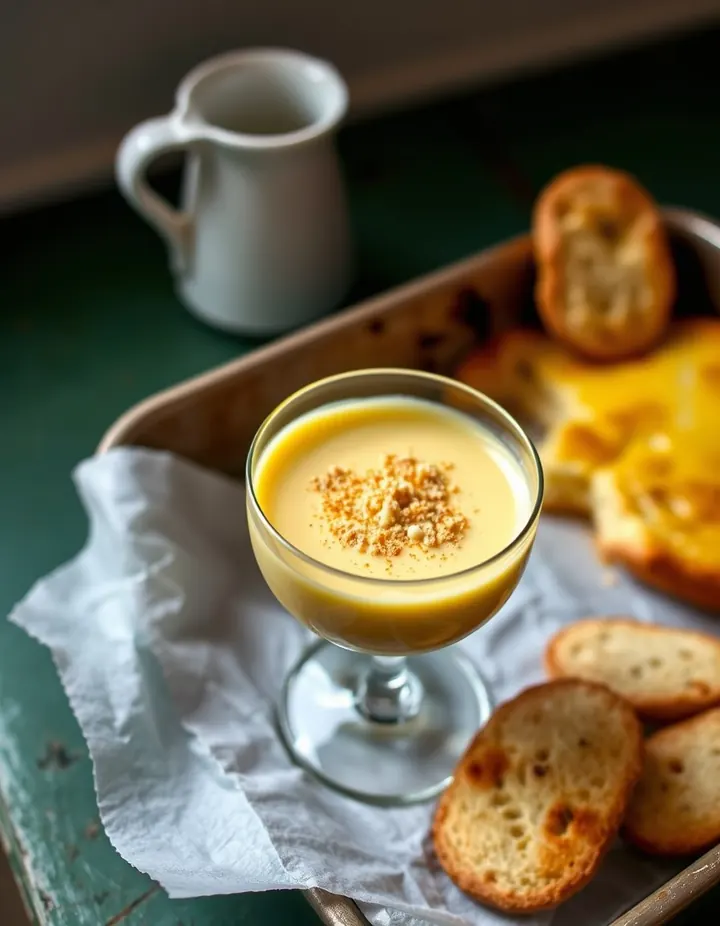 Egg Wine58 recipes
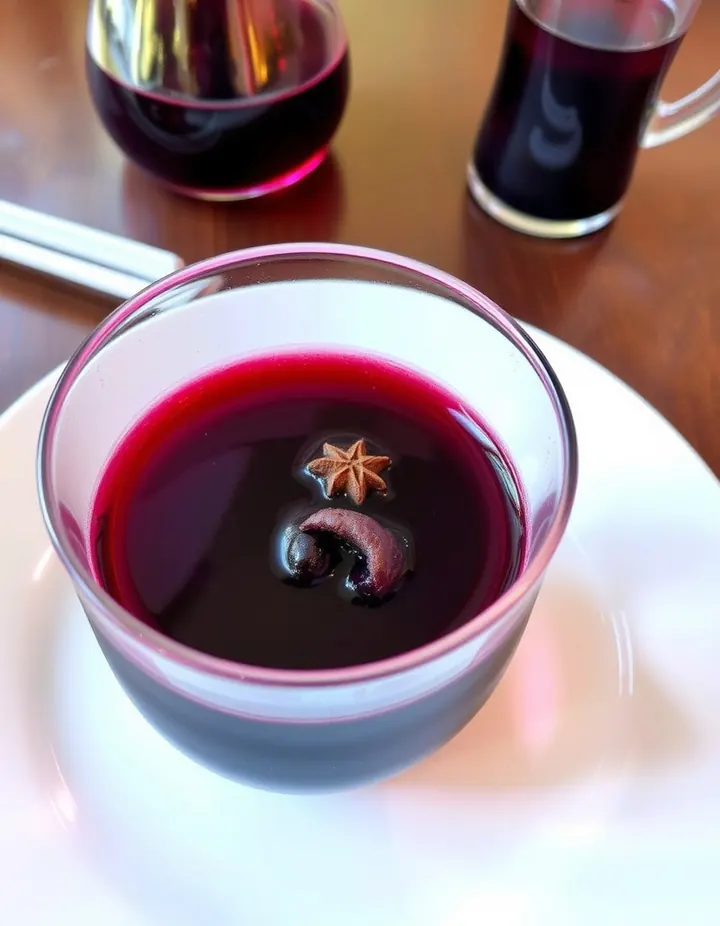 Elderberry Wine51 recipes
The free Flavor Lab newsletter: one surprising pairing a week and the molecular reason it works, in 60 seconds. No spam, unsubscribe anytime.
Prefer an account? Create a free account to save pairings and unlock the full chemistry.