Why it works: Onion and potato are a kitchen classic. They rank in the top 3% of all ingredient pairs, and cooks put them together in 9,023 recipes. Both carry 2-isopropyl-3-methoxypyrazine, which smells earthy, pea. The science ↓
Delicious Baked Tongue
Ingredients
Directions
The book says “a rather slow oven”. The 300°F (150°C) in the steps is the modern equivalent, not the book's own figure.
Prepare the tongue
Boil the tongue in salted water for 1 hour.
Place the boiled tongue in a fireless cooker overnight.
Remove the skin from the tongue in the morning.
Sprinkle the tongue with salt and pepper.
Place the tongue in a roasting pan or large casserole.
Make the sauce
Mix the tomato juice, water, and chopped onion.
Pour the mixture around the tongue.
Bake and roast
Bake in a 300°F (150°C) oven for 2 hours.
Add the whole, peeled potatoes sprinkled with salt and pepper 45 minutes before the tongue is done.
Roast the potatoes until tender and brown.
Remove the cover if necessary to brown the potatoes.
Finish and serve
Transfer the tongue to a platter.
Surround the tongue with the potatoes.
Add more water to the sauce.
Thicken the sauce with flour mixed with a little water.
Adjust seasoning if needed.
Pour some gravy over the tongue.
Serve the remaining gravy on the side.
Transcribed from a scanned cookbook and modernised for today's kitchens. Where the book gave no heat or time, or said "a moderate oven", the temperatures and times here may be modern equivalents rather than the book's own figures.
Explore the science
The flavor team
The pairs that carry this dish. Each one is judged two ways: how much their aromas overlap, and how often cooks already put them together.
-
Onion + potatotop 3% of all pairsSmell alikemoderateCooked together9,023 recipes
Shared aroma: 2-isopropyl-3-methoxypyrazine (earthy, pea).
-
Tomato + potatotop 5% of all pairsSmell alikestrongCooked together2,798 recipes
Shared aroma: 2-isopropyl-3-methoxypyrazine (earthy, pea).
-
Beef + oniontop 7% of all pairsSmell alikemoderateCooked together17,092 recipes
Shared aroma: 2-isopropyl-3-methoxypyrazine (earthy, pea).
-
Tomato + peppertop 7% of all pairsSmell alikemoderateCooked together17,923 recipes
Shared aroma: 2-isopropyl-3-methoxypyrazine (earthy, pea).
-
Beef + tomatotop 8% of all pairsSmell alikemoderateCooked together5,448 recipes
Shared aroma: 2-isopropyl-3-methoxypyrazine (earthy, pea).
Ranks compare each pair with 20,000 random ingredient pairs on CompKitchen. How we score pairs
What each ingredient does
- Beef tongue
- Forms the main meat, which becomes tender through long, slow moist cooking.
- Potatoes
- Absorb cooking juices and brown on the outside while the centre turns soft and tender.
- Flour
- Thickens the sauce so it clings to the tongue and potatoes instead of running thin.
- Stewed tomato
- Adds acidity and body to the sauce, giving the gravy its flavour base.
- Onion
- Adds savoury aroma and sweetness as it softens into the sauce.
The step that matters
Thicken the sauce with flour mixed with a little water. Flour added dry clumps and stays grainy; mixing it first with cold water into a smooth slurry lets starch granules separate and thicken the gravy evenly.
Swap the tomato
How well each one fits the dish's main ingredients (beef, onion, potato, flour, pepper):
- Chivefits better
- Okrafits better
- Carrotfits better
- Tomatothe original
Fit is the average pairing score against beef, onion, potato, flour, pepper. Candidates are from the same food group and used in at least 100 recipes.
“What each ingredient does” and “The step that matters” were written by Claude from this recipe’s own method and reviewed in samples by CompKitchen.
You might also like
 Tomato Soup526 recipes
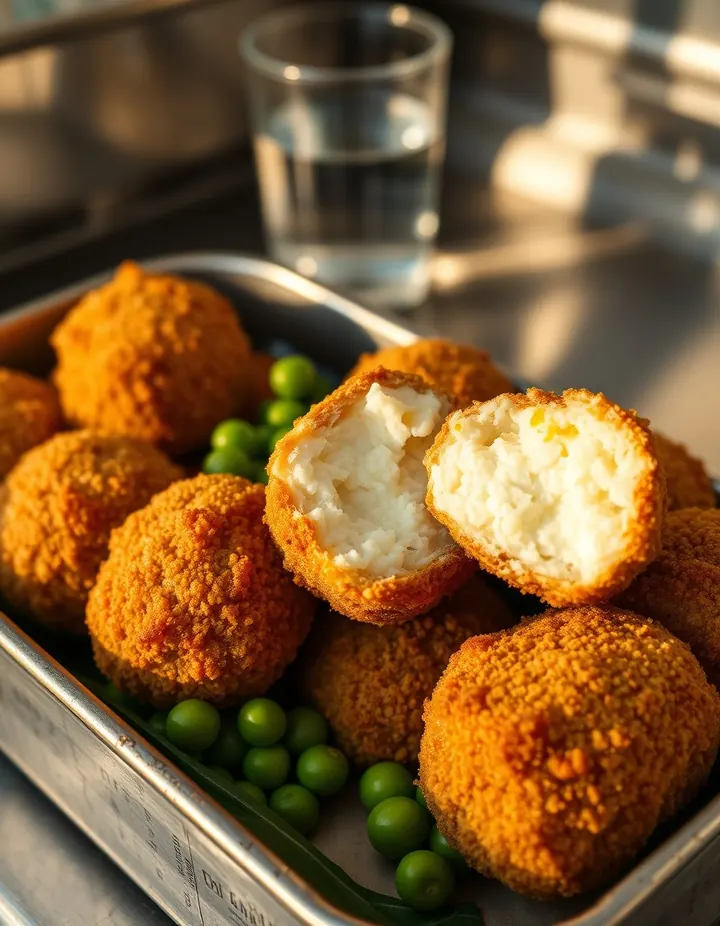 Potato Croquettes255 recipes
 Roast Beef211 recipes
 Beef Loaf175 recipes
The free Flavor Lab newsletter: one surprising pairing a week and the molecular reason it works, in 60 seconds. No spam, unsubscribe anytime.
Prefer an account? Create a free account to save pairings and unlock the full chemistry.