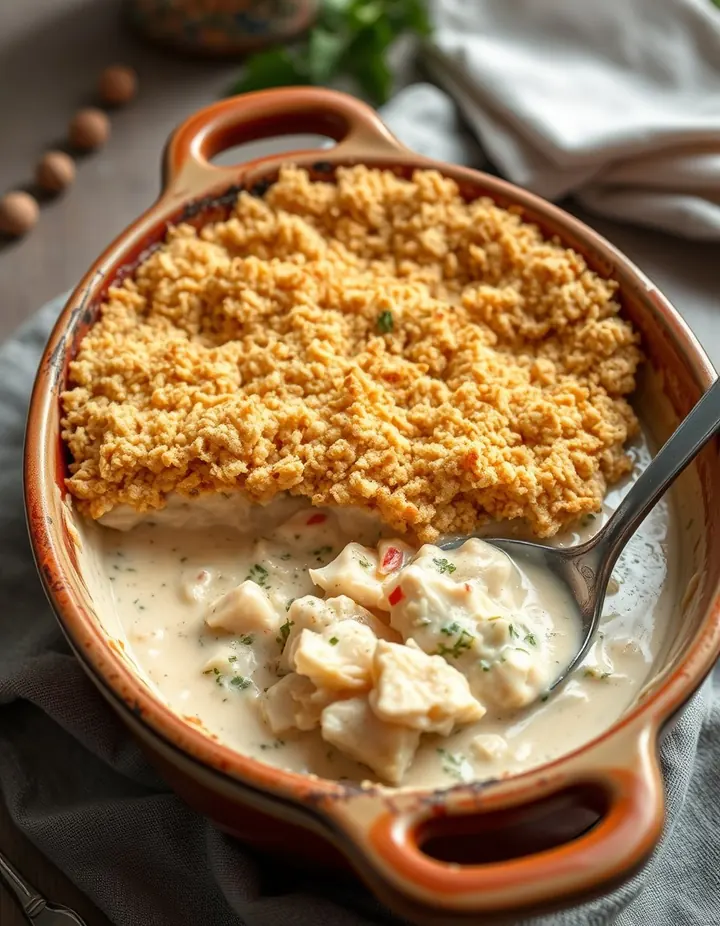
Why it works: Lemon and parsley match in chemistry and in kitchens. They rank in the top 1% of all ingredient pairs, and 14,037 recipes mention both. Both carry beta-phellandrene, which smells minty, terpene. The science ↓
Fish a LA Creme
Ingredients
Directions
The book gives no oven temperature. The 350°F (175°C) in the steps was added when the recipe was transcribed, as a starting point.
Poach the fish
Rub the fish with coarse sea salt and place it in a kettle with enough boiling water to cover it.
Once it boils, reduce the heat to simmer and let it cook for 1 hour.
Remove the fish and carefully draw out all the bones.
Make the sauce
In a saucepan, mix 1 ounce of flour with 1 quart of cream or milk until smooth.
Add the juice of 1 lemon, chopped onion, parsley, nutmeg, salt, and pepper.
Cook over low heat, stirring until it thickens, then stir in ¼ pound of butter.
Strain the sauce through a sieve.
Assemble and bake
Place a little sauce on a dish, lay the fish on top, and pour the remaining sauce over it.
Beat the egg whites to a froth and spread over the fish.
Bake at 350°F (175°C) for 30 minutes or until light brown.
Transcribed from a scanned cookbook and modernised for today's kitchens. Where the book gave no heat or time, or said "a moderate oven", the temperatures and times here may be modern equivalents rather than the book's own figures.
Photo for illustrative purposes only · Contact us to use it
Explore the science
The flavor team
The pairs that carry this dish. Each one is judged two ways: how much aroma chemistry they share, and how many recipes mention both.
-
Lemon + parsleytop 1% of all pairsAroma overlapstrongMentioned together14,037 recipes
Shared aroma: beta-phellandrene (minty, terpene).
-
Parsley + peppertop 2% of all pairsAroma overlapstrongMentioned together34,122 recipes
Shared aroma: 4'-methylacetophenone (bitter almond).
-
Lemon + peppertop 3% of all pairsAroma overlapstrongMentioned together27,047 recipes
Shared aroma: trans-2-nonenal (cardboard, fatty).
-
Parsley + nutmegtop 3% of all pairsAroma overlapstrongMentioned together5,062 recipes
Shared aroma: 4'-methylacetophenone (bitter almond).
-
Lemon + nutmegtop 5% of all pairsAroma overlapstrongMentioned together11,318 recipes
Shared aroma: beta-phellandrene (minty, terpene).
Ranks compare each pair with 20,000 random ingredient pairs on CompKitchen. How we score pairs
What each ingredient does
- Firm saltwater fish
- Forms the main body of the dish, staying moist and holding its shape during poaching.
- Flour
- Thickens the cream into a smooth sauce as it cooks.
- Cream or new milk
- Forms the rich base of the sauce, adding body and a soft texture.
- Butter
- Adds fat and richness, giving the sauce a smooth, velvety finish.
- Whites of 6 eggs
- Whipped to a froth, they form a light topping that sets and browns in the oven.
- Lemon juice
- Adds acidity that brightens the cream sauce and balances its richness.
The step that matters
Beat the egg whites to a froth. Egg whites must be whipped until foamy so their proteins trap air and then set and brown evenly in the oven rather than turning runny or flat.
Flavor stand-ins for the onion
How well each one fits the dish's main ingredients (fish, flour, cream, lemon, parsley, nutmeg, pepper):
- Spinachbetter flavor fit
- Shallotbetter flavor fit
- Arrowrootbetter flavor fit
- Onionthe original
Fit is the average pairing score against fish, flour, cream, lemon, parsley, nutmeg, pepper. Candidates are from the same food group and used in at least 100 recipes. This compares flavor only: it does not check the job the ingredient does in the dish (bulk, moisture, acidity, structure).
“What each ingredient does” and “The step that matters” were written by Claude from this recipe’s own method and reviewed in samples by CompKitchen.
You might also like
 Lemon Sauce236 recipes
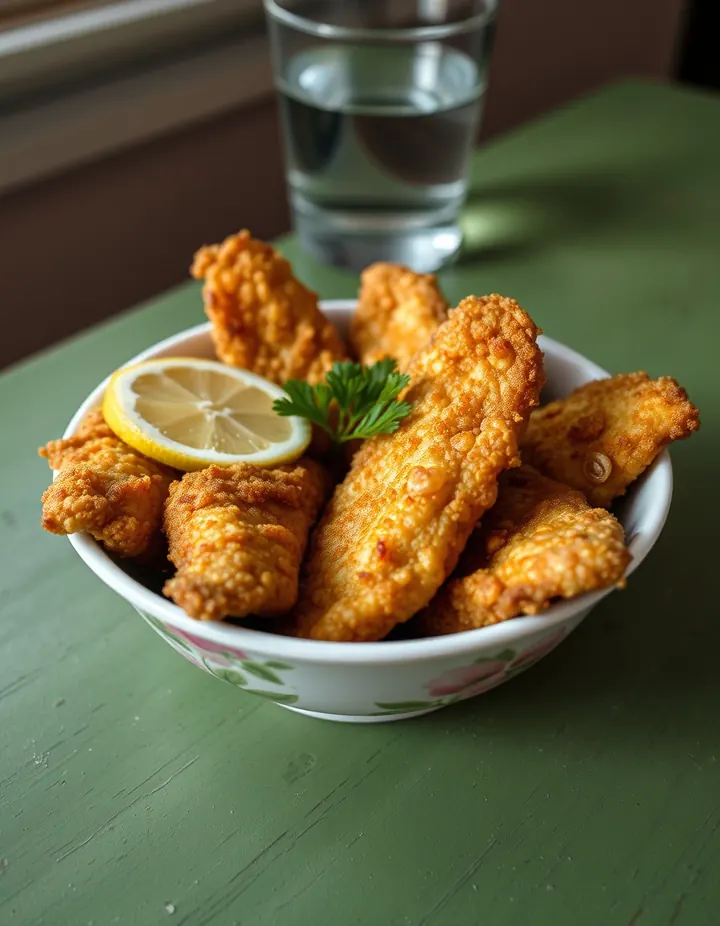 Fried Fish120 recipes
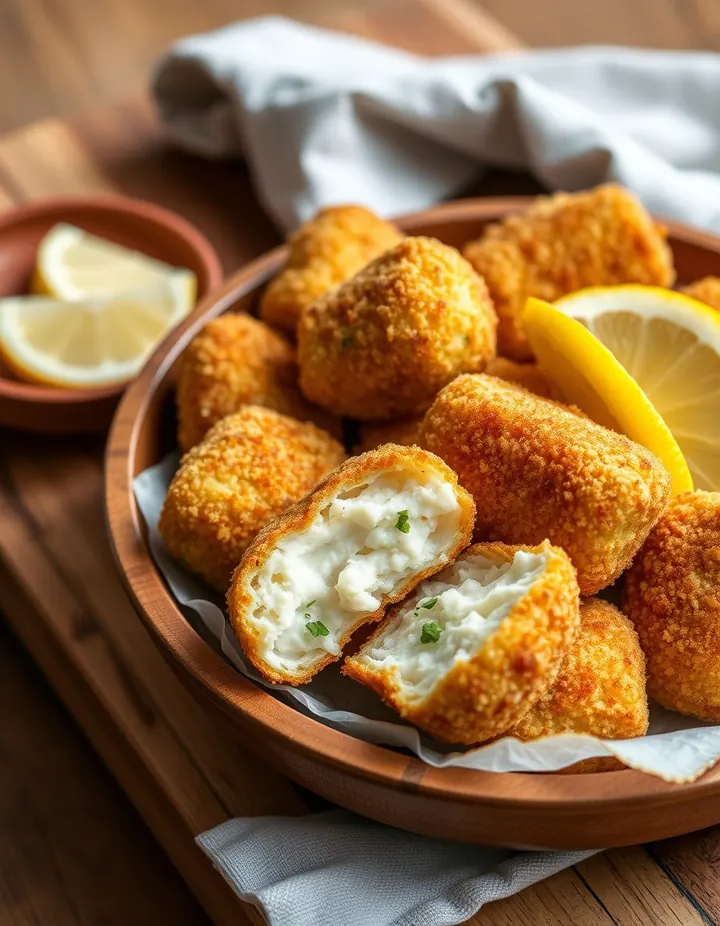 Fish Croquettes81 recipes
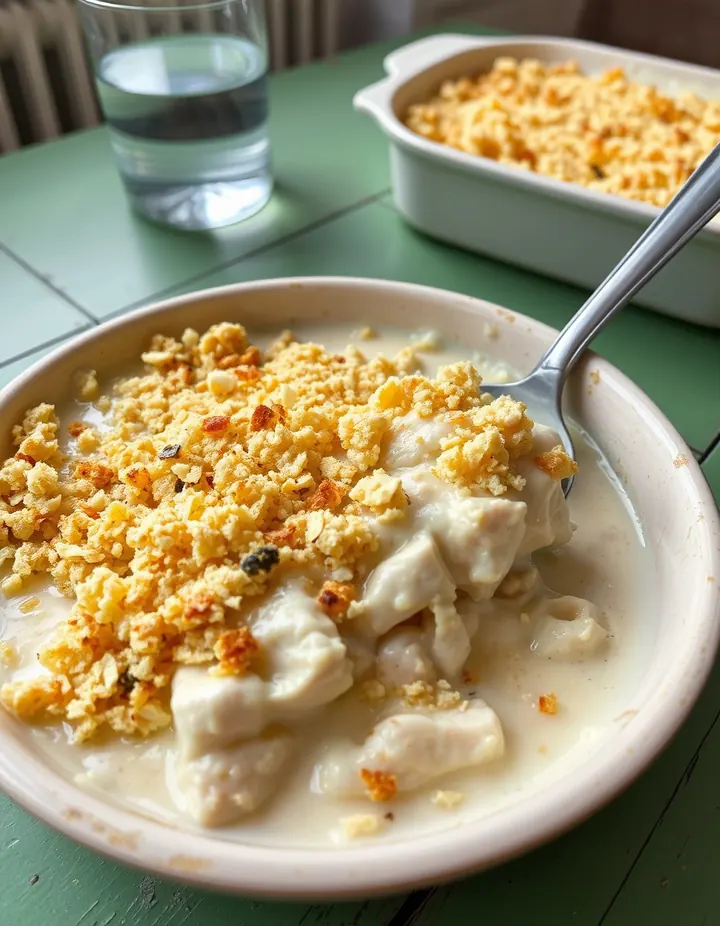 Scalloped Cod69 recipes
The Sunday pairing: one pairing, the chemistry behind it, and how to cook it. No spam, unsubscribe anytime.
Prefer an account? Create a free account for sign-in; Pro adds the full results and chemistry.