Why it works: Chicken and pork match in chemistry and in kitchens. They rank in the top 2% of all ingredient pairs, and cooks put them together in 5,417 recipes. Both carry 2-furfurylthiol, which smells coffee, roasted. The science ↓
Chicken Roasted
Ingredients
Directions
Prepare the chicken
Clean the chicken thoroughly.
Make a dressing and fill the body or just the breast with it, adding a large lump of butter inside.
Push the legs up under the skin.
Skewer the legs through the body.
Press the wings against the sides.
Skewer or tie the wings firmly to the body.
Sew up any openings.
Roast
Place butter or slices of pork in the dripping pan.
Put the chicken in the pan, breast side down.
Rub the chicken with butter.
If the pan is not tightly covered, add hot water when the chicken begins to brown.
Baste the chicken every 10 minutes, allowing 15 to 20 minutes per pound for baking.
Turn the chicken after half an hour.
Dredge the chicken with a little flour during the last basting.
Check for doneness by pressing the flesh; it should feel firm and have a golden brown color.
Make the gravy and serve
Remove any threads, strings, or skewers before serving.
Stew the giblets in hot water while the chicken roasts.
Chop the giblets finely.
Add the chopped giblets and flour to the gravy from the roasted chicken.
Add boiling water and a little salt to the gravy.
Serve.
Transcribed from a scanned cookbook and modernised for today's kitchens. Where the book gave no heat or time, or said "a moderate oven", the temperatures and times here may be modern equivalents rather than the book's own figures.
Explore the science
The flavor team
The pairs that carry this dish. Each one is judged two ways: how much their aromas overlap, and how often cooks already put them together.
-
Chicken + porktop 2% of all pairsSmell alikestrongCooked together5,417 recipes
Shared aroma: 2-furfurylthiol (coffee, roasted).
-
Butter + flourtop 12% of all pairsSmell alikelowCooked together124,287 recipes
Shared aroma: isobutyraldehyde (malty, green).
-
Butter + porktop 13% of all pairsSmell alikemoderateCooked together13,933 recipes
Shared aroma: 2-furfurylthiol (coffee, roasted).
-
Chicken + buttertop 15% of all pairsSmell alikemoderateCooked together13,902 recipes
Shared aroma: 2-furfurylthiol (coffee, roasted).
-
Chicken + flourtop 27% of all pairsSmell alikelowCooked together10,559 recipes
Shared aroma: acetaldehyde (pungent, ethereal).
Butter and flour barely smell alike, yet cooks put them together in 124,287 recipes: they work on texture and structure more than aroma.
Ranks compare each pair with 20,000 random ingredient pairs on CompKitchen. How we score pairs
What each ingredient does
- Chicken
- Forms the main protein that turns firm and tender as it cooks.
- Butter
- Adds fat that helps the skin brown and keeps the meat moist.
- Pork slices
- Release fat and juices into the pan that baste the chicken and flavor the drippings.
- Flour
- Dusted on the chicken to aid browning and later thickens the gravy.
The step that matters
Checking doneness. Pressing the flesh only gives a rough sense of doneness. Poultry must be cooked through, so the meat should be fully firm and the juices clear before serving.
“What each ingredient does” and “The step that matters” were written by Claude from this recipe’s own method and reviewed in samples by CompKitchen.
More roasted chicken recipes
You might also like
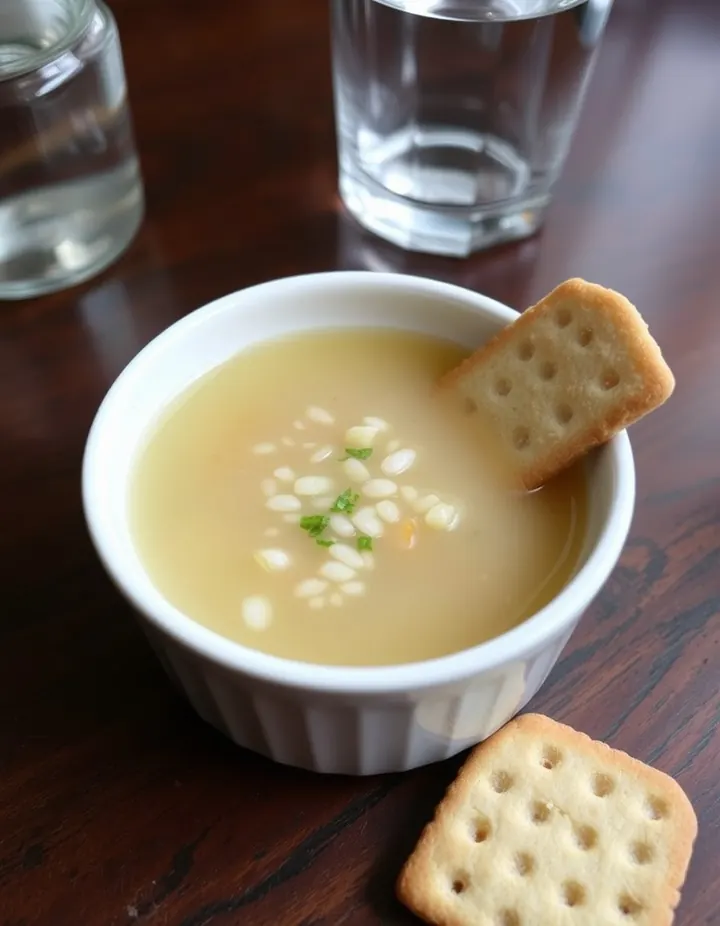 Chicken Broth257 recipes
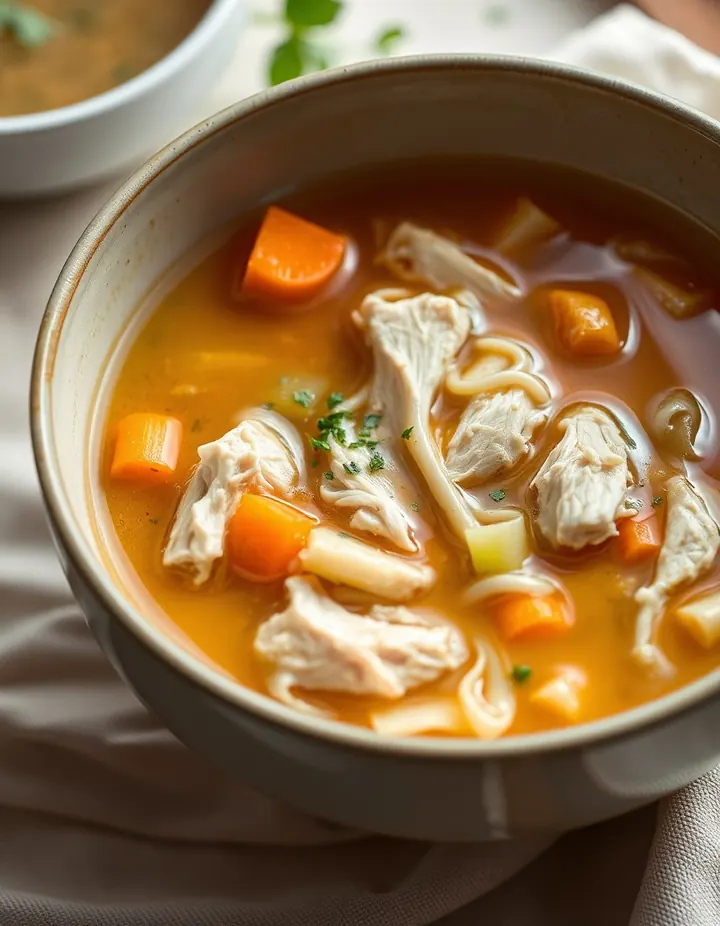 Chicken Soup156 recipes
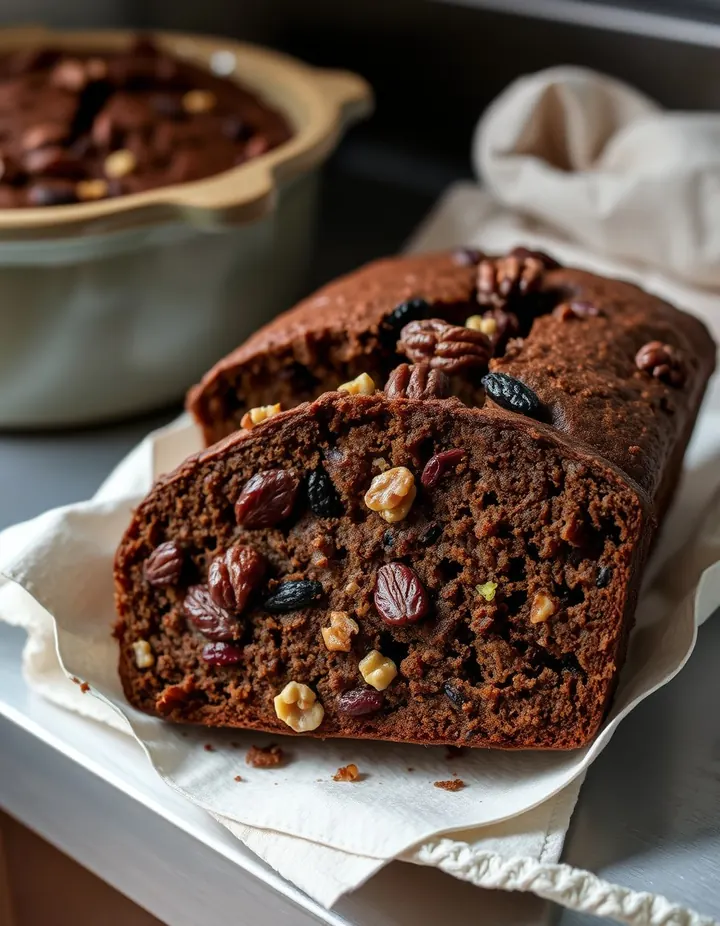 Pork Cake107 recipes
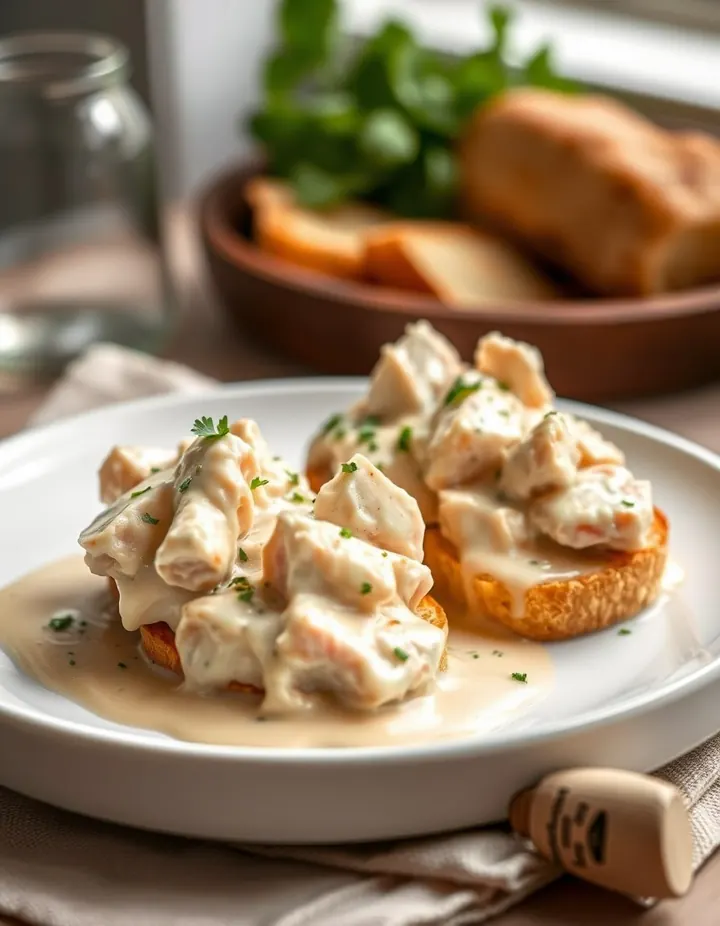 Creamed Chicken89 recipes
The free Flavor Lab newsletter: one surprising pairing a week and the molecular reason it works, in 60 seconds. No spam, unsubscribe anytime.
Prefer an account? Create a free account to save pairings and unlock the full chemistry.