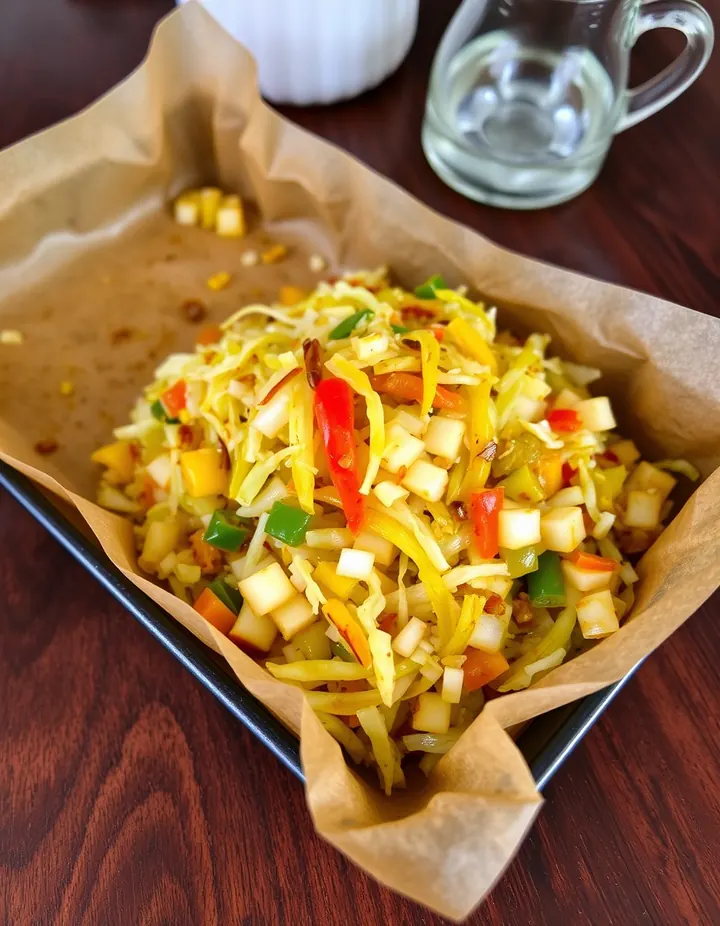
Why it works: Horseradish and mustard match in chemistry and in kitchens. They rank in the top 1% of all ingredient pairs, and cooks put them together in 1,832 recipes. Both carry coumarin, which smells sweet, hay. The science ↓
Chopped Pickle
Ingredients
Directions
Prepare the peppers and salt
Slice the peppers and soak them in salt water overnight.
Drain and chop finely in the morning.
Soak the salt and mustard seeds in boiling water for 15 minutes.
Add the soaked salt and mustard seeds to the chopped peppers along with the horseradish.
Salt the tomatoes and cabbage
Wash the tomatoes, cut a small piece from each end, slice, and chop finely.
Place the tomatoes in a jar, stir in 1 cup salt, and let stand for 24 hours.
Mix twice as much chopped cabbage as tomatoes with 2 cups salt.
Let the mixture stand for 24 hours.
Drain the cabbage and place it in a separate jar.
Cover both the tomatoes and cabbage with cold weak vinegar.
After 24 hours, drain the cabbage again.
Cook and pack
Boil the tomatoes and vinegar for 3 minutes, stirring constantly.
Pour out the boiled mixture and let cool.
Squeeze the tomatoes until dry.
Mix the tomatoes with the cabbage and layer them in a stone jar.
Sprinkle each layer with the pepper, mustard, and horseradish mixture, adding cayenne pepper occasionally.
Cover and finish
Cover the jar with strong vinegar mixed with 1 cup sugar per gallon.
Place a plate on top to keep the pickles submerged.
If a white scum forms, drain the vinegar.
Boil the vinegar, skim, and pour it back over the pickles while boiling.
Transcribed from a scanned cookbook and modernised for today's kitchens. Where the book gave no heat or time, or said "a moderate oven", the temperatures and times here may be modern equivalents rather than the book's own figures.
Photo for illustrative purposes only · Contact us to use it
Explore the science
The flavor team
The pairs that carry this dish. Each one is judged two ways: how much their aromas overlap, and how often cooks already put them together.
-
Horseradish + mustardtop 1% of all pairsSmell alikestrongCooked together1,832 recipes
Shared aroma: coumarin (sweet, hay).
-
Horseradish + cabbagetop 2% of all pairsSmell alikestrongCooked together481 recipes
Shared aroma: coumarin (sweet, hay).
-
Cabbage + mustardtop 3% of all pairsSmell alikestrongCooked together1,645 recipes
Shared aroma: 2-isopropyl-3-methoxypyrazine (earthy, pea).
-
Pepper + cabbagetop 5% of all pairsSmell alikemoderateCooked together4,081 recipes
Shared aroma: 2-isopropyl-3-methoxypyrazine (earthy, pea).
-
Tomato + peppertop 7% of all pairsSmell alikemoderateCooked together17,923 recipes
Shared aroma: 2-isopropyl-3-methoxypyrazine (earthy, pea).
Ranks compare each pair with 20,000 random ingredient pairs on CompKitchen. How we score pairs
What each ingredient does
- Green tomatoes
- Provide the bulk of the pickle and, once salted and drained, a firm, chopped texture.
- Coarse sea salt
- Draws water out of the tomatoes and cabbage, firming them and preserving the mixture.
- Cabbage
- Adds crunch and body, keeping the pickle from turning soft after salting and packing.
- Vinegar
- Provides acidity that preserves the pickle and gives it its sharp flavour.
- Sugar
- Balances the sharpness of the vinegar with a touch of sweetness.
- Mustard seeds
- Contribute a pungent, sharp flavour that runs through the pickle.
The step that matters
Squeezing the tomatoes dry after boiling. Excess water dilutes the vinegar brine and softens the pickle, so the tomatoes must be pressed well before they are mixed with the cabbage and packed.
Swap the tomato
How well each one fits the dish's main ingredients (horseradish, sugar, vinegar, pepper, cabbage, mustard):
- Radishfits better
- Broccolifits better
- Beetrootfits better
- Tomatothe original
Fit is the average pairing score against horseradish, sugar, vinegar, pepper, cabbage, mustard. Candidates are from the same food group and used in at least 100 recipes.
“What each ingredient does” and “The step that matters” were written by Claude from this recipe’s own method and reviewed in samples by CompKitchen.
You might also like
 Tomato Soup526 recipes
 Cream of Tomato Soup107 recipes
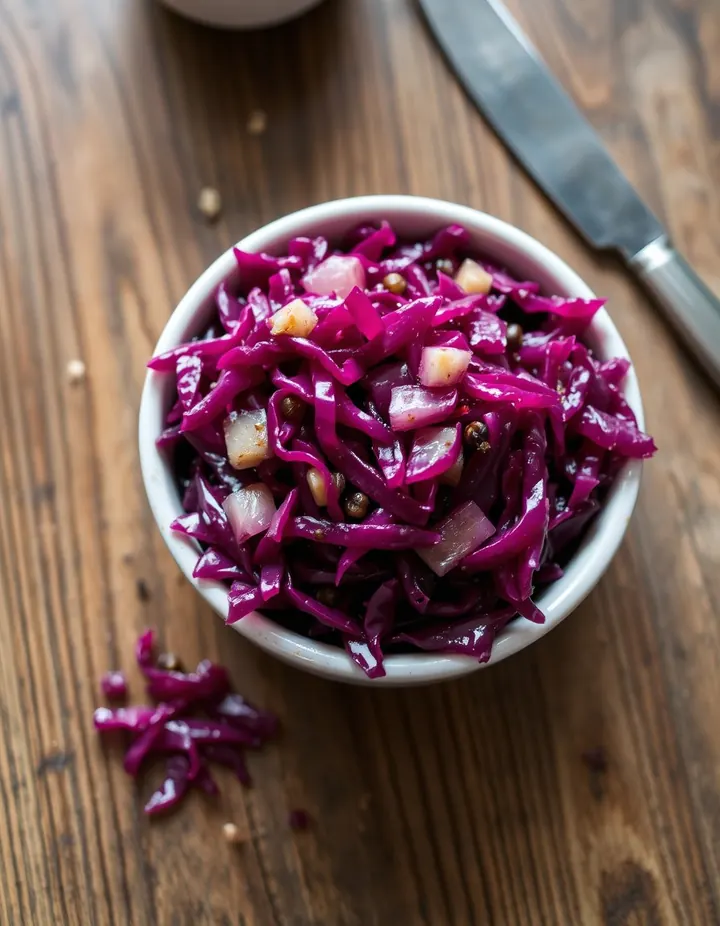 Red Cabbage65 recipes
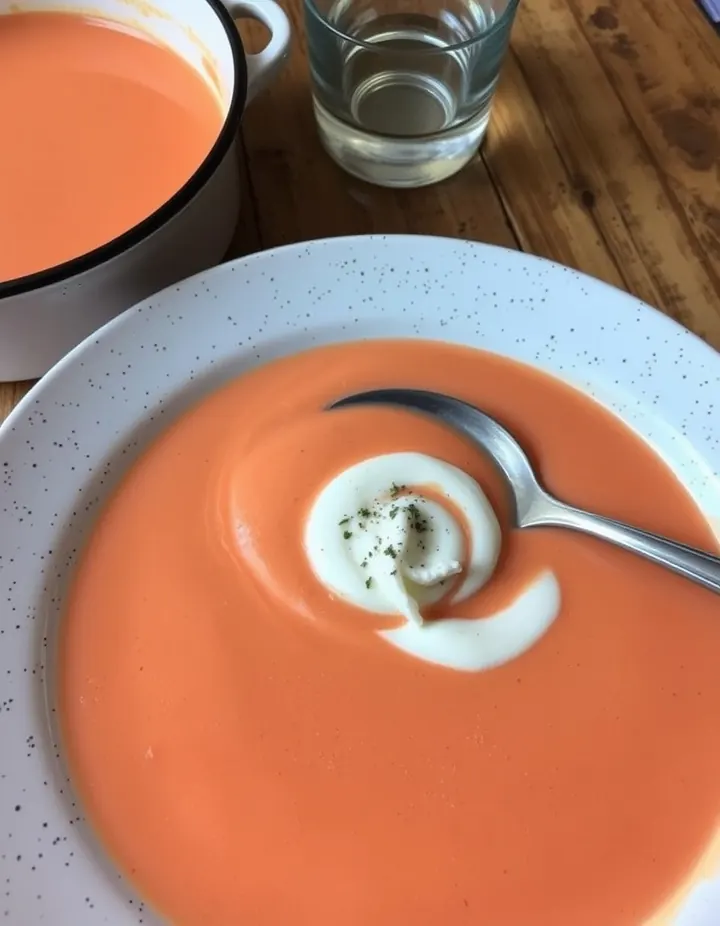 Tomato Bisque61 recipes
The free Flavor Lab newsletter: one surprising pairing a week and the molecular reason it works, in 60 seconds. No spam, unsubscribe anytime.
Prefer an account? Create a free account to save pairings and unlock the full chemistry.