Why it works: Carrot and celery match in chemistry and in kitchens. They rank in the top 1% of all ingredient pairs, and cooks put them together in 10,173 recipes. Both carry myristicin, which smells spice, warm. The science ↓
Dressed Salmon
Ingredients
Directions
The book gives no oven temperature. The 400°F (200°C) in the steps was added when the recipe was transcribed, as a starting point.
Poach the salmon
Preheat your oven to 400°F (200°C).
In a fish kettle or large baking dish, place the salmon and cover with butter paper.
Prepare the sauce by combining carrot, turnip, celery, onion, sweet herbs, mace, whole pepper, cloves, bay leaf, anchovies, vinegar, brown stock, and sherry.
Pour the sauce over the salmon and let it stew until cooked through.
Make the sauce
Drain the stock from the fish and thicken it by straining through a fine sieve.
If using capers, add them to the sauce and boil, skimming off any grease.
Season the sauce with lemon juice, cayenne pepper, salt, and sugar, and add essence of anchovies if desired.
Fry and serve
Cut the salmon into cutlet shapes.
Heat clarified butter in a saucepan and add cayenne pepper.
Fry each cutlet in the butter until golden, then place them on paper to absorb excess grease.
Serve with the prepared brown sauce.
Transcribed from a scanned cookbook and modernised for today's kitchens. Where the book gave no heat or time, or said "a moderate oven", the temperatures and times here may be modern equivalents rather than the book's own figures.
Explore the science
The flavor team
The pairs that carry this dish. Each one is judged two ways: how much their aromas overlap, and how often cooks already put them together.
-
Carrot + celerytop 1% of all pairsSmell alikestrongCooked together10,173 recipes
Shared aroma: myristicin (spice, warm).
-
Carrot + turniptop 1% of all pairsSmell alikestrongCooked together8,002 recipes
Shared aroma: coumarin (sweet, hay).
-
Turnip + celerytop 2% of all pairsSmell alikemoderateCooked together4,418 recipes
Shared aroma: coumarin (sweet, hay).
-
Pepper + clovetop 5% of all pairsSmell alikestrongCooked together17,451 recipes
Shared aroma: ethyl octanoate (fruity, wine).
-
Carrot + clovetop 5% of all pairsSmell alikestrongCooked together5,873 recipes
Shared aroma: cuminaldehyde (Spicy, cumin).
Ranks compare each pair with 20,000 random ingredient pairs on CompKitchen. How we score pairs
What each ingredient does
- Salmon
- Forms the main body of the dish and becomes flaky and tender when gently stewed.
- Brown stock
- Provides the liquid base of the sauce, carrying savory depth once thickened and reduced.
- Anchovies
- Contribute a savory, salty depth that melts into the sauce and enriches its flavor.
- Vinegar
- Adds acidity that brightens the sauce and balances the richness of stock and butter.
- Sherry
- Adds aromatic sweetness and acidity to the sauce, deepening its overall flavor.
- Clarified butter
- Fries the cutlets to a golden crust while adding richness and browning.
The step that matters
Fry each cutlet in the butter until golden. Clarified butter has no milk solids to burn, so it can reach a high frying heat and brown the surface evenly. Too little heat leaves the cutlets pale and greasy, while too much can scorch the cayenne and darken the coating unevenly.
Swap the mace
How well each one fits the dish's main ingredients (salmon, carrot, turnip, celery, onion, pepper, clove):
- Parsleyfits better
- Thymefits better
- Marjoramfits better
- Macethe original
Fit is the average pairing score against salmon, carrot, turnip, celery, onion, pepper, clove. Candidates are from the same food group and used in at least 100 recipes.
“What each ingredient does” and “The step that matters” were written by Claude from this recipe’s own method and reviewed in samples by CompKitchen.
You might also like
 Lemon Sauce236 recipes
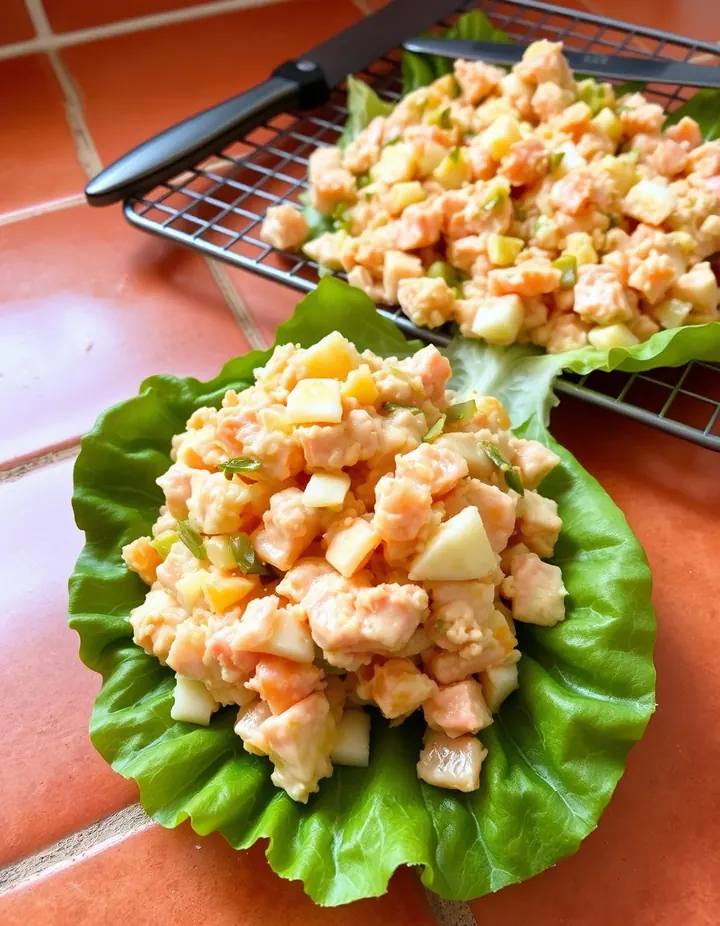 Salmon Salad155 recipes
 Carrot Soup134 recipes
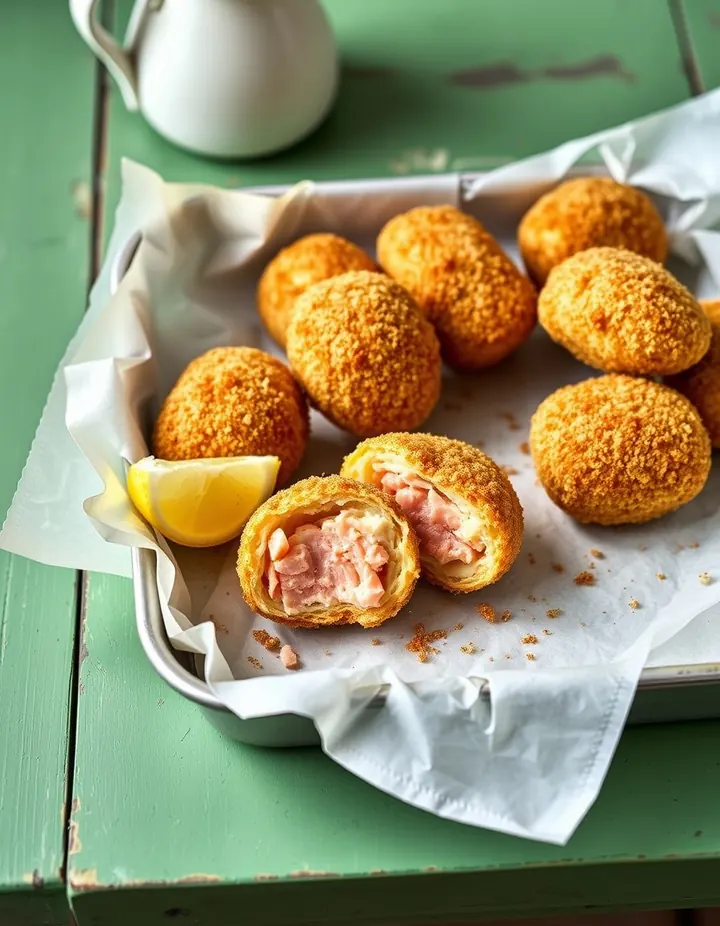 Salmon Croquettes129 recipes
The free Flavor Lab newsletter: one surprising pairing a week and the molecular reason it works, in 60 seconds. No spam, unsubscribe anytime.
Prefer an account? Create a free account to save pairings and unlock the full chemistry.