Why it works: Clove and thyme match in chemistry and in kitchens. They rank in the top 2% of all ingredient pairs, and cooks put them together in 4,108 recipes. Both carry cuminaldehyde, which smells Spicy, cumin. The science ↓
Whole Boned Ham
Ingredients
Directions
Prepare the ham
Split the ham down the inside without breaking the skin.
Remove all the bone from the ham.
Chop the mushrooms, truffles, garlic, celery, and thyme, then stuff this mixture into the ham.
Sew the ham closed and place it in a closed bag to maintain its shape.
In a pot, add the ham and 1 dozen cloves, then boil slowly for 3 hours.
After boiling, place the ham in a closed pan to press until very cold.
Remove the skin from the ham.
Make the jelly
Combine 1½ pints of ham water, 1½ pints of soup stock, and 1 box of dissolved gelatin in a bowl.
Add pepper and salt to the mixture.
Beat the whites and shells of 2 eggs, then add to the stock and ham water to clarify.
Heat the mixture, stirring until it boils, and skim off any fat.
Strain the jelly through a flannel bag after boiling for 10 minutes.
Set and garnish
If you don't have a ham mold, cut some jelly into diamond shapes and place around the dish.
Cut the remaining jelly fine and spread it over the ham.
Garnish the dish with carrots, beets cut into flower shapes, and parsley.
Transcribed from a scanned cookbook and modernised for today's kitchens. Where the book gave no heat or time, or said "a moderate oven", the temperatures and times here may be modern equivalents rather than the book's own figures.
Explore the science
The flavor team
The pairs that carry this dish. Each one is judged two ways: how much their aromas overlap, and how often cooks already put them together.
-
Clove + thymetop 2% of all pairsSmell alikestrongCooked together4,108 recipes
Shared aroma: cuminaldehyde (Spicy, cumin).
-
Celery + thymetop 3% of all pairsSmell alikestrongCooked together3,193 recipes
Shared aroma: beta-phellandrene (minty, terpene).
-
Thyme + peppertop 4% of all pairsSmell alikemoderateCooked together11,585 recipes
Shared aroma: beta-phellandrene (minty, terpene).
-
Garlic + thymetop 4% of all pairsSmell alikestrongCooked together5,608 recipes
Shared aroma: beta-phellandrene (minty, terpene).
-
Mushroom + truffletop 4% of all pairsSmell alikemoderateCooked together1,900 recipes
Shared aroma: 2,4-nonadienal (fatty, green).
Ranks compare each pair with 20,000 random ingredient pairs on CompKitchen. How we score pairs
What each ingredient does
- Ham
- Forms the main body of the dish and provides the meaty flavor that the jelly surrounds.
- Eggs
- Whites clarify the stock, collecting particles so the jelly turns clear.
- Gelatine
- Sets the stock into a firm jelly that holds its shape when sliced and served.
- Mushrooms
- Add earthy flavor and moisture to the stuffing inside the ham.
- Truffles
- Add a concentrated, aromatic earthy flavor to the stuffing.
- Celery
- Adds savory aromatic flavor to the stuffing.
The step that matters
Strain the jelly through a flannel bag after boiling for 10 minutes.. Egg white must be boiled so it coagulates and traps impurities, then the liquid must be strained gently and unpressed. Rushing or squeezing the bag leaves cloudiness in the jelly.
Swap the garlic
How well each one fits the dish's main ingredients (ham, mushroom, truffle, clove, celery, thyme, pepper):
- Marjoramfits better
- Winter savoryfits better
- Parsleyfits better
- Garlicthe original
Fit is the average pairing score against ham, mushroom, truffle, clove, celery, thyme, pepper. Candidates are from the same food group and used in at least 100 recipes.
“What each ingredient does” and “The step that matters” were written by Claude from this recipe’s own method and reviewed in samples by CompKitchen.
You might also like
 Carrot Soup134 recipes
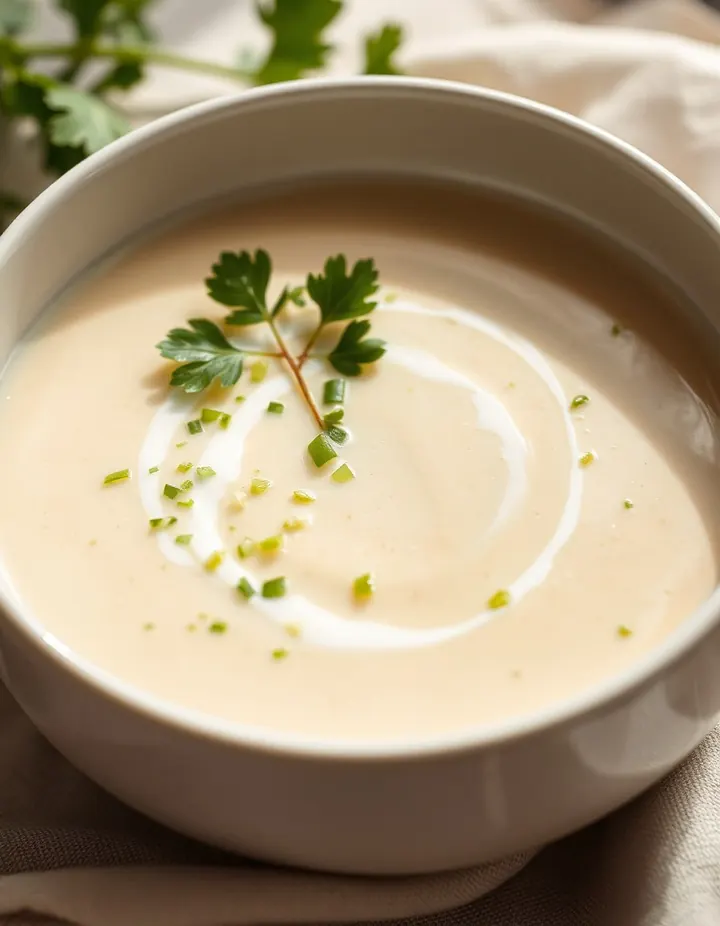 Cream of Celery Soup113 recipes
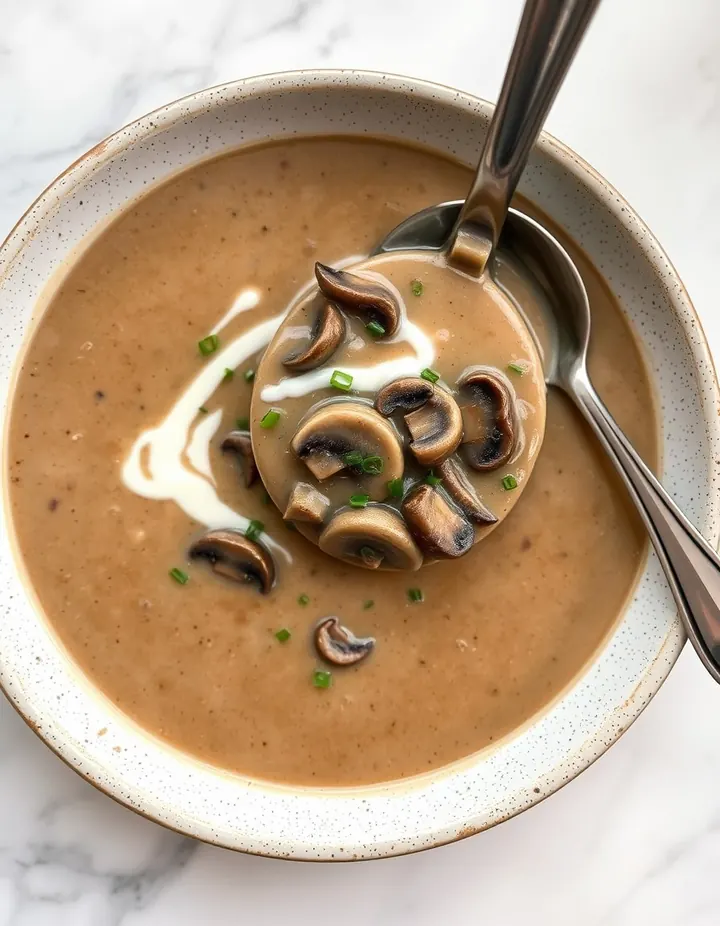 Mushroom Soup60 recipes
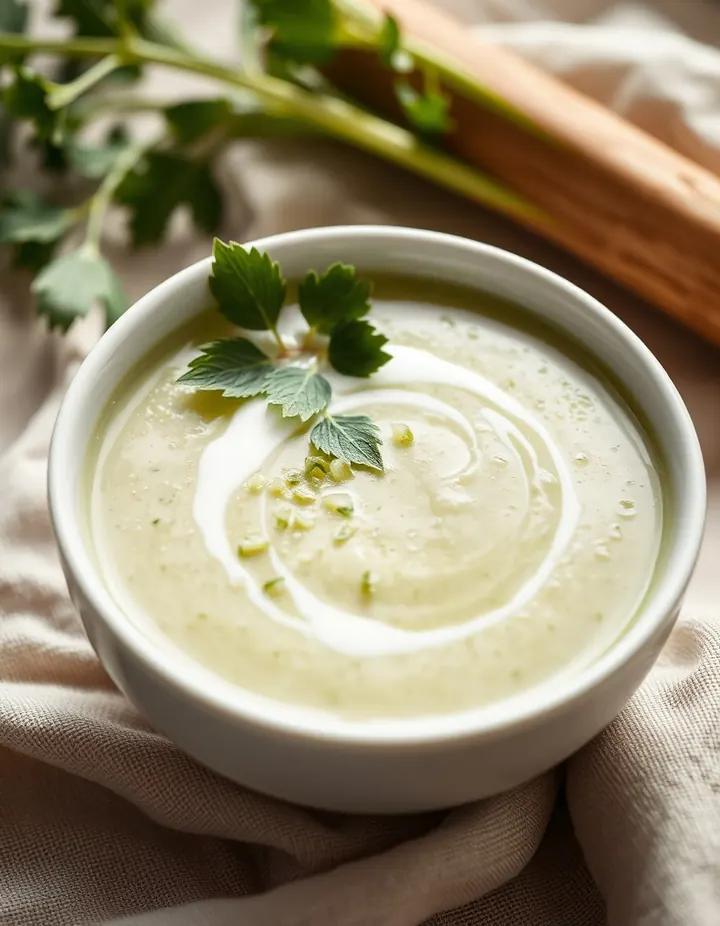 Celery Stew25 recipes
The free Flavor Lab newsletter: one surprising pairing a week and the molecular reason it works, in 60 seconds. No spam, unsubscribe anytime.
Prefer an account? Create a free account to save pairings and unlock the full chemistry.