Why it works: Flour and almond are a kitchen classic. They rank in the top 5% of all ingredient pairs, and cooks put them together in 8,673 recipes. Both carry isobutyraldehyde, which smells malty, green. The science ↓
Almond Cake
Ingredients
Directions
The book says “a moderate oven”. The 350°F (175°C) in the steps is the modern equivalent, not the book's own figure.
Prepare
Sift the flour and place it near the fire to dry.
Pour boiling water over the almonds, rub off the skins, and chop the kernels finely.
Line two medium-sized cake pans with buttered paper or butter them thickly and dust with powdered sugar.
Preheat the oven to 350°F (175°C).
Make the batter
Beat the butter until creamy, then gradually add the powdered sugar and rosewater.
Mix in the flour gradually.
Beat the egg whites until stiff, then gently fold in the remaining powdered sugar.
Combine the egg whites and chopped almonds with the batter, mixing quickly and lightly.
Bake
Pour the batter into the prepared pans and place them on earthen plates.
Bake for about 45 minutes, or until a clean toothpick can be inserted and removed without sticking.
Transcribed from a scanned cookbook and modernised for today's kitchens. Where the book gave no heat or time, or said "a moderate oven", the temperatures and times here may be modern equivalents rather than the book's own figures.
Explore the science
The flavor team
The pairs that carry this dish. Each one is judged two ways: how much their aromas overlap, and how often cooks already put them together.
-
Flour + almondtop 5% of all pairsSmell alikemoderateCooked together8,673 recipes
Shared aroma: isobutyraldehyde (malty, green).
-
Almond + buttertop 11% of all pairsSmell alikemoderateCooked together9,245 recipes
Shared aroma: 2,3-pentanedione (butter, sweet).
-
Flour + buttertop 12% of all pairsSmell alikelowCooked together124,287 recipes
Shared aroma: isobutyraldehyde (malty, green).
-
Flour + sugartop 15% of all pairsSmell alikemoderateCooked together92,116 recipes
Shared aroma: phenylacetaldehyde (hawthorne, honey).
-
Flour + eggtop 15% of all pairsSmell alikelowCooked together106,462 recipes
Shared aroma: isobutyraldehyde (malty, green).
Flour and butter barely smell alike, yet cooks put them together in 124,287 recipes: they work on texture and structure more than aroma.
Ranks compare each pair with 20,000 random ingredient pairs on CompKitchen. How we score pairs
What each ingredient does
- All-purpose flour
- Forms the cake's structure as its proteins set around the air and fat in the batter.
- Shelled almonds
- Add nutty flavor, richness and a tender, slightly moist texture when chopped finely.
- Butter
- Adds fat that tenderizes the crumb and carries flavor; creaming it traps air.
- Powdered sugar
- Sweetens the cake and, creamed with butter, helps create a lighter, finer crumb.
- Egg whites
- Beaten to a stiff foam, they trap air that lifts the cake as it bakes and sets.
The step that matters
Folding in the egg whites and mixing the batter quickly and lightly. Beaten egg white foam holds the cake's rise. Overmixing develops gluten in the flour and deflates the foam, leaving a dense, tough cake.
“What each ingredient does” and “The step that matters” were written by Claude from this recipe’s own method and reviewed in samples by CompKitchen.
More almond cake recipes
You might also like
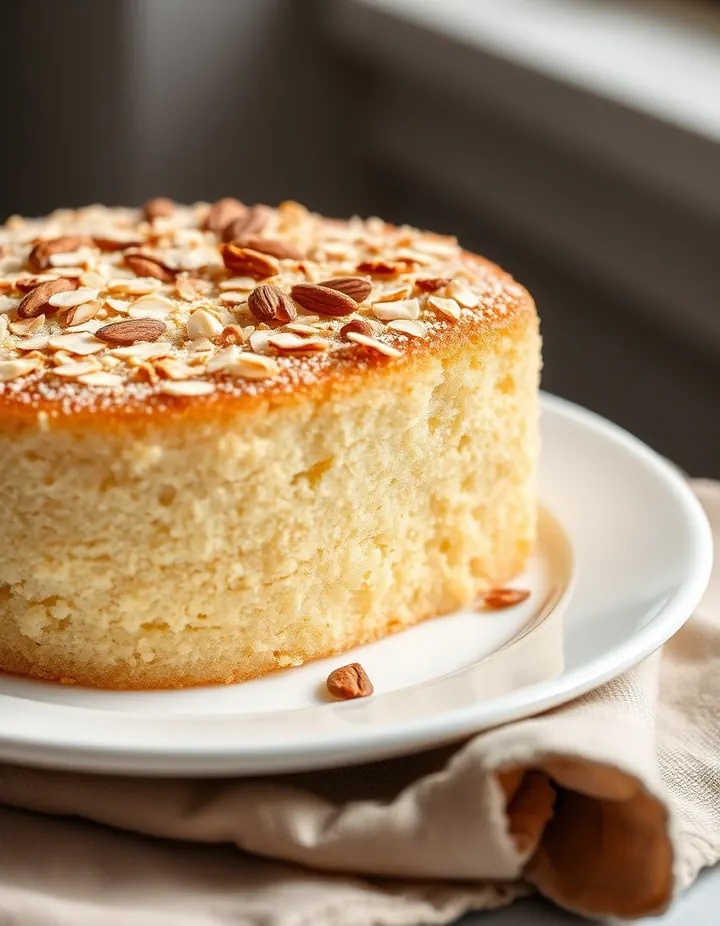 Almond Sponge Cake26 recipes
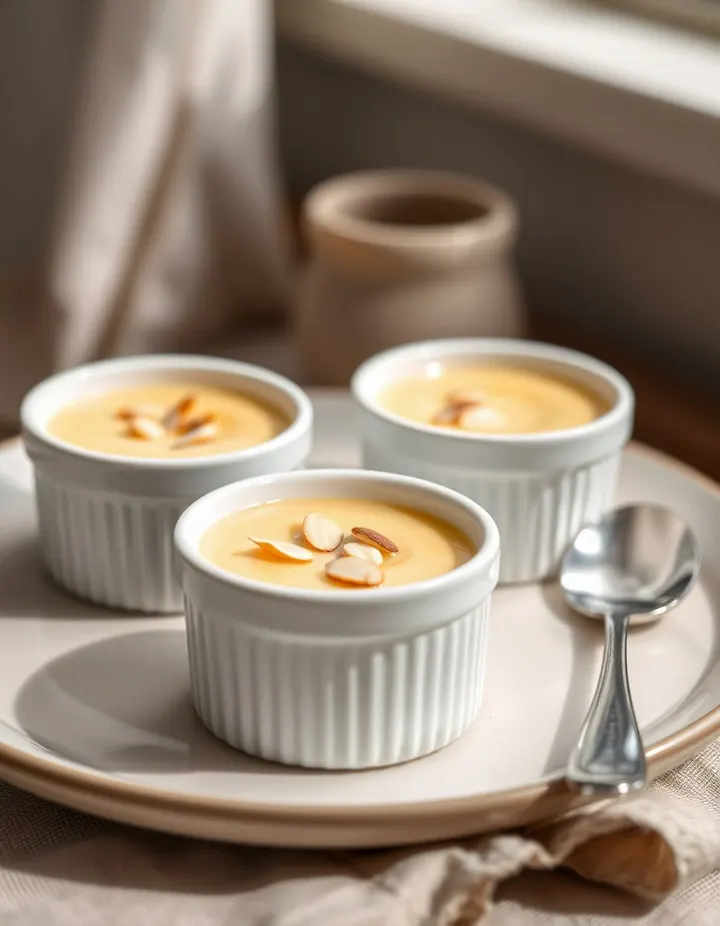 Almond Custard22 recipes
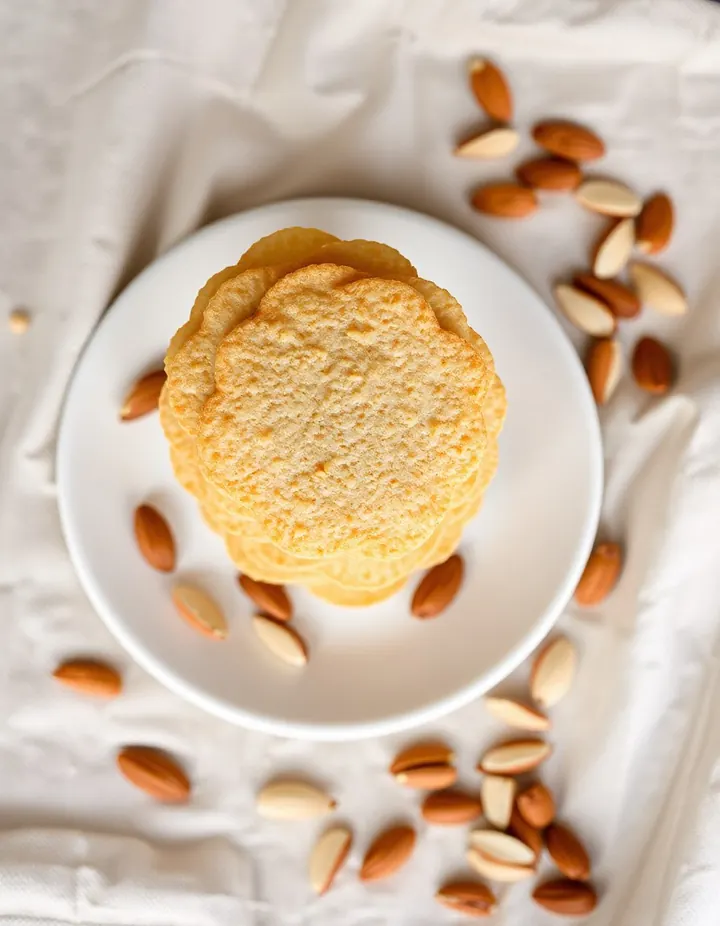 Almond Wafers22 recipes
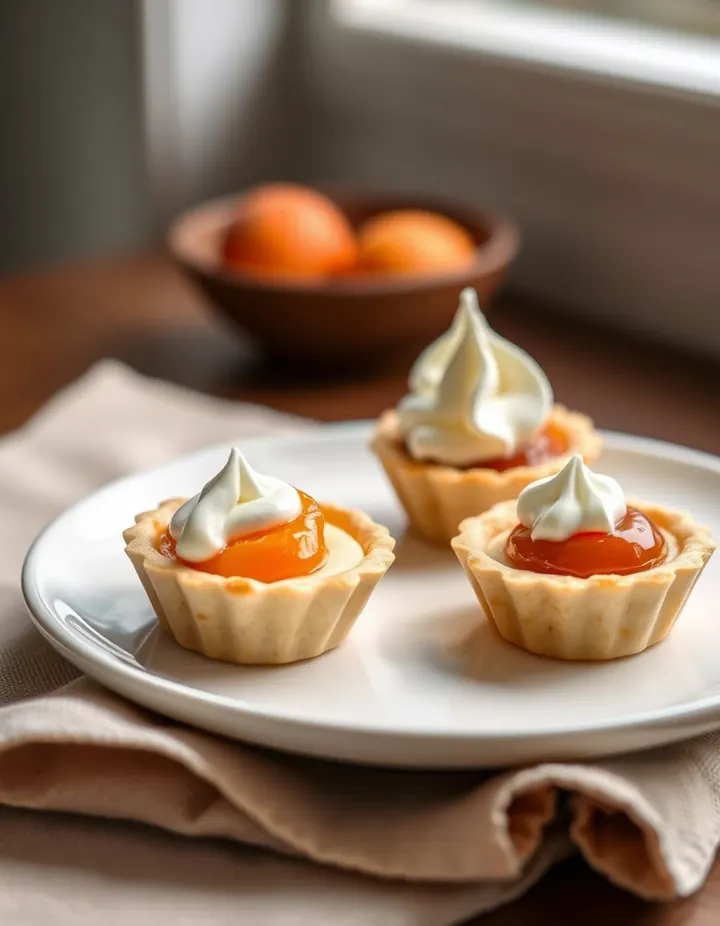 Almond Paste Tartlets10 recipes
The free Flavor Lab newsletter: one surprising pairing a week and the molecular reason it works, in 60 seconds. No spam, unsubscribe anytime.
Prefer an account? Create a free account to save pairings and unlock the full chemistry.