Why it works: Thyme and winter savory match in chemistry and in kitchens. They rank in the top 1% of all ingredient pairs, and cooks put them together in 780 recipes. Both carry eucalyptol, which smells eucalyptus, herbal. The science ↓
Leg of Mutton Boned and Forced
Ingredients
Directions
Bone the leg
Turn the underside of the mutton upwards.
Cut through the skin from the knuckle to the first joint and raise it from the flesh along the bone.
Cut through the flesh down to the bone and work the knife around it until you reach the socket.
Remove the flat bone from the large end of the joint and loosen the skin around the middle joint carefully.
Draw out the two bones without dividing them.
Make and fill
Chop nearly a pound of the inside of the mutton fine with the bacon and mix with parsley, thyme, winter savory, pepper, mace, salt, nutmeg, and lemon rind or eschalots.
Fill the cavities with the prepared forcemeat, adding seasoning of eschalot, garlic, or onion.
Sew and tie
Sew the skin neatly together where it was cut open and tie the knuckle tightly to prevent gravy escape.
Replace the flat bone at the large end and use a long needle and twine to draw the edges of the meat together over it.
Roast
Roast the prepared mutton on a cradle spit or a hanging jack if possible.
Transcribed from a scanned cookbook and modernised for today's kitchens. Where the book gave no heat or time, or said "a moderate oven", the temperatures and times here may be modern equivalents rather than the book's own figures.
Explore the science
The flavor team
The pairs that carry this dish. Each one is judged two ways: how much their aromas overlap, and how often cooks already put them together.
-
Thyme + winter savorytop 1% of all pairsSmell alikestrongCooked together780 recipes
Shared aroma: eucalyptol (eucalyptus, herbal).
-
Parsley + thymetop 1% of all pairsSmell alikestrongCooked together9,057 recipes
Shared aroma: cuminaldehyde (Spicy, cumin).
-
Parsley + lemontop 1% of all pairsSmell alikestrongCooked together14,037 recipes
Shared aroma: beta-phellandrene (minty, terpene).
-
Winter savory + nutmegtop 1% of all pairsSmell alikestrongCooked together406 recipes
Shared aroma: methyleugenol (clove, spice).
-
Thyme + lemontop 1% of all pairsSmell alikestrongCooked together3,973 recipes
Shared aroma: beta-phellandrene (minty, terpene).
Ranks compare each pair with 20,000 random ingredient pairs on CompKitchen. How we score pairs
What each ingredient does
- Leg of mutton
- Forms the main body of the dish and supplies the rich, meaty flavour and substantial texture.
- Delicate striped bacon
- Adds fat and moisture to the forcemeat, keeping the stuffing from drying out while roasting.
- Parsley
- Contributes fresh, green aroma that lightens the rich flavour of the meat.
- Thyme
- Adds a savoury, aromatic note that complements the roasted meat.
- Winter savory
- Provides a peppery, aromatic flavour that suits rich meats like mutton.
The step that matters
Sewing and tying the skin closed. Any gap in the skin lets the juices and forcemeat escape during roasting, so the meat dries out and the gravy is lost. The seam and knuckle must be sealed firmly before the joint goes on the spit.
Swap the mace
How well each one fits the dish's main ingredients (mutton, parsley, thyme, winter savory, pepper, nutmeg, lemon):
- Marjoramfits better
- Sagefits better
- Allspicefits better
- Macethe original
Fit is the average pairing score against mutton, parsley, thyme, winter savory, pepper, nutmeg, lemon. Candidates are from the same food group and used in at least 100 recipes.
“What each ingredient does” and “The step that matters” were written by Claude from this recipe’s own method and reviewed in samples by CompKitchen.
You might also like
 Mutton Broth292 recipes
 Lemon Sauce236 recipes
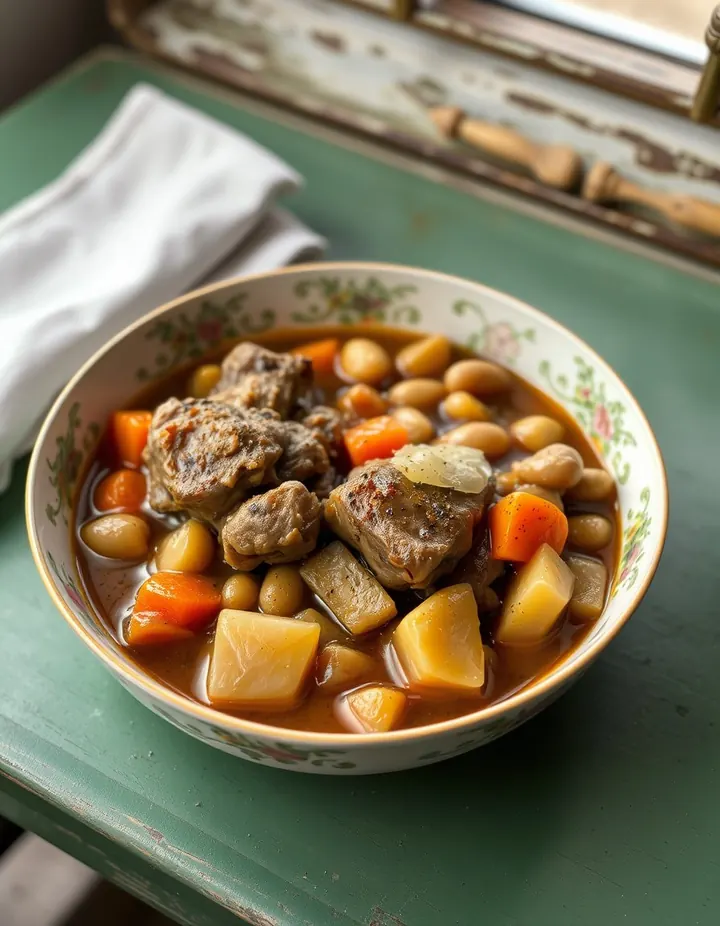 Haricot Mutton59 recipes
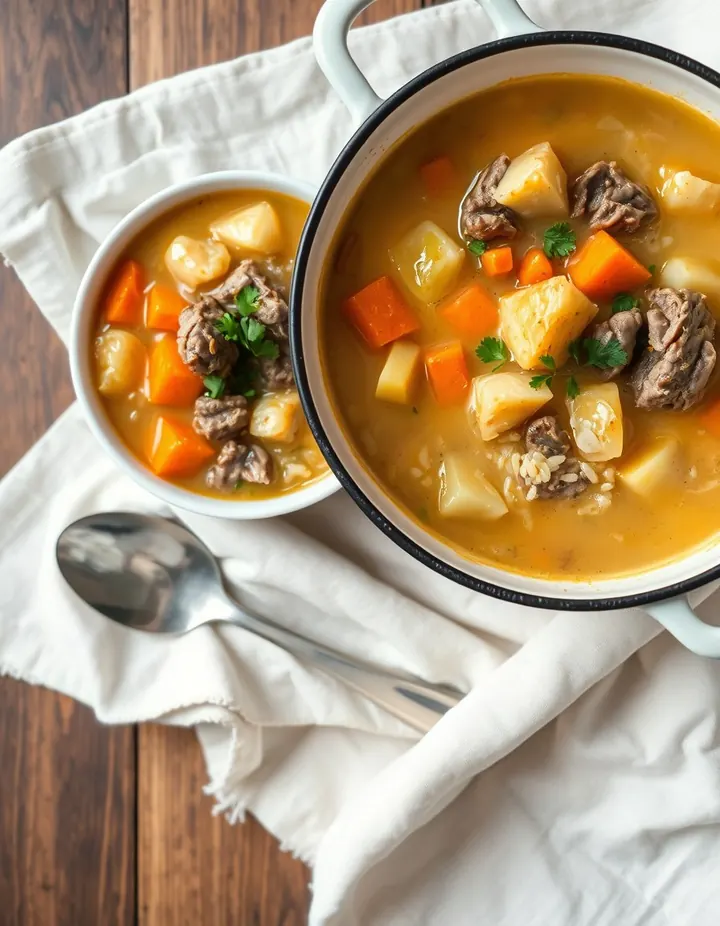 Mutton Soup56 recipes
The free Flavor Lab newsletter: one surprising pairing a week and the molecular reason it works, in 60 seconds. No spam, unsubscribe anytime.
Prefer an account? Create a free account to save pairings and unlock the full chemistry.