Why it works: Chestnut and flour match in chemistry and in kitchens. They rank in the top 6% of all ingredient pairs, and cooks put them together in 517 recipes. Both carry isobutyraldehyde, which smells malty, green. The science ↓
Boiled Sausages
Ingredients
Directions
Prepare
Boil water in a pot and add the sausages.
Simmer for 7 to 10 minutes, depending on their size.
Remove the husk and skin from the roasted chestnuts.
Melt a small amount of butter in a skillet.
Fry 6 small flat oval cakes of sausage meat until browned.
Remove the sausage cakes.
Make the sauce
Pour most of the fat from the skillet into a saucepan.
Mix in 1 tablespoon of flour and stir over heat until browned.
Gradually add ½ pint of broth.
Add ⅓ cup of white wine, stirring continuously.
Add the herbs, salt, and pepper or cayenne to season.
Bring the mixture to a boil.
Stew and serve
Add the sausages around the pan and chestnuts in the center.
Stew gently for nearly 1 hour.
Remove the herbs.
Serve the sausages neatly with chestnuts in the center, strained sauce poured over, and serve hot.
Transcribed from a scanned cookbook and modernised for today's kitchens. Where the book gave no heat or time, or said "a moderate oven", the temperatures and times here may be modern equivalents rather than the book's own figures.
Explore the science
The flavor team
The pairs that carry this dish. Each one is judged two ways: how much their aromas overlap, and how often cooks already put them together.
-
Chestnut + flourtop 6% of all pairsSmell alikestrongCooked together517 recipes
Shared aroma: isobutyraldehyde (malty, green).
-
White wine + buttertop 9% of all pairsSmell alikemoderateCooked together5,083 recipes
Shared aroma: ethyl octanoate (fruity, wine).
-
Beef + peppertop 10% of all pairsSmell alikemoderateCooked together18,971 recipes
Shared aroma: 2-isopropyl-3-methoxypyrazine (earthy, pea).
-
Flour + buttertop 12% of all pairsSmell alikelowCooked together124,287 recipes
Shared aroma: isobutyraldehyde (malty, green).
-
Chestnut + peppertop 13% of all pairsSmell alikemoderateCooked together826 recipes
Shared aroma: ethyl octanoate (fruity, wine).
Flour and butter barely smell alike, yet cooks put them together in 124,287 recipes: they work on texture and structure more than aroma.
Ranks compare each pair with 20,000 random ingredient pairs on CompKitchen. How we score pairs
What each ingredient does
- Sausages
- Their meat is partly set by simmering, then browned and gently stewed in the sauce.
- Spanish chestnuts
- Their starch softens during stewing, giving the dish body and a mild, sweet flavour.
- Flour
- Browned in the fat, it thickens the broth into a smooth, lightly nutty sauce.
- Beef or veal broth
- Forms the liquid base of the sauce and carries savoury, meaty flavour.
- White wine
- Adds acidity and aroma that brighten the rich broth and sauce.
- Butter
- Adds fat for frying the sausage cakes and gives them browning and richness.
The step that matters
Browning the flour in the fat. Cooking flour in fat until golden develops a nutty flavour and removes raw starch taste. Stopping too early leaves the sauce pale and floury, while burning gives a bitter taste.
Swap the chestnut
How well each one fits the dish's main ingredients (beef, white wine, flour, pepper, butter):
- Beansfits about as well
- Almondfits about as well
- Chestnutthe original
- Chickpeafits about as well
Fit is the average pairing score against beef, white wine, flour, pepper, butter. Candidates are from the same food group and used in at least 100 recipes.
“What each ingredient does” and “The step that matters” were written by Claude from this recipe’s own method and reviewed in samples by CompKitchen.
You might also like
 Roast Beef211 recipes
 Beef Loaf175 recipes
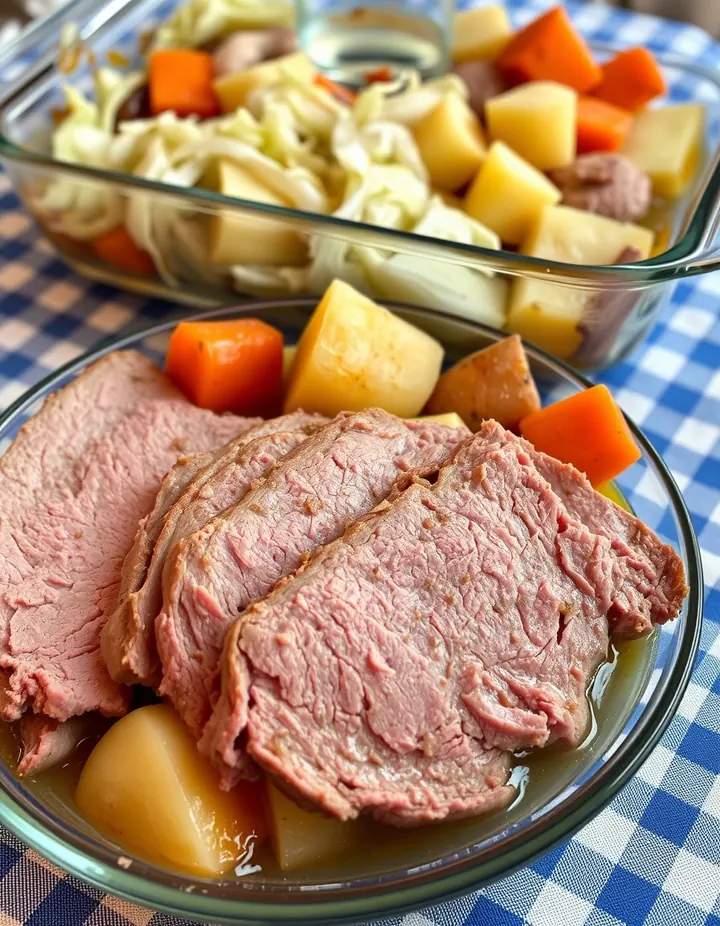 Corned Beef87 recipes
 Beef Broth67 recipes
The free Flavor Lab newsletter: one surprising pairing a week and the molecular reason it works, in 60 seconds. No spam, unsubscribe anytime.
Prefer an account? Create a free account to save pairings and unlock the full chemistry.