Why it works: Carrot and marjoram match in chemistry and in kitchens. They rank in the top 1% of all ingredient pairs, and cooks put them together in 687 recipes. Both carry cuminaldehyde, which smells Spicy, cumin. The science ↓
To Bone, and Cook a Boned Turkey
Ingredients
Directions
The book gives no oven temperature. The 400°F (200°C) in the steps was added when the recipe was transcribed, as a starting point.
Bone and stuff
Using a small sharp knife, carefully cut the flesh from the bones of the turkey, keeping the skin intact.
Remove the bones from the turkey, splitting the back halfway up.
Prepare stuffing by mixing finely chopped chicken meat, bread crumbs, pepper, salt, mace, sweet marjoram, butter, and eggs.
Fill the turkey with the stuffing and sew it up to maintain its shape.
Simmer the gravy
In a deep saucepan, combine the cracked calves' feet, removed turkey bones, onion, carrot, mace, pepper, salt, and cloves.
Place the turkey on top of the bones and add 2 quarts of water.
Cover tightly and simmer for 3 hours.
If there is less than 1 quart of gravy, add more water and boil for 30 minutes.
Beat the egg whites and shells, stir into the gravy, and boil for 15 minutes.
Strain the gravy through a cloth into a jelly mold.
Brown and serve
Remove the turkey, flour it, baste with butter, and place it in a 400°F (200°C) oven to brown.
Once the turkey is cold and the jelly is set, serve the turkey with jelly on the breast.
Transcribed from a scanned cookbook and modernised for today's kitchens. Where the book gave no heat or time, or said "a moderate oven", the temperatures and times here may be modern equivalents rather than the book's own figures.
Explore the science
The flavor team
The pairs that carry this dish. Each one is judged two ways: how much their aromas overlap, and how often cooks already put them together.
-
Carrot + marjoramtop 1% of all pairsSmell alikestrongCooked together687 recipes
Shared aroma: cuminaldehyde (Spicy, cumin).
-
Pepper + marjoramtop 3% of all pairsSmell alikestrongCooked together2,609 recipes
Shared aroma: estragole (anise, licorice).
-
Carrot + peppertop 6% of all pairsSmell alikestrongCooked together14,555 recipes
Shared aroma: 2-isopropyl-3-methoxypyrazine (earthy, pea).
-
Onion + carrottop 6% of all pairsSmell alikemoderateCooked together21,601 recipes
Shared aroma: 2-isopropyl-3-methoxypyrazine (earthy, pea).
-
Bread + buttertop 7% of all pairsSmell alikemoderateCooked together27,232 recipes
Shared aroma: delta-decalactone (sweet, creamy).
Ranks compare each pair with 20,000 random ingredient pairs on CompKitchen. How we score pairs
What each ingredient does
- Eggs
- Bind the stuffing and help hold its mixture together during cooking.
- Bread crumbs
- Absorb moisture and add body to the stuffing.
- Calves' feet
- Release gelatin into the liquid, helping the gravy set into a jelly.
- Egg whites
- Bind fine particles in the gravy so they can be strained off, clearing the liquid.
- Butter
- Adds fat and richness to the stuffing and aids browning of the turkey skin.
The step that matters
Strain the gravy through a cloth into a jelly mold.. Gelatin from the calves' feet sets the liquid into a jelly only as it cools, so the gravy must be strained clear and left undisturbed to chill before the turkey is served.
Swap the mace
How well each one fits the dish's main ingredients (turkey, onion, carrot, bread, pepper, marjoram, butter):
- Thymefits better
- Parsleyfits better
- Sagefits better
- Macethe original
Fit is the average pairing score against turkey, onion, carrot, bread, pepper, marjoram, butter. Candidates are from the same food group and used in at least 100 recipes.
“What each ingredient does” and “The step that matters” were written by Claude from this recipe’s own method and reviewed in samples by CompKitchen.
You might also like
 Brown Bread461 recipes
 Carrot Soup134 recipes
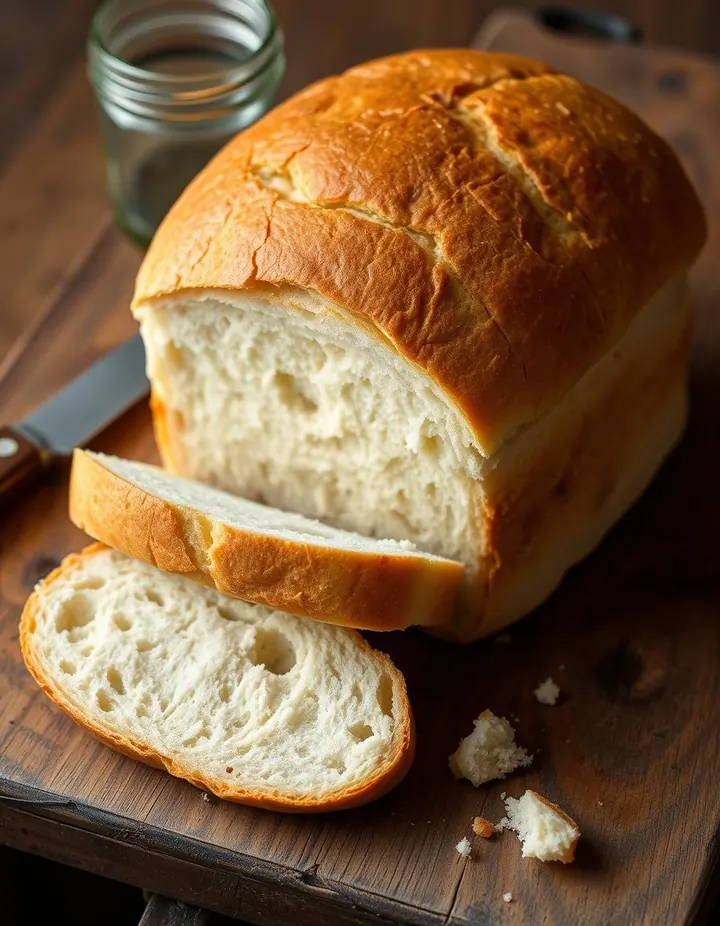 White Bread80 recipes
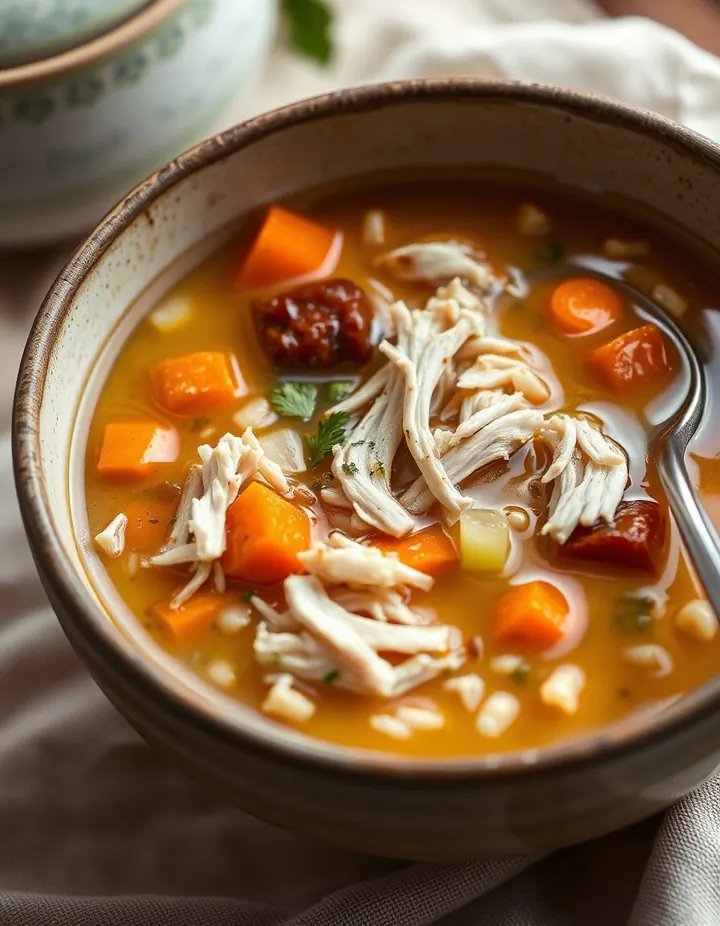 Turkey Soup71 recipes
The free Flavor Lab newsletter: one surprising pairing a week and the molecular reason it works, in 60 seconds. No spam, unsubscribe anytime.
Prefer an account? Create a free account to save pairings and unlock the full chemistry.