Why it works: Beef and pork match in chemistry and in kitchens. They rank in the top 1% of all ingredient pairs, and cooks put them together in 5,690 recipes. Both carry 12-methyltridecanal, which smells tallowy, beefy. The science ↓
Roast Meat
Ingredients
Directions
The book says “a very hot oven”. The 400°F (200°C) in the steps is the modern equivalent, not the book's own figure.
Prepare
Preheat the oven to 400°F (200°C).
Scrape and wipe the roast beef with a damp towel, then a dry one.
Dredge the meat thoroughly with flour.
Roast
Place the meat in the hot oven to cook quickly on the outside.
Use a roasting pan with a rack to prevent sogginess.
Do not salt the meat until it is partly cooked to retain juices.
Baste the meat frequently.
Cook beef for about 10 minutes per pound for rare; mutton for 15 minutes per pound; lamb a little longer.
For veal and venison, roast for 4 to 5 hours, optionally wrapping venison in pastry.
For pork, roast for 3 to 5 hours until thoroughly done.
Transcribed from a scanned cookbook and modernised for today's kitchens. Where the book gave no heat or time, or said "a moderate oven", the temperatures and times here may be modern equivalents rather than the book's own figures.
Explore the science
The flavor team
The pairs that carry this dish. Each one is judged two ways: how much their aromas overlap, and how often cooks already put them together.
-
Beef + porktop 1% of all pairsSmell alikestrongCooked together5,690 recipes
Shared aroma: 12-methyltridecanal (tallowy, beefy).
-
Beef + flourtop 25% of all pairsSmell alikelowCooked together10,677 recipes
Shared aroma: isobutyraldehyde (malty, green).
-
Flour + porktop 27% of all pairsSmell alikelowCooked together11,187 recipes
Shared aroma: isobutyraldehyde (malty, green).
Beef and flour barely smell alike, yet cooks put them together in 10,677 recipes: they work on texture and structure more than aroma.
Ranks compare each pair with 20,000 random ingredient pairs on CompKitchen. How we score pairs
What each ingredient does
- Flour
- Forms a coating on the meat that helps it brown and develop a crisp outer crust.
- Salt
- Seasons the meat; adding it after partial cooking helps retain juices.
The step that matters
Do not salt the meat until it is partly cooked. Salt drawn in early can pull moisture to the surface and dissolve proteins, so salting after partial cooking helps the meat keep its juices inside.
“What each ingredient does” and “The step that matters” were written by Claude from this recipe’s own method and reviewed in samples by CompKitchen.
More roast meat recipes
You might also like
 Roast Beef211 recipes
 Beef Loaf175 recipes
 Pork Cake107 recipes
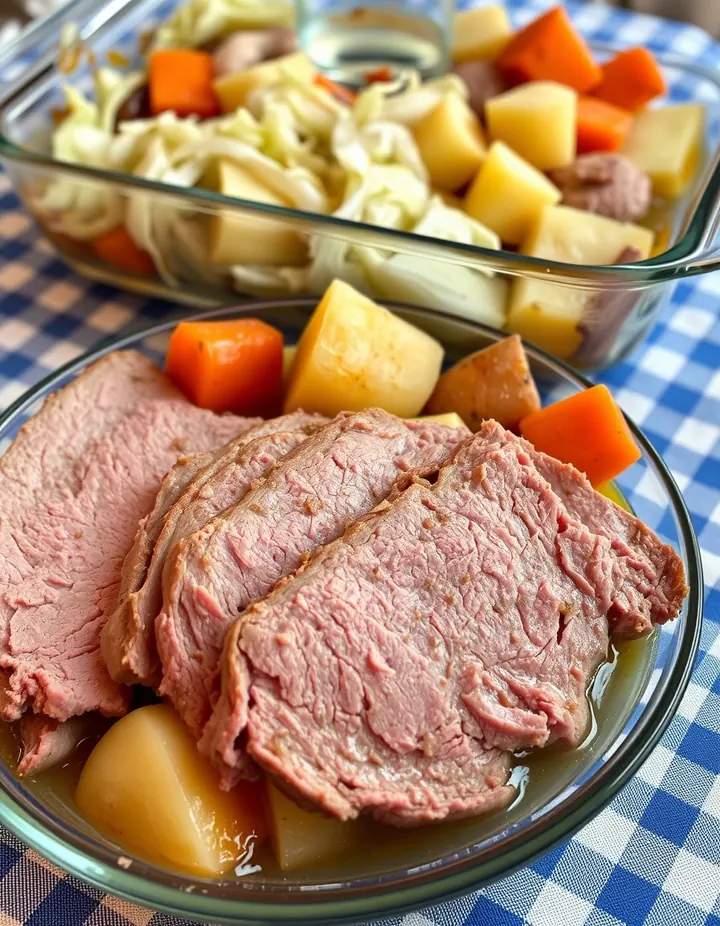 Corned Beef87 recipes
The free Flavor Lab newsletter: one surprising pairing a week and the molecular reason it works, in 60 seconds. No spam, unsubscribe anytime.
Prefer an account? Create a free account to save pairings and unlock the full chemistry.