Why it works: Lemon and pepper match in chemistry and in kitchens. They rank in the top 3% of all ingredient pairs, and cooks put them together in 27,047 recipes. Both carry trans-2-nonenal, which smells cardboard, fatty. The science ↓
Game Mutton
Ingredients
Directions
The book says “a hot oven”. The 400°F (200°C) in the steps is the modern equivalent, not the book's own figure.
Prepare the mutton
Hang the leg of mutton in a cool place for two weeks, washing it with vinegar every other day.
When ready to cook, rub the mutton with lemon juice, then with the cut onion, and finally with salad oil.
Roast
Place the mutton in a covered roaster with boiling water and bake in a hot oven at 400°F (200°C) for 30 minutes.
Transfer to a cooler oven at 350°F (175°C) and cook for 15 minutes per pound.
Half an hour before finishing, baste with gravy mixed with melted currant jelly.
Fifteen minutes later, baste with butter, sprinkle with pepper, salt, and flour, and brown on the upper rack of the oven.
Make the gravy and serve
Pour off the gravy into a bowl and cool to skim off the fat.
Strain the gravy, return it to the heat, thicken with browned flour, boil, and add sherry.
Pour half of the gravy over the meat and serve the rest in a sauce boat.
Transcribed from a scanned cookbook and modernised for today's kitchens. Where the book gave no heat or time, or said "a moderate oven", the temperatures and times here may be modern equivalents rather than the book's own figures.
Explore the science
The flavor team
The pairs that carry this dish. Each one is judged two ways: how much their aromas overlap, and how often cooks already put them together.
-
Lemon + peppertop 3% of all pairsSmell alikestrongCooked together27,047 recipes
Shared aroma: trans-2-nonenal (cardboard, fatty).
-
Onion + peppertop 11% of all pairsSmell alikemoderateCooked together68,474 recipes
Shared aroma: 2-isopropyl-3-methoxypyrazine (earthy, pea).
-
Butter + flourtop 12% of all pairsSmell alikelowCooked together124,287 recipes
Shared aroma: isobutyraldehyde (malty, green).
-
Vinegar + curranttop 13% of all pairsSmell alikelowCooked together693 recipes
Shared aroma: isoamyl acetate (banana, pear).
-
Vinegar + oniontop 14% of all pairsSmell alikemoderateCooked together18,226 recipes
Shared aroma: acetic acid (sour, vinegar).
Butter and flour barely smell alike, yet cooks put them together in 124,287 recipes: they work on texture and structure more than aroma.
Ranks compare each pair with 20,000 random ingredient pairs on CompKitchen. How we score pairs
What each ingredient does
- Leg of mutton
- Forms the main body of the roast, becoming tender and juicy during long, slow cooking.
- Vinegar
- Acidic washing helps tenderize the surface of the meat during the long hanging period.
- Currant jelly
- Adds sweetness and gloss to the gravy and helps the basting glaze brown.
- Butter
- Adds fat and richness, promoting browning on the surface of the roast.
- Flour
- Browned flour thickens the gravy and adds a toasted flavor.
- Sherry
- Adds acidity and aroma to the finished gravy.
The step that matters
Browning the meat after the basting with butter, pepper, salt, and flour. The upper rack browning depends on the surface being dry and well coated with fat and flour. Too little heat or too much moisture leaves the crust pale and the gravy weaker in flavor.
Swap the currant
How well each one fits the dish's main ingredients (mutton, vinegar, lemon, onion, butter, pepper, flour):
- Limefits better
- Mangofits better
- Cherryfits better
- Currantthe original
Fit is the average pairing score against mutton, vinegar, lemon, onion, butter, pepper, flour. Candidates are from the same food group and used in at least 100 recipes.
“What each ingredient does” and “The step that matters” were written by Claude from this recipe’s own method and reviewed in samples by CompKitchen.
You might also like
 Mutton Broth292 recipes
 Lemon Sauce236 recipes
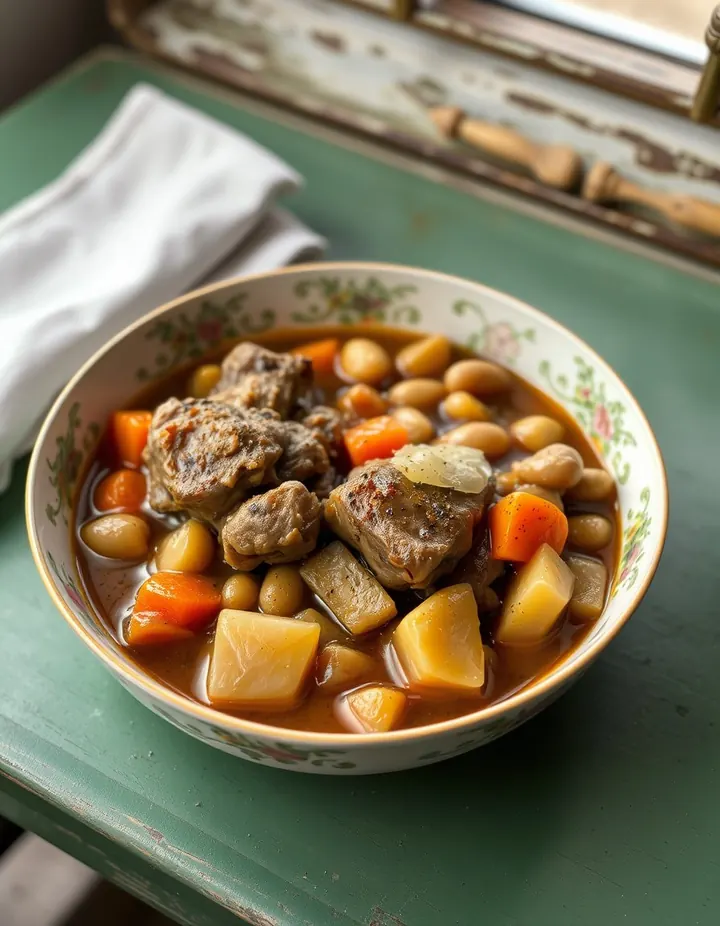 Haricot Mutton59 recipes
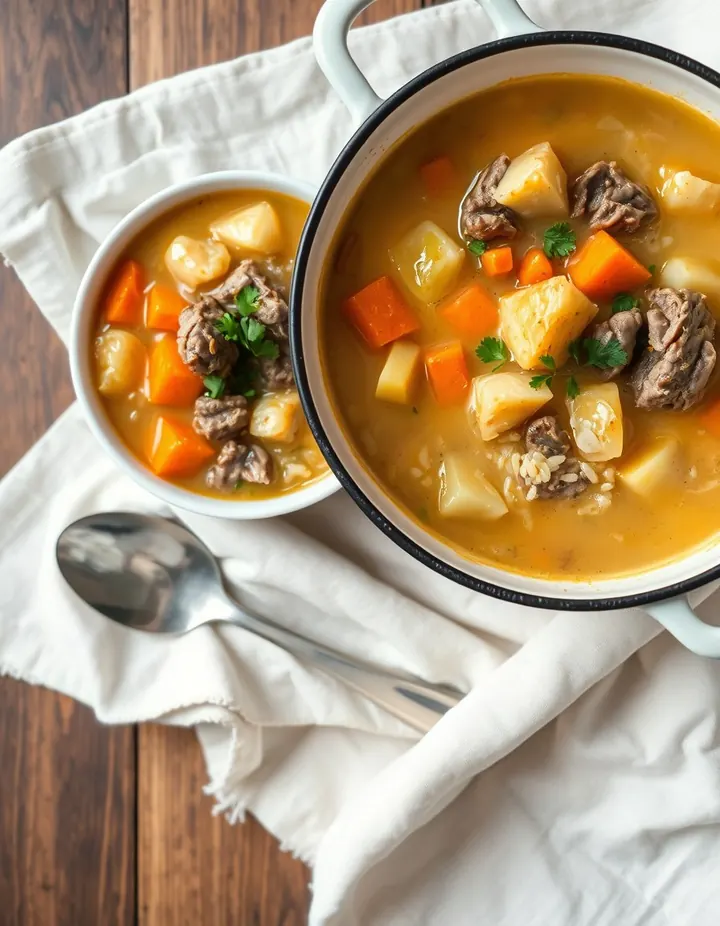 Mutton Soup56 recipes
The free Flavor Lab newsletter: one surprising pairing a week and the molecular reason it works, in 60 seconds. No spam, unsubscribe anytime.
Prefer an account? Create a free account to save pairings and unlock the full chemistry.